

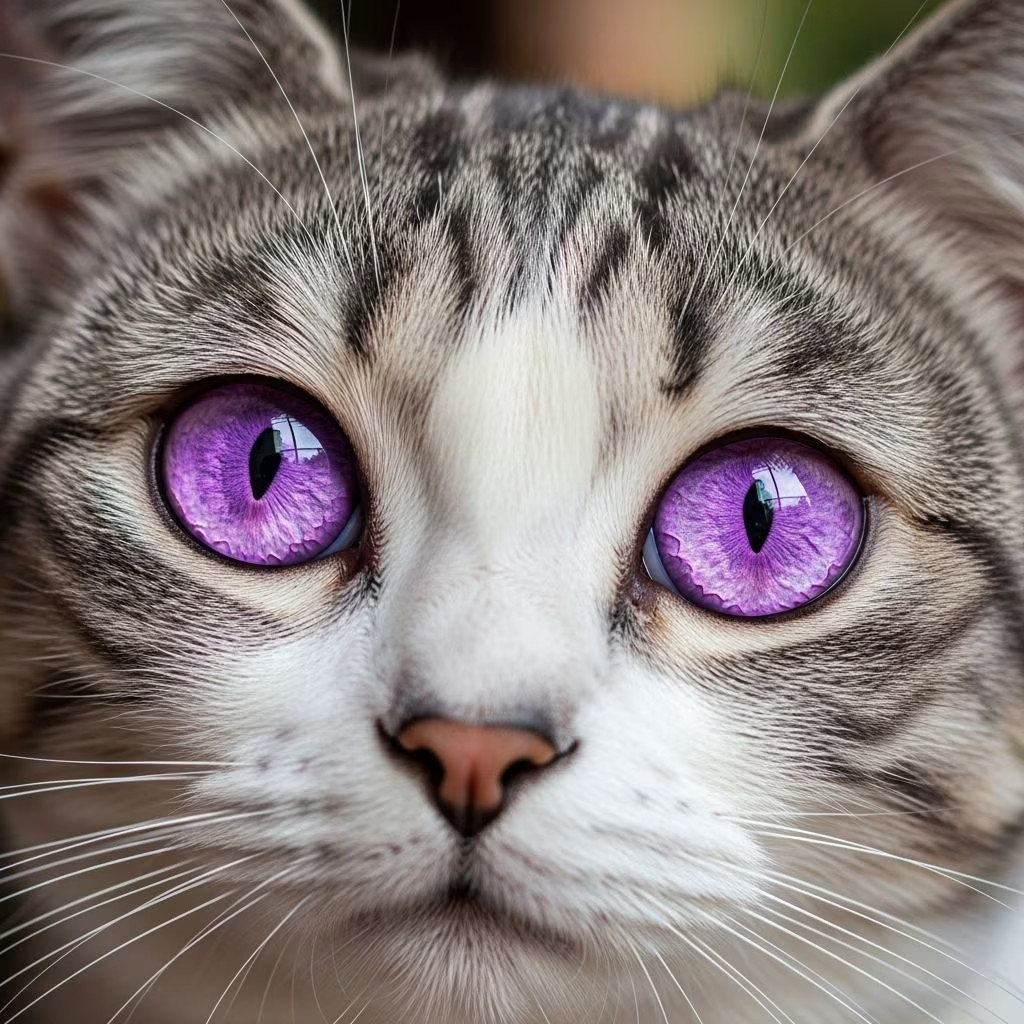
While cats cannot have true purple eyes like those in fairy tales, certain rare albino breeds exhibit lilac-hued eyes that might resemble purple under specific lighting. Cat eye color is determined by genetics and the presence of melanocytes, pigment-producing cells in the iris. This article explores the science behind cat eye colors, debunking the purple myth and detailing real possibilities.
What Determines Cat Eye Color?
A cat’s eye color is primarily governed by genetics passed down through generations, with melanocytes playing a central role. These cells produce melanin, the pigment responsible for eye hue. No melanocytes result in blue eyes, low numbers create green eyes, and high concentrations lead to intense orange or copper shades.
The intensity of the color correlates directly with melanocyte count—the more pigment, the deeper the shade. Kittens are born with blue eyes due to underdeveloped pigmentation, which matures over weeks as melanin distributes in the iris.
- Blue eyes: Absence or minimal melanin allows light scattering, mimicking sky blue.
- Green eyes: Low melanin with some yellow pigment from the tapetum lucidum.
- Orange/Copper eyes: High melanin levels in breeds like the British Shorthair.
- Yellow/Gold eyes: Moderate melanin combined with lipochrome pigment.
Coat color often influences eye color; white cats may have blue eyes due to the dominant white gene overriding other pigments.
Can Cats Have Violet or Purple Eyes?
True purple or violet eyes do not occur naturally in cats, as confirmed by veterinary sources. The myth likely stems from lilac or pinkish hues in albino cats, where extreme low melanin causes red blood vessels to show through, creating a lavender effect in bright light.
Unlike human myths of violet eyes from albinism (which produce pinkish-red due to visible vessels), cats’ lilac appears closer to pale purple but isn’t true violet. No genetic mutation produces purple pigmentation in felines.
Do Any Cats Have Purple Eyes?
No cat breeds have genuine purple eyes. However, albino or extreme white cats can display lilac eyes, especially breeds like the Albino Havana or Sphynx variants. These eyes appear pinkish-lilac due to transparency, not pigment.
| Eye Color | Causes | Example Breeds |
|---|---|---|
| Lilac/Pinkish | Albinism, low melanin | Albino cats, Colorpoint Shorthair |
| Blue | No melanin, white coat gene | Siamese, Turkish Angora |
| Heterochromia | Genetic mosaicism | Sphynx, Turkish Van |
Genetic Factors Behind Cat Eye Colors
Cat eye color genetics mirror coat patterns, involving melanin types: eumelanin (black/brown) and phaeomelanin (red/yellow). The OCA2 gene on chromosome 15 regulates melanin production, similar to humans, with HERC2 influencing its expression.
Dilution genes lighten colors; for instance, the recessive dilution gene turns intense shades to pastel, affecting eyes indirectly via coat. Temperature-sensitive albinism in Siamese causes blue eyes as cooler extremities produce more melanin.
- OCA2 gene: Controls melanin in iris.
- HERC2: Regulates OCA2, mutations lead to lighter eyes.
- Dominant white gene (W): Produces white cats with blue/orange eyes, often linked to deafness.
Heterochromia in Cats
Heterochromia, or odd-eyed cats, feature one blue eye and one colored eye (e.g., green or yellow). This developmental condition arises when melanin distributes unevenly during kitten growth, affecting only one iris.
Common in white or bicolor cats like Turkish Van or Japanese Bobtail, it’s genetic and harmless, though blue-eyed sides may correlate with deafness.
Dichroic Eyes in Cats
Dichroic eyes show two colors within the same iris, such as blue center fading to green outer ring. Caused by uneven melanocyte distribution, this rare trait appears in breeds like the Turkish Angora.
The split can be sectoral (pie-shaped sections) or central (pupil ringed differently), adding unique beauty without health issues.
Albino Cats and Their Eye Colors
Albino cats lack tyrosinase, an enzyme for melanin, resulting in pure white coats and pinkish-red or lilac eyes from visible blood vessels. They are light-sensitive and prone to vision issues.
True albinism is recessive; carriers show no signs. These cats often have crossed eyes or nystagmus due to neurological effects.
Can Kittens’ Eye Color Change?
Yes, all kittens start with blue eyes from immature melanocytes. Pigment develops post-birth, stabilizing by 8-12 weeks. Siamese remain blue due to genetics; others shift to green, yellow, or copper.
Monitor for changes beyond 3 months, as delays might indicate health issues like blindness.
When Should I Be Concerned About My Cat’s Eyes?
Consult a vet if eyes cloud, change abruptly post-maturity, show discharge, squinting, or redness. Conditions like uveitis, glaucoma, or cataracts mimic color shifts.
- Cloudy blue: Possible cataracts.
- Sudden green to blue: Injury or disease.
- Pink without albinism: Ulcers or infection.
Conclusion
While purple eyes remain a myth for cats, understanding genetics reveals fascinating realities like lilac albinos and heterochromia. Appreciate your cat’s unique gaze—it’s a window into their genetic heritage.
Frequently Asked Questions
What colors can cat eyes be?
Common colors include blue, green, yellow, gold, orange, and copper. Rare lilac in albinos.
Why do some cats have different colored eyes?
Heterochromia from uneven melanin distribution during development.
Are purple-eyed cats real?
No true purple; lilac hues in albinos are closest.
Do all white cats have blue eyes?
No, depends on the white gene; some have green or yellow.
Can cat eye color change as they age?
Typically stabilizes by 12 weeks; adult changes signal health issues.
References
- Purple Eyes: Unraveling the Myth and Genetics — Debby Burk Optical. 2023. https://debspecs.com/blog/-purple-eyes-unraveling-the-myth-and-genetics/
- Can Cats Have Purple Eyes? Vet-Reviewed Facts — Catster. 2024-05-15. https://www.catster.com/lifestyle/can-cats-have-purple-eyes/
- Why do cats have different coloured eyes? — Cats Protection. 2023-08-10. https://www.cats.org.uk/cats-blog/why-do-cats-have-different-coloured-eyes
- The Science Behind Cat Colors and Genetics — Zoetis Petcare. 2024-02-20. https://www.zoetispetcare.com/blog/article/science-behind-cat-colors
- Heterochromia — Wikipedia (citing primary genetic studies). 2025. https://en.wikipedia.org/wiki/Heterochromia



