

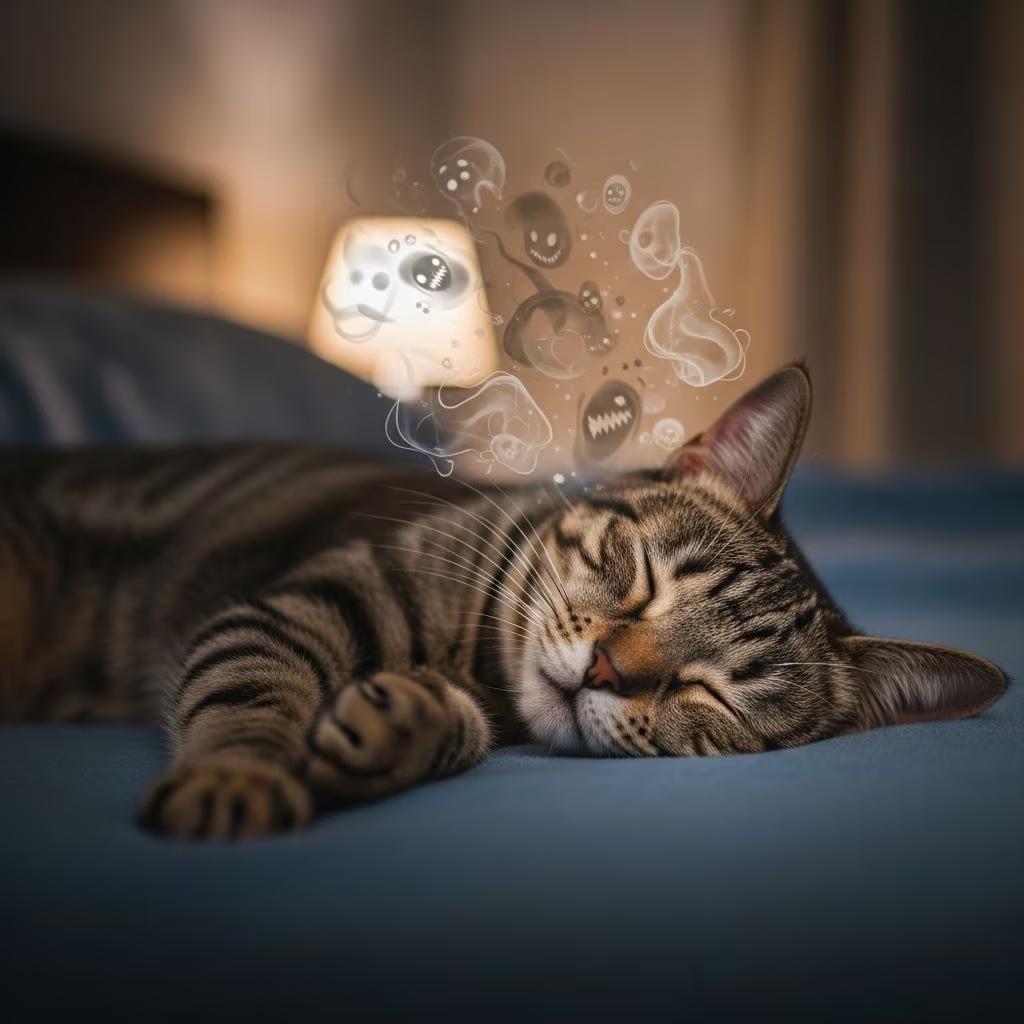
Cats spend much of their lives sleeping, often exhibiting twitching paws, soft mews, or sudden jerks that intrigue owners. While science confirms cats dream during REM sleep, the question of whether they experience nightmares remains intriguing, with behavioural clues suggesting it’s possible.
Do Cats Dream?
Yes, cats dream, primarily during REM (Rapid Eye Movement) sleep, a stage where brain activity mirrors wakefulness. Cats sleep 12-18 hours daily, cycling through non-REM and REM phases, much like humans. EEG studies show cat brainwaves in REM resemble those in dreaming humans, indicating active mental processing.
In the 1960s, French neuroscientist Michel Jouvet conducted pioneering research on cats. By lesioning the pons in the brainstem—which normally induces muscle atonia during REM—he observed cats acting out dreams. Without paralysis, sleeping cats pounced, swatted, and stalked imaginary prey, providing direct evidence of dream enactment rooted in hunting instincts.
These behaviours confirm cats relive daily experiences, reinforcing memories via the active hippocampus during REM. A similar 2001 MIT rat study showed identical brain patterns during maze-running tasks and subsequent REM sleep, suggesting cats likely replay activities like play or hunting.
What Do Cats Dream About?
Cat dreams likely revolve around natural behaviours and daily events. Experts believe they process:
- Hunting instincts: Even indoor cats dream of stalking, pouncing, and chasing, as seen in Jouvet’s studies where cats mimicked predation sequences.
- Social interactions: Bonds with owners, other pets, or cats may replay, strengthening emotional ties through memory consolidation.
- Daily routines: Play sessions, grooming, eating, or exploring trigger hippocampal activation, helping solidify learning and problem-solving.
- Sensory experiences: Harvard’s Dr. Deirdre Barrett posits animals dream in richer sensory modes, potentially emphasising smells and sounds over visuals.
Observing a cat’s sleep twitches—paws kneading, tail flicking, or whiskers moving—offers glimpses into these vivid, instinct-driven reveries.
Signs Your Cat Is Dreaming
Recognising dream states helps distinguish normal sleep from distress. Common signs include:
- Twitching or paddling: Paws move rhythmically, simulating running or batting at prey.
- Vocalisations: Soft purrs, meows, chirps, or growls as they ‘react’ to dream scenarios.
- Rapid eye movement: Eyes dart under closed lids, a hallmark of REM.
- Whisker and ear flicks: Subtle adjustments mimicking alertness to dream stimuli.
- Body tension/release: Brief stiffening followed by relaxation, unlike seizure rigidity.
These occur in short bursts (5-10 minutes) during REM cycles, which comprise 20-30% of cat sleep. Jamie Richardson from Small Door Veterinary notes most twitches are harmless REM indicators; extreme, repetitive movements with arching warrant vet attention to rule out seizures.
Can Cats Have Nightmares?
No definitive proof exists that cats have nightmares akin to human fear-laden dreams, but behavioural evidence and parallels in REM function strongly suggest it’s plausible. If cats replay positive instincts, they could also revisit stressors like vet visits, conflicts, or traumas.
Dr. Elizabeth Stelow explains human dreams rehearse responses to daily/past events; cats likely do the same, potentially including negatives. Post-trauma, cats show emotional coping via sleep, akin to humans processing fear. Jouvet’s cats occasionally displayed defensive reactions to ‘imaginary enemies,’ hinting at negative content.
Signs of possible nightmares:
- Intense distress vocalisations: Yowls, hisses, or cries louder than playful mews.
- Violent thrashing: Aggressive paw strikes or biting air, beyond mild twitches.
- Sudden awakenings: Bolting upright, dilated pupils, or hiding post-sleep.
- Contextual stress: Recent changes like moves, losses, or loud noises correlate with restless sleep.
How to Tell If Your Cat Is Having a Nightmare
Differentiating nightmares from normal dreams relies on intensity and aftermath. Use this table for quick assessment:
| Normal Dreaming | Possible Nightmare |
|---|---|
| Mild twitches, soft sounds | Loud cries, violent jerks |
| Relaxed wake-up or continued sleep | Sudden startle, panting, hiding |
| Frequent in healthy routines | Follows stress/trauma |
| No daytime behaviour change | Increased anxiety or clinginess |
If patterns persist, monitor for underlying issues like pain or neurological changes. Consult a vet if combined with appetite loss or lethargy.
Should You Wake a Cat from a Nightmare?
Generally, no—waking disrupts REM, vital for memory and emotional processing. Sudden disturbances risk scratches or bites from startled cats in defensive dream states. Instead:
- Observe quietly: Note patterns without intervention.
- Speak softly: Gentle voice may soothe without full arousal.
- Provide comfort post-wake: If they stir naturally, offer pets or a safe space.
Only intervene if thrashing endangers them (e.g., near edges). Prioritise a calm environment to minimise nightmare triggers.
How to Help Your Cat Have Better Dreams
Promote restful sleep to reduce distress dreams:
- Enrich environment: Toys, scratching posts, and perches for positive daily stimulation.
- Maintain routine: Consistent feeding/play/sleep schedules stabilise circadian rhythms.
- Reduce stressors: Quiet spaces, pheromone diffusers (e.g., Feliway), gradual introductions to changes.
- Exercise daily: 15-30 minutes play mimics hunting, tiring them positively.
- Comfortable bedding: Soft, elevated beds in dim, safe areas.
For seniors or medicated cats, REM may alter; vet check-ups ensure health.
Frequently Asked Questions
Do all cats dream?
Yes, all mammals enter REM sleep, including cats. Frequency/intensity varies by age and health.
Why do kittens twitch more in sleep?
Kittens spend up to 80% of sleep in REM, practising survival instincts rapidly.
Can stress cause more cat nightmares?
Likely yes; stress heightens cortisol, influencing dream content via memory replay.
Do older cats dream differently?
Seniors may have less intense REM due to brain changes; monitor for cognitive decline.
Can medications affect cat dreaming?
Yes, sedatives or neurologics alter REM; consult vets on changes.
Do cats sleepwalk?
Rarely; disrupted atonia (as in Jouvet’s studies) causes dream enactment, not true sleepwalking.
Conclusion
While cat nightmares lack ironclad proof, REM science and behaviours affirm rich inner lives. Understanding these supports compassionate care, fostering secure, dream-filled slumbers for your feline companion.
References
- Understanding Cat Dreams: Memory, Behavior, and Health Links — Michu. Accessed 2026. https://michu.com.au/blogs/news/do-cats-dream
- Do Cats Dream? — PetMD. Accessed 2026. https://www.petmd.com/cat/general-health/do-cats-dream
- Do Animals Dream? with David M. Peña-Guzmán — University of Chicago News. 2023-approx. https://news.uchicago.edu/do-animals-dream-david-m-pena-guzman
- Do Cats Dream? — Chewy. Accessed 2026. https://www.chewy.com/education/cat/training-and-behavior/do-cats-dream
- Do cats have nightmares or bad dreams? — Way of Cats. Accessed 2026. https://www.wayofcats.com/blog/do-cats-have-nightmares/250



