

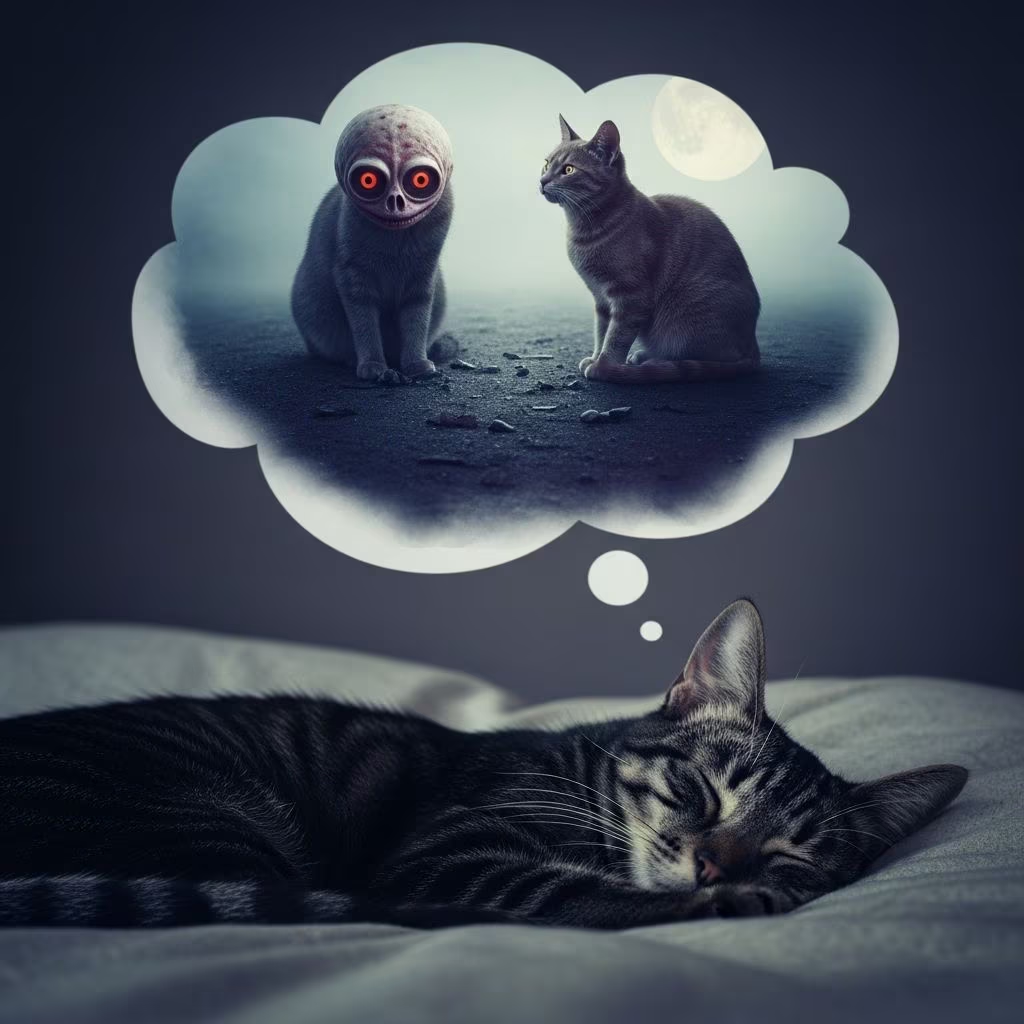
Cats spend much of their day sleeping, often twitching, purring, or moving their paws as if chasing prey. These behaviors raise a common question among cat owners: do cats dream, and can they have nightmares? Scientific evidence shows cats enter REM sleep, where dreaming occurs, suggesting they process daily experiences much like humans. While direct proof of nightmares is lacking, behavioral cues and brain studies indicate cats may relive stressful events during sleep.
How Much Do Cats Sleep?
Cats are renowned for their extensive sleep needs, averaging **12 to 18 hours per day**. Kittens and senior cats may sleep even more, up to 20 hours, while adults balance naps with bursts of activity. This sleep pattern supports their crepuscular nature, being most active at dawn and dusk.
During these long rest periods, cats cycle through non-REM and REM stages. Non-REM provides deep physical restoration, while REM—characterized by rapid eye movements under closed lids—fuels mental processing. EEG studies confirm cat brainwaves in REM mirror those in humans during dreaming, with heightened activity in memory centers like the hippocampus.
The Science of Dreaming in Cats
Research dating back to the 1960s provides compelling evidence that cats dream. French neuroscientist **Michel Jouvet** conducted pioneering experiments on cats by lesioning the pons in their brainstem, which normally induces muscle atonia (paralysis) during REM sleep. Without this inhibition, cats acted out vivid dream sequences: stalking, pouncing, swatting, and even fighting imaginary foes while remaining asleep. Videos from these studies show cats leaping and grooming as if in a phantom hunt.
These behaviors align with cats’ innate instincts, suggesting dreams replay typical feline activities. Modern electrophysiological data reinforces this: during REM, the feline brain replays neural patterns from waking experiences, processing memories and reinforcing learning. A analogous 2001 MIT rat study found identical maze-running brain activity during sleep, implying cats likely “rehearse” chases or play sessions.
What Do Cats Dream About?
Cat dreams likely revolve around their daily lives and instincts. Here’s what science suggests:
- Hunting and Play: Twitching paws and chattering often mimic stalking prey, as seen in Jouvet’s cats pouncing on invisible mice.
- Social Interactions: Cats bond with owners and other pets; dreams may replay cuddles, grooming, or conflicts to strengthen emotional memories.
- Memory Consolidation: The active hippocampus during REM helps process routines, like navigating home or learning tricks.
- Sensory Experiences: Experts like Dr. Deirdre Barrett propose animals dream in multisensory ways, perhaps vividly smelling food or hearing birds.
House cats, despite domestication, retain wild instincts. Even without live prey, dreams evoke ancestral behaviors like fighting or exploring.
Signs Your Cat Is Dreaming
Observing your cat sleep reveals dream signs. Common indicators include:
- Rapid eye movements under eyelids.
- Paw paddling, twitching, or kicking.
- Soft mews, purrs, or chatters.
- Tail flicking or whisker movement.
- Occasional body shifts as if fleeing or pursuing.
These occur in REM cycles, lasting 5-15 minutes every hour or so. A 2023 PetMD analysis notes such movements are normal unless extreme, like stiffening or repetitive jerking, which may signal seizures.
| Normal Dream Signs | Potential Concern Signs |
|---|---|
| Twitching paws, soft vocalizations | Arched back, violent thrashing |
| Brief episodes (under 1 min) | Prolonged, repetitive movements |
| Relaxed body post-episode | Disorientation upon waking |
If concerns arise, consult a vet to rule out epilepsy or neurological issues.
Can Cats Have Nightmares?
No definitive proof exists that cats experience nightmares as humans do—with emotional terror and recall upon waking. However, behavioral evidence and expert consensus suggest it’s plausible. Cats process trauma emotionally, reacting to stress like vet visits or fights by replaying events in dreams.
Jouvet’s cats displayed defensive postures against “predators,” hinting at negative scenarios. Dr. Stelow from Chewy notes brains rehearse responses to threats, so a scared cat might dream of escapes or conflicts. Philosopher David M. Peña-Guzmán argues electrophysiological data supports animals entering “phantasmagoric” dream worlds, including fears.
Signs of potential bad dreams mirror human distress: whimpering, flattened ears, dilated pupils, or frantic movements. Post-wake clinginess may indicate unease.
How to Help a Cat with Nightmares
If your cat seems distressed in sleep, intervene gently:
- Observe First: Most episodes pass naturally; avoid waking abruptly to prevent startle bites.
- Soothe Environment: Dim lights, white noise, and a quiet space reduce triggers.
- Comfort Upon Waking: Offer pets and a safe spot; pheromone diffusers like Feliway calm anxiety.
- Address Daytime Stress: Enrich with toys, play, and routines to minimize negative memories.
- Vet Check: Rule out pain or illness causing restless sleep.
Reducing overall stress prevents nightmare-like dreams. Daily play mimics hunting, promoting positive REM content.
Do All Cats Dream the Same Way?
Dream patterns vary by age, health, and breed:
- Kittens: Dream more frequently, practicing survival skills.
- Adults: Balanced REM for memory.
- Seniors: Reduced intensity due to brain changes; monitor for cognitive decline.
Medications affecting the nervous system can alter REM, intensifying or suppressing dreams. Consult vets for changes. Cats don’t sleepwalk like humans but may act out if atonia fails—rare in healthy pets.
Frequently Asked Questions (FAQs)
Do cats dream every night?
Yes, cats enter REM multiple times daily, likely dreaming during each cycle to process experiences.
Is it bad to wake a cat from a bad dream?
Gently soothe if distressed, but most recover alone. Sudden wakes risk scratches.
Can stress cause cat nightmares?
Yes, traumatic events may replay in dreams, leading to vocalizations or agitation.
Do kittens have nightmares?
Kittens dream vividly of play and exploration, possibly including early scares.
What if my cat cries in sleep?
Monitor; isolated cries are normal, but persistent distress warrants a vet visit for pain or seizures.
Do feral cats dream differently?
Feral cats likely dream of survival hunts and territories, more intensely than pets.
Understanding cat dreams fosters empathy, viewing them as sentient beings with rich inner lives. By observing sleep behaviors, owners can enhance welfare and strengthen bonds.
References
- Understanding Cat Dreams: Memory, Behavior, and Health Links — Michu. 2023. https://michu.com.au/blogs/news/do-cats-dream
- Do Animals Dream? with David M. Peña-Guzmán — University of Chicago News. 2021-10-12. https://news.uchicago.edu/do-animals-dream-david-m-pena-guzman
- Do Cats Dream? — PetMD. 2023. https://www.petmd.com/cat/general-health/do-cats-dream
- Do Cats Dream? — Chewy. 2023. https://www.chewy.com/education/cat/training-and-behavior/do-cats-dream
- Do Cats Have Nightmares or Bad Dreams? — Way of Cats. 2023. https://www.wayofcats.com/blog/do-cats-have-nightmares/250



