

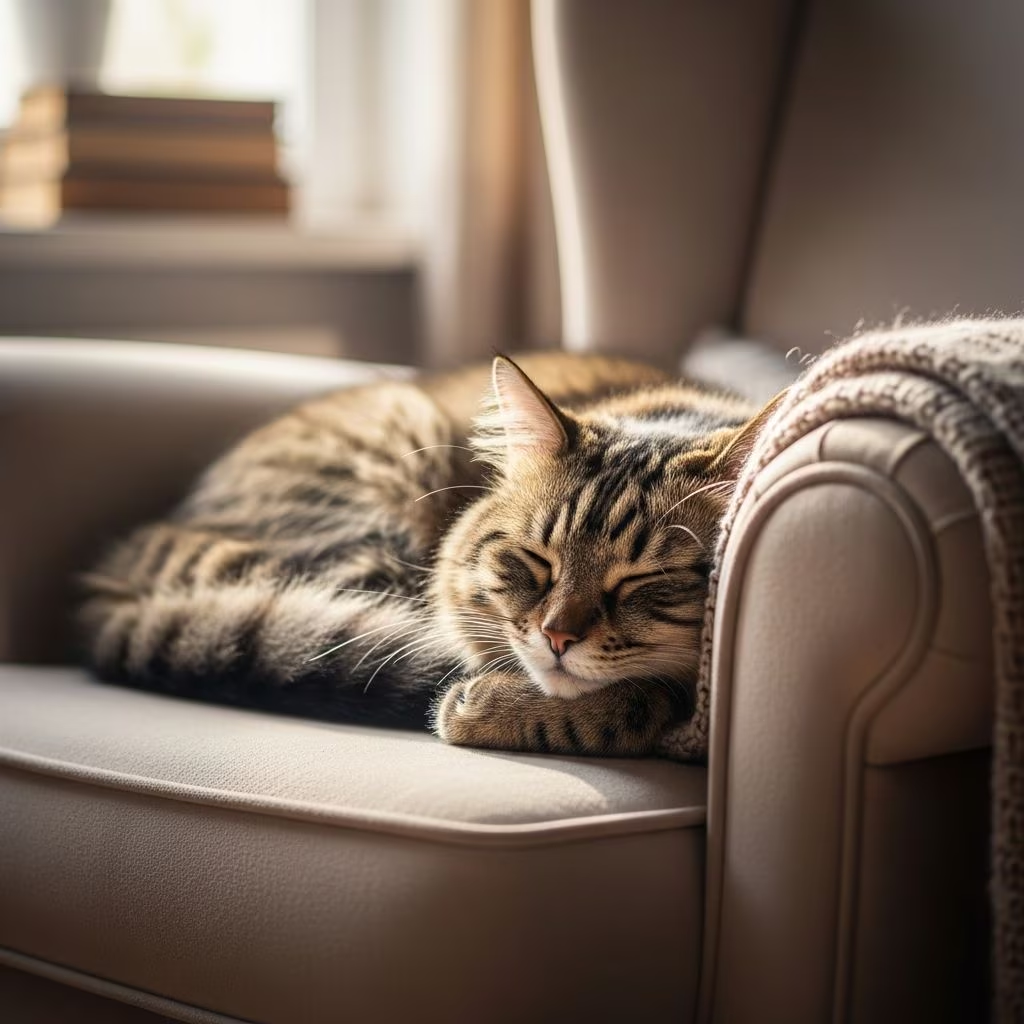
Cats are renowned for their love of sleep, often napping up to 16 hours a day in polyphasic patterns typical of over three-quarters of mammals. However, like humans, cats can develop sleep disorders such as narcolepsy, cataplexy, insomnia, and nocturnal restlessness, which disrupt their rest and health.
What Are Normal Cat Sleep Patterns?
Cats exhibit polyphasic sleep, cycling through multiple short periods of rest rather than one long bout like humans. Kittens and young cats favor REM (rapid eye movement) sleep for growth and dreaming, while older cats shift toward more NREM (non-REM) light sleep. Nocturnal crepuscular activity peaks at dawn and dusk, aligning with hunting instincts, but excessive daytime sleepiness or nighttime wakefulness signals potential issues.
Adequate sleep supports immune function, metabolism, and behavior. Diet influences this cycle; studies show REM sleep in prior hours correlates with food intake, emphasizing nutrition’s role in rest quality.
Can Cats Have Sleep Disorders?
Yes, cats can experience various sleep disorders, though rarer than in dogs. Common ones include narcolepsy, cataplexy, insomnia, sleep apnea, and age-related disruptions. These stem from neurological, hormonal, or environmental factors and warrant veterinary evaluation to rule out underlying diseases.
Types of Feline Sleep Disorders
Narcolepsy and Cataplexy
Narcolepsy involves excessive daytime sleepiness and sudden REM sleep intrusions, while cataplexy causes abrupt muscle tone loss, leading to collapse without loss of consciousness. Episodes trigger by excitement like play, food, or greetings, lasting seconds to minutes with twitching, rapid eye movement, and quick recovery upon stimulation.
Often congenital and inherited, these affect young cats, mimicking serious conditions like seizures. Though not life-threatening, falls risk injury. Breeds aren’t specified for cats, unlike dogs (e.g., Dobermans), but vigilance prevents harm.
Insomnia and Nocturnal Restlessness
Older cats commonly show insomnia via nighttime pacing, vocalizing, or reversed day-night cycles due to cognitive dysfunction, senility, hearing/vision loss, or hyperthyroidism (excess thyroid hormone causing cardiac issues). Stress from home changes (new pets, moves) or pain from illness exacerbates this.
Sleep Apnea
Brachycephalic breeds like Persians face breathing pauses during sleep from short snouts, causing poor rest, daytime drowsiness, and risks like heart disease or diabetes. Obesity, age, allergies, or infections contribute.[10]
Signs and Symptoms of Sleep Disorders in Cats
- Sudden collapses or paralysis (cataplexy)
- Excessive daytime sleepiness or lethargy
- Muscle twitching, whimpering during episodes
- Nighttime wakefulness, pacing, or vocalizing
- Reversed sleep-wake cycles
- Daytime drowsiness from apnea-related poor sleep
- Associated signs: weight changes, appetite loss, personality shifts
Monitor for triggers like excitement or rapid onset without warning.
Causes of Sleep Disorders in Cats
| Disorder | Primary Causes | Risk Factors |
|---|---|---|
| Narcolepsy/Cataplexy | Congenital mutations (e.g., hypocretin receptor), brainstem issues, trauma | Young age, excitement triggers |
| Insomnia/Restlessness | Hyperthyroidism, cognitive dysfunction, pain, anxiety, environmental stress | Senior cats, home changes |
| Sleep Apnea | Brachycephalic structure, obesity, allergies | Persians, older/heavy cats[10] |
Hyperthyroidism, confirmed via blood tests, elevates heart risks; melatonin supplements may aid.
Diagnosis of Feline Sleep Disorders
Vets start with history, observing episodes, and physical exams. Blood tests detect hyperthyroidism or organ issues. For narcolepsy/cataplexy, video recordings aid differentiation from epilepsy. Advanced diagnostics like CSF analysis (hypocretin levels) or imaging rule out tumors/trauma. Polysomnography, rare in vets, monitors sleep stages.
Treatment and Management Options
No cure for narcolepsy/cataplexy exists; manage via environmental tweaks: avoid triggers, provide safe spaces. Insomnia treats underlying causes—thyroid meds for hyperthyroidism, melatonin (vet-dosed) for cycles.
- Environmental adjustments: Consistent routines, afternoon play to tire cats, quiet night zones.
- Diet: Nutritious food supports sleep; avoid late feeding.
- Medical: Antibiotics/antihistamines for apnea infections; surgery for structural issues.[10]
- Senior care: Cognitive supplements, pain relief for arthritis.
Consult vets before supplements to avoid interactions.
When to See a Vet for Cat Sleep Issues
Seek care if patterns change suddenly: increased collapses, persistent insomnia, breathing pauses, or concurrent symptoms like vomiting, weight loss. Early intervention prevents complications like heart disease.
Preventing Sleep Problems in Cats
- Maintain ideal weight to curb apnea.[10]
- Enrich environment: toys, scratching posts reduce stress.
- Regular vet checkups for seniors detect hyperthyroidism early.
- Balanced diet and exercise promote healthy cycles.
Frequently Asked Questions (FAQs)
Can all cats get narcolepsy?
No, it’s rare and mostly congenital in young cats, triggered by excitement.
Why is my senior cat restless at night?
Likely cognitive dysfunction, hyperthyroidism, or sensory loss; vet tests confirm.
Does breed affect sleep apnea risk?
Yes, Persians and short-nosed breeds are prone due to airway structure.[10]
Can diet fix my cat’s sleep issues?
It supports quality but doesn’t cure disorders; address medical causes first.
Is melatonin safe for cats?
Vet-approved low doses help regulate cycles with minimal side effects.
Conclusion
Understanding cat sleep disorders empowers owners to spot issues early. From narcolepsy’s collapses to senior insomnia, prompt vet care ensures restful lives. Prioritize health for your feline friend’s well-being.
References
- The Sleepy Secrets of Cats: Why Cats Sleep So Much — Darwin’s Pet. 2023. https://www.darwinspet.com/blogs/pet-behavior/the-sleepy-secrets-of-cats-why-cats-sleep-so-much
- What Causes Cat and Dog Insomnia? — Hill’s Pet Nutrition. 2024. https://www.hillspet.com/pet-care/behavior-appearance/what-causes-cat-and-dog-insomnia
- Sleeping Disorders in Animals — Texas A&M University College of Veterinary Medicine & Biomedical Sciences. 2023. https://vetmed.tamu.edu/news/pet-talk/sleeping-disorders-in-animals/
- Narcolepsy and Cataplexy in Cats — Vetster. 2024. https://vetster.com/en/conditions/cat/narcolepsy-and-cataplexy
- 5 Reasons Your Cat isn’t Sleeping at Night and How to Help — North Road Veterinary Clinic. 2023. https://www.northroadvet.com.au/blog/5-causes-for-cats-not-sleeping-at-night-and-ways-to-help
- Sleep disorders: differential diagnoses and treatment — Vet Times. 2022. https://www.vettimes.com/news/vets/small-animal-vets/sleep-disorders-differential-diagnoses-and-treatment
- Narcolepsy and Cataplexy in Cats — PetMD. 2024. https://www.petmd.com/cat/conditions/neurological/c_ct_narcolepsy_cataplexy



