

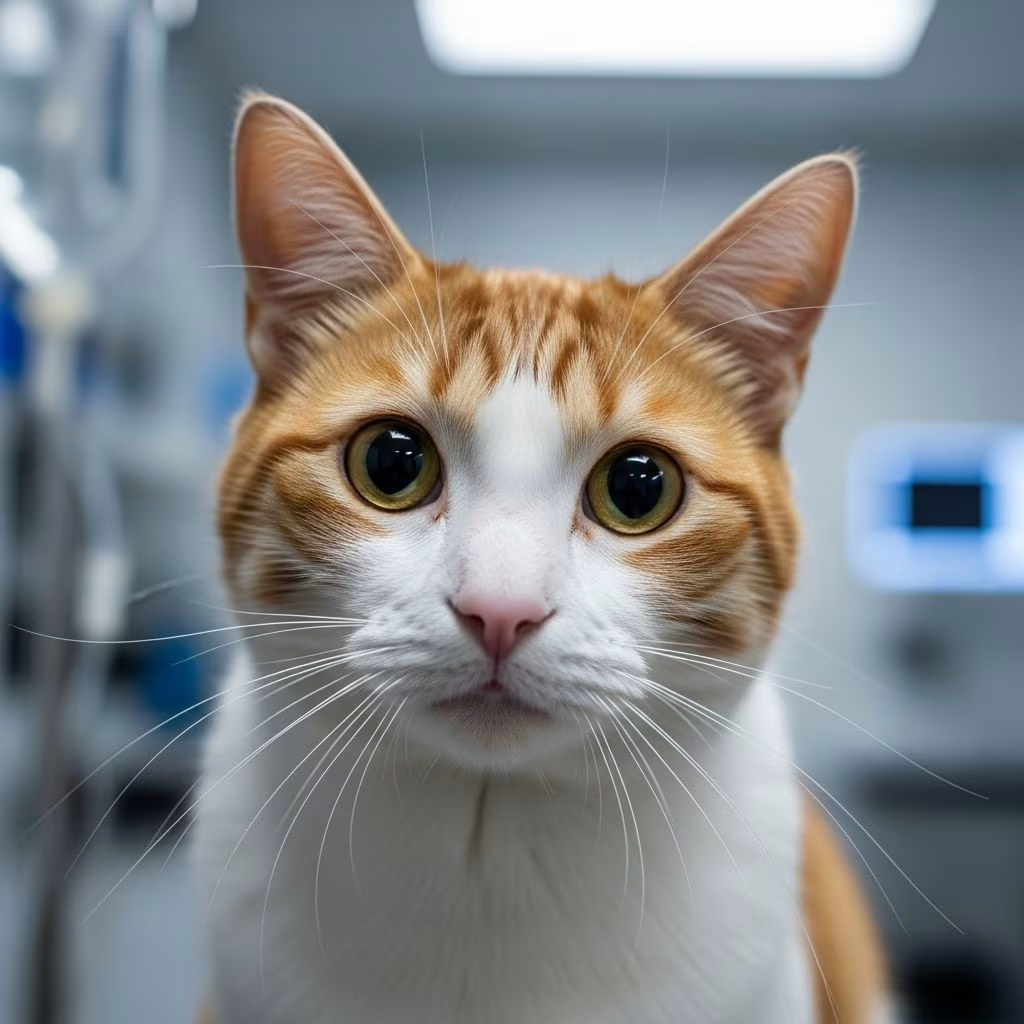
Yes, cats can receive kidney transplants as a treatment for end-stage chronic kidney disease (CKD) or irreversible acute renal failure, offering a potential lifeline when medical management fails.
Kidney transplantation in cats has evolved since the first successful procedure in 1987 at the University of California-Davis School of Veterinary Medicine. Veterinary centers across the U.S. have performed hundreds of these surgeries, with survival rates improving due to advances in microsurgery, immunosuppression, and patient selection.
What Is a Kidney Transplant for Cats?
A kidney transplant involves surgically removing a healthy kidney from a donor cat and implanting it into a recipient cat with failing kidneys. The donor kidney takes over filtration duties, potentially restoring normal kidney function and extending life.
Cats have two kidneys, but unlike humans, they can function with one. The transplant kidney is typically placed in the abdomen, connected to major blood vessels like the aorta and vena cava. This procedure requires microsurgical techniques to anastomose tiny vessels (1-2 mm in diameter).
The surgery addresses irreversible conditions where over 75% of kidney function is lost, as kidneys do not regenerate.
Indications: When Is a Kidney Transplant Recommended for Cats?
Kidney transplants are indicated for cats with decompensated CKD or acute irreversible renal failure despite aggressive medical therapy. Signs of decompensation include persistent weight loss, worsening anemia, azotemia (high blood urea nitrogen and creatinine), and poor response to fluids or diet.
Common underlying pathologies include:
- Chronic interstitial nephritis (most common, ~48% of cases)
- Polycystic kidney disease (~10%)
- Ethylene glycol or lily toxicity (~9%)
- Renal fibrosis (~6%)
- Other: glomerulonephritis, pyelonephritis, amyloidosis, oxalate nephrosis, renal dysplasia
Early intervention in decompensated stages yields better outcomes than waiting for full end-stage crisis.
Candidate Selection: Who Qualifies for a Feline Kidney Transplant?
Not all cats are suitable candidates. Thorough screening ensures only viable patients proceed, maximizing success.
Recipient Criteria:
- Irreversible kidney failure confirmed by diagnostics (CBC, chemistry panel, urinalysis, urine culture, T4)
- No concurrent severe diseases (e.g., heart disease, cancer, uncontrolled hypertension, infections)
- Negative urine cultures (or resolved after cyclosporine challenge and antibiotics for pyelonephritis)
- Stabilized with IV fluids/meds pre-surgery
Contraindications (Table of Conditions Precluding Transplant):
| Condition | Reason |
|---|---|
| Chronic pyelonephritis (recurrent UTIs) | Risk of donor kidney infection |
| Neoplasia (cancer) | Immunosuppression worsens progression |
| Cardiac disease | Anesthesia/surgery risks too high |
| Uncontrolled hypertension | Vascular complications |
| FIV/FeLV positive | Increased infection risk with immunosuppressants |
Pre-op stabilization often involves hospitalization for fluids, anti-nausea meds, and blood pressure control.
Donor Selection for Cat Kidney Transplants
Donors are healthy, young adult cats (typically 1-5 years old) from shelters or the recipient’s household. Key requirements:
- Blood cross-match compatible (no reaction between donor RBCs and recipient serum)
- Free of diseases (FeLV/FIV negative, normal bloodwork, imaging)
- Left kidney preferred for surgical ease
Recipients’ owners must adopt the donor cat post-surgery, ensuring lifelong care. No euthanasia for donors.
Advanced techniques like Carrel patch allow use of kidneys with multiple arteries, simplifying anastomosis and reducing thrombosis risk.
The Feline Kidney Transplant Procedure
The surgery occurs at specialized centers equipped for microsurgery. Performed under general anesthesia, it takes 4-6 hours.
Steps:
- Donor Nephrectomy: Harvest left kidney with Carrel patch (aortic cuff including renal arteries) using 9-0/10-0 nylon sutures. Vein and ureter preserved.
- Recipient Preparation: Remove native kidneys if needed (not always); expose aorta between renal and mesenteric arteries, caudal vena cava.
- Implantation: Anastomose renal artery end-to-side to aorta (simple continuous/interrupted 8-0-10-0 nylon); vein to vena cava (7-0 silk continuous). Ureteroneocystostomy for ureter.
- Close: Monitor reperfusion; cats recover in ICU.
Both donor and recipient survive surgery in >90% cases with experienced teams.
Success Rates and Outcomes of Cat Kidney Transplants
Success is high: 90-92% of cats survive to discharge; 60-70% alive at 1 year; median survival 360-613 days (up to 6+ years reported).
Improvements stem from better immunosuppression (cyclosporine), infection control, and risk factor identification. Many cats die from unrelated causes years later.
UC-Davis early series: 71% discharge, 51% 1-year survival; now higher anecdotally.
Post-Operative Care After Feline Kidney Transplant
Intensive monitoring for 1-2 weeks: IV fluids, pain control, antibiotics, immunosuppressants (cyclosporine lifelong).
- Watch for rejection (fever, azotemia), infection, thrombosis, hypertension.
- Weekly bloodwork initially, then monthly.
- Low-protein renal diet, blood pressure meds if needed.
- Donor recovers quickly, monitored similarly.
Owners manage meds at home; compliance key to success.
Cost of Kidney Transplants for Cats
Costs range $15,000-$25,000 USD, covering screening, surgery, hospitalization (1-2 weeks), meds, follow-ups. Varies by center; not typically insured.
Includes donor care/adoption. Worth it for quality time gained (average 2-3 years).
Where Can Cats Get Kidney Transplants?
Limited to specialized veterinary teaching hospitals:
| Institution | Location | Notes |
|---|---|---|
| University of Pennsylvania (Penn Vet) | Philadelphia, PA | 90% discharge, 60-70% 1-year survival |
| UC-Davis | Davis, CA | Pioneered in 1987; hundreds performed |
| Others | Various | Contact for current programs |
Frequently Asked Questions (FAQs)
Can any cat get a kidney transplant?
No, only those with end-stage CKD/acute failure, no comorbidities, after thorough screening.
How long do cats live after a kidney transplant?
Median 2-3 years; some 6-13 years. 90% survive surgery, 70% at 1 year.
Do I have to adopt the donor cat?
Yes, to ensure its welfare post-donation.
What are the risks of feline kidney transplant?
Rejection, infection, thrombosis, hypertension; mitigated by immunosuppression and monitoring.
Is kidney transplant better than dialysis for cats?
Transplant offers better long-term function; dialysis not widely available for cats.
References
- A Carrel patch technique for renal transplantation in cats — The American College of Veterinary Surgeons. 2017-09-01. https://pubmed.ncbi.nlm.nih.gov/28858383/
- Screening and medical management of feline kidney transplant candidates — dvm360. N/A. https://www.dvm360.com/view/screening-and-medical-management-feline-kidney-transplant-candidates
- Insights into Feline Kidney Transplants — Today’s Veterinary Practice (Lillian R. Aronson, VMD, Diplomate ACVS). N/A. https://todaysveterinarypractice.com/urology-renal-medicine/insights-into-feline-kidney-transplants/
- You are not a cat, but a cat could someday help treat your chronic kidney disease — Wake Forest University School of Medicine. 2021-04-01. https://newsroom.wakehealth.edu/news-releases/2021/04/you-are-not-a-cat-but-a-cat-could-someday-help-treat-your-chronic-kidney-disease
- Is A Kidney Transplant Right For My Cat? — AAHA. N/A. https://www.aaha.org/resources/is-a-kidney-transplant-right-for-my-cat/
- Renal Transplantation — University of Pennsylvania School of Veterinary Medicine. N/A. https://www.vet.upenn.edu/ryan-hospital/clinical-services/advanced-urinary-care/renal-transplantation/
- Feline Kidney Transplantation – General Information — University of Wisconsin School of Veterinary Medicine. N/A. https://www.vetmed.wisc.edu/wp-content/dss/mcanulty/felinekidneytransplant/generalinfo.html



