

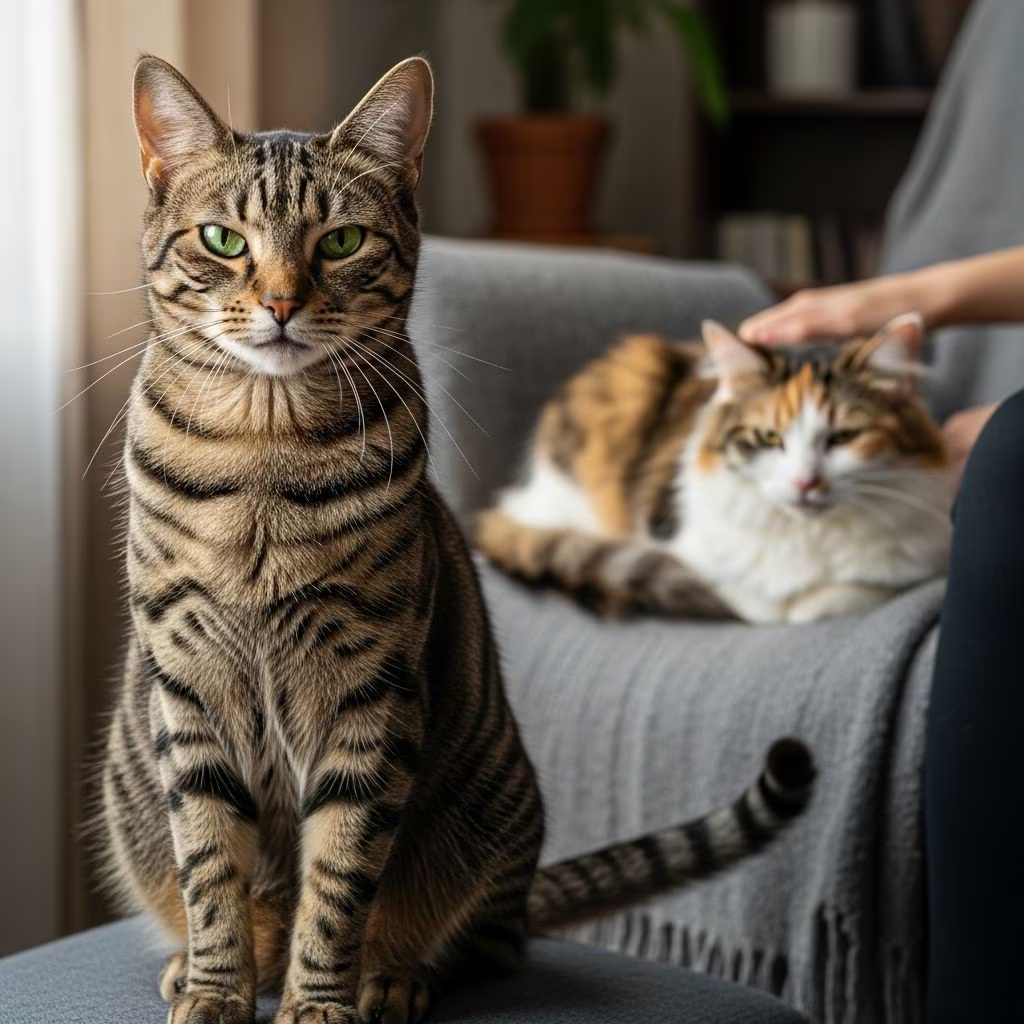
Cats are often seen as independent creatures, but many owners notice behaviors that resemble human jealousy when new pets, babies, or changes disrupt their world. While cats don’t feel jealousy exactly like humans, they exhibit stress responses to threats against their resources, territory, or attention from owners. These reactions stem from their territorial instincts and social dynamics, leading to aggression, attention-seeking, or destructive actions.
Table of Contents
- Signs of Jealousy in Cats
- What Causes Jealousy in Cats?
- The Science Behind Cat Jealousy
- Types of Jealousy in Cats
- How to Manage Jealousy in Cats
- Frequently Asked Questions
Signs of Jealousy in Cats
Recognizing jealousy in cats starts with observing sudden changes in behavior. Common indicators include aggressive displays toward perceived rivals, excessive demands for attention, and stress-related habits. These signs help owners differentiate normal feline quirks from emotional distress.
- Hissing, growling, swatting, or scratching: Directed at new pets, people, or objects stealing attention. This territorial defense asserts dominance.
- Attention-seeking: Cats may wedge themselves between you and the rival, sit on your lap during interactions, or block paths to demand focus.
- Destructive behavior: Knocking items off shelves, chewing furniture, or shredding fabrics as outlets for frustration.
- Marking territory: Urinating outside the litter box or spraying to reclaim spaces like beds or furniture.
- Increased vocalization or clinginess: Excessive meowing, hiding, or overgrooming signals anxiety and a plea for reassurance.
- Litter box avoidance: Stress protests or resource guarding manifest as inappropriate elimination.
These behaviors often intensify in multi-pet homes or after life changes. A table summarizes key signs for quick reference:
| Behavior | What It Means | Example |
|---|---|---|
| Hissing/Swatting | Territorial defense | Swatting a new dog approaching you |
| Blocking/Inserting | Attention-seeking | Sitting on your keyboard while you pet another cat |
| Destructive Actions | Frustration outlet | Knocking over vases |
| Marking/Spraying | Reclaiming space | Urine on your bed after a guest visits |
| Overgrooming/Hiding | Anxiety response | Excessive licking leading to bald spots |
What Causes Jealousy in Cats?
Jealousy-like behaviors arise from disruptions to a cat’s stable world. Cats thrive on predictability, and anything shifting attention, resources, or hierarchy can trigger possessiveness.
- New pets: Introducing another cat, dog, or small animal sparks competition for food, space, and affection. Resident cats view newcomers as intruders.
- New baby or children: Babies demand time and change routines; unfamiliar kids may overwhelm sensitive cats.
- Changes in owner attention: Work demands, new partners, or even phone use redirect focus, leaving cats feeling insecure.
- Resource scarcity: Limited litter boxes, toys, or prime spots in multi-cat homes fuel rivalry.
- Environmental shifts: Moving, new furniture, or routine alterations cause stress.
- Lack of socialization: Under-socialized cats react more possessively to changes.
- Health issues: Pain or mobility limits (e.g., arthritis preventing bed access) breed resentment toward agile rivals.
Genetics play a role too—some breeds like Bengals or Siamese are more vocal and attention-oriented, amplifying reactions.
The Science Behind Cat Jealousy
Do cats truly feel jealousy? Experts clarify it’s not identical to human emotion but a complex stress response involving resource guarding, anxiety, and fear of change. Observations mirror human jealousy behaviors: monitoring rivals and protective actions.
Unlike dogs, studied extensively for attachment (e.g., via secure base tests), cat research lags. However, behavioral parallels suggest emotional depth. Vets note cats show possessiveness when bonds are threatened, akin to primate hierarchies.
Key insights:
- Not pure emotion: More accurately, territorial instincts and insecurity drive displays.
- Stress physiology: Elevated cortisol from disruptions leads to aggression or withdrawal.
- Social structure: Cats form loose hierarchies; perceived demotions trigger defense.
While lacking fMRI studies on cats, ethologists like Dr. John Bradshaw affirm cats experience nuanced feelings based on survival-adapted behaviors.
Types of Jealousy in Cats
Cat specialists categorize jealousy as aggression subtypes tied to social dynamics.
- Status-induced aggression: Cats assert dominance via blocking access, aggressive stares, spraying touched items, or solicit-then-bite patterns. Stems from anxiety over control.
- Resource guarding: Hoarding food, toys, or lap time; escalates to swatting rivals.
- Redirected aggression: Frustration from inaccessible stressors (e.g., window birds) vents on owners or pets.
In multi-cat homes, hierarchy disruptions amplify these, especially post-maturity in kittens.
How to Manage Jealousy in Cats
Addressing jealousy requires patience, enrichment, and prevention. Never punish— it worsens stress. Focus on reassurance and equity.
- Provide ample resources: One litter box per cat +1, multiple feeding stations, vertical spaces.
- Gradual introductions: Use scent swapping, supervised meetings for new pets.
- Extra play/attention: Daily sessions with each cat individually to rebuild bonds.
- Enrichment: Puzzle feeders, cat trees, window perches combat boredom.
- Pheromone diffusers: Feliway calms anxiety.
- Consult vets: Rule out health issues; behaviorists for persistent cases.
- Maintain routines: Consistent schedules minimize triggers.
Success stories abound: Owners report harmony restored via separate ‘safe zones’ and equal treats. Monitor progress; severe aggression warrants professionals.
Frequently Asked Questions (FAQs)
Do cats really get jealous like humans?
No, but they show similar stress behaviors from resource threats or attention shifts, interpreted as jealousy.
What are the most common signs of a jealous cat?
Hissing, blocking, destruction, marking, and clinginess top the list.
Can a new baby trigger jealousy in cats?
Yes—routine changes and attention diversion often provoke reactions; prepare with pre-baby desensitization.
How do you stop a jealous cat from attacking new pets?
Slow intros, resources, playtime, and supervision; pheromones help.
Is cat jealousy a sign of health problems?
Possibly—pain limits access, mimicking jealousy; vet check first.
This comprehensive guide empowers cat owners to decode and diffuse jealousy, fostering a peaceful home. Early intervention prevents escalation into chronic stress.
References
- How I’m Managing a Jealous Cat in My Multi-Cat Home — Petful. 2023. https://www.petful.com/behaviors/cats-jealous-of-each-other/
- Do Cats Get Jealous? Understanding Cat Behavior & Emotions — Purina. 2024. https://www.purina.com/articles/cat/behavior/understanding-cats/do-cats-get-jealous
- Vet’s 2025 Guide: Do Cats Get Jealous? — Ask A Vet. 2025-01-01. https://askavet.com/blogs/news/vet-s-2025-guide-do-cats-get-jealous-%F0%9F%90%B1
- Do Cats Get Jealous? Exploring Feline Emotions and Social Dynamics — Kinship. 2024. https://www.kinship.com/cat-behavior/jealousy-in-cats
- Do Cats Get Jealous? — WebMD. 2024. https://www.webmd.com/pets/cats/do-cats-get-jealous
- 9 Signs Your Pet Is Jealous (and How to Stop It) — PetMD. 2024. https://www.petmd.com/dog/behavior/9-signs-your-pet-jealous-and-how-stop-it
- How to Identify and Fix Jealous and Aggressive Behavior in Cats — Neater Pets. 2023. https://neaterpets.com/blogs/news/identify-fix-jealous-aggressive-behavior-cats-dogs



