

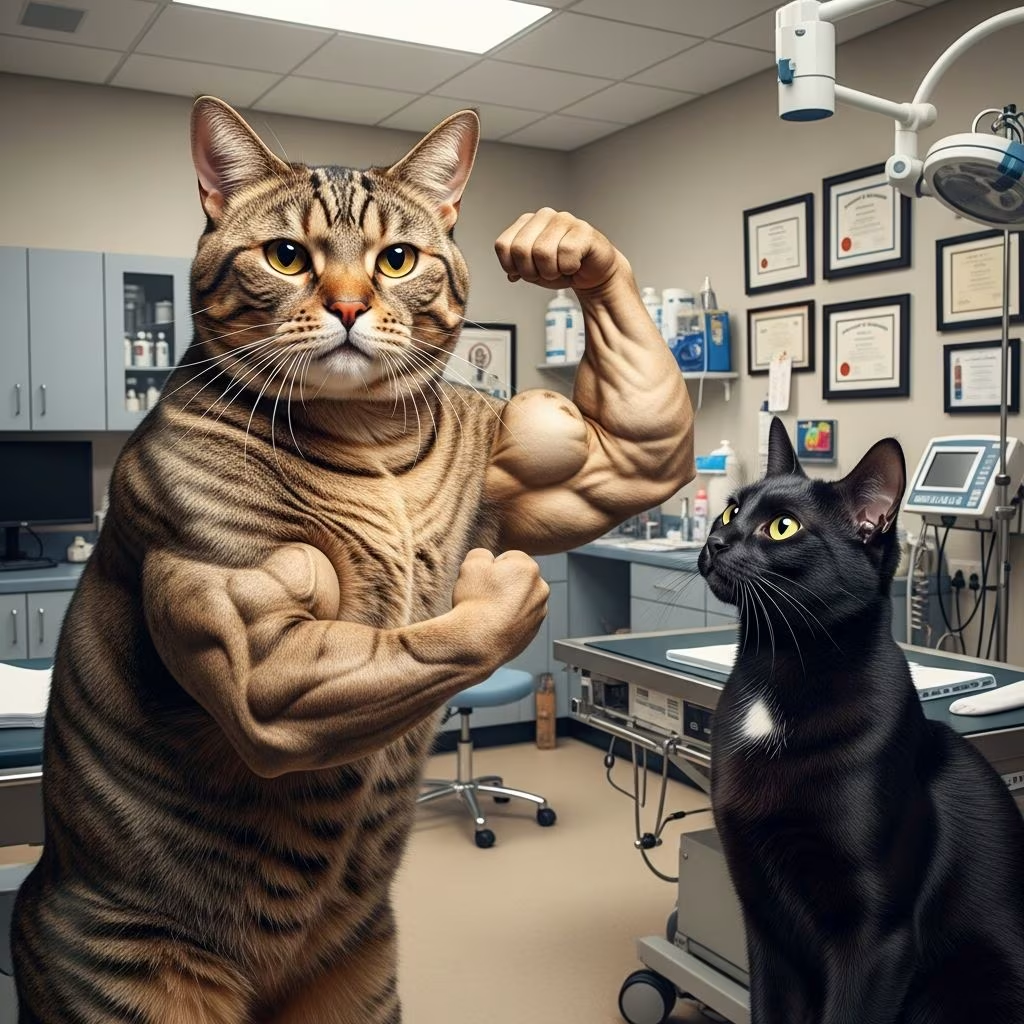
Can Cats Get “Jacked” From Steroids? The Matt Damon Story
When actor Matt Damon appeared on a popular late-night talk show, he shared an amusing anecdote about his cat that sparked considerable curiosity among pet owners. According to Damon’s account, his feline companion had become severely ill after moving to New York in 2021, losing significant weight and displaying concerning behavioral changes such as walking in circles. After seeking emergency veterinary care at a prestigious animal medical center, a renowned cat neurologist suggested an unconventional treatment approach: administering a substantial dose of steroids. Fast-forwarding to the present day, Damon jokingly claimed his cat had become remarkably muscular, comparing the feline’s physique to that of Arnold Schwarzenegger with “muscles on muscles.” This lighthearted celebrity anecdote inevitably led pet owners and cat enthusiasts alike to wonder: could this actually happen to their own cats?
The Reality: Separating Fact From Fiction
The simple answer to whether cats can develop muscular physiques from steroid treatment is: no, not in the way the popular story suggests. However, the complete picture is more nuanced and worth exploring in detail. Veterinary professionals consistently clarify that while steroids play a crucial role in feline medicine, they do not function as performance-enhancing substances that build visible muscle mass in cats.
Dr. Gabrielle Fadl, a New York City-based veterinarian, confirms that the story about Matt Damon’s cat was indeed a joke rather than a literal description of pharmaceutical reality. The steroids used in veterinary medicine for cats are primarily glucocorticoids, particularly prednisolone, which operate through entirely different mechanisms than the anabolic steroids that build muscle tissue in bodybuilders and athletes.
Understanding Glucocorticoids vs. Anabolic Steroids
To comprehend why cats cannot develop visible muscularity from veterinary steroids, it’s essential to understand the fundamental differences between the two primary categories of steroids.
Glucocorticoids
Glucocorticoids are the steroids routinely prescribed in veterinary practice. These substances reduce inflammation and can serve chemotherapeutic functions, often used in conjunction with other treatments to help shrink tumors or diminish inflammation associated with neoplastic conditions. Prednisolone and prednisone represent the most commonly administered glucocorticoids in feline medicine. Their primary purpose centers on managing inflammatory conditions, suppressing immune responses when necessary, and treating various medical emergencies.
Anabolic Steroids
Anabolic steroids, by contrast, are synthetic derivatives of testosterone engineered to promote muscle growth and development. These substances are administered in veterinary medicine only in select cases where serious muscle deterioration has developed as a complication of an underlying disease. The mechanisms are entirely distinct from glucocorticoids: anabolic steroids work by diffusing through cell membranes and binding to specific receptor proteins, ultimately stimulating the production of messenger RNA that regulates enzyme synthesis responsible for muscle tissue development. Veterinarians rarely utilize anabolic steroids in routine feline care, reserving their use for specific therapeutic circumstances where muscle wasting requires intervention.
How Glucocorticoids Actually Affect Feline Physiology
Rather than building muscle, glucocorticoids produce effects that are, in many ways, opposite to the desirable outcomes that anabolic steroids create. Understanding these actual effects provides insight into why the Damon story, while entertaining, represents pure fiction.
Short-Term Side Effects
When cats begin glucocorticoid treatment, veterinarians typically observe several immediate changes:
- Significantly increased thirst and urination patterns
- Dramatically increased hunger and appetite
- General loss of energy and lethargy
- Development or worsening of existing infections, particularly bacterial infections
- Panting, which is a common response to corticosteroid treatment
These short-term effects are generally manageable and tend to resolve once the medication is discontinued, particularly when treatment duration remains brief.
Long-Term Side Effects
Prolonged glucocorticoid administration produces more serious and potentially irreversible complications that directly contradict the idea of enhanced muscularity:
- Muscle weakness and wasting: Rather than building muscle, prolonged corticosteroid use leads to muscle weakness secondary to protein catabolism (breakdown), particularly affecting older cats
- Development of thin skin and poor hair coat: Cats often experience hair loss, thinning skin, and deterioration of coat quality
- Poor wound healing ability: The immune-suppressive effects impair the body’s capacity to heal injuries efficiently
- Obesity and weight gain: While steroids increase appetite and cats consume more food, any weight gain consists primarily of fat rather than muscle tissue
- Potbelly appearance: Many long-term steroid users develop a characteristic “potbelly” appearance as visceral fat accumulates
- Calcinosis cutis: Hard plaques or calcium deposits develop in the skin, representing a distinctive and sometimes severe complication of chronic steroid use
- Endocrine disorders: Cats face increased predisposition to diabetes mellitus and may develop Cushing’s disease with prolonged use
- Cardiovascular complications: Long-term high-dose steroid treatment can result in elevated blood pressure and even heart failure
- Suppressed immune function: Cats become more susceptible to both opportunistic and secondary bacterial and fungal infections
- Behavioral changes: Some cats exhibit altered behavior including increased agitation, aggression, or depression
Why Veterinarians Prescribe Glucocorticoids Despite Side Effects
Given the substantial side effect profile, pet owners might wonder why veterinarians prescribe these medications at all. The answer lies in their potent therapeutic benefits and the clinical situations where benefits substantially outweigh risks.
Primary Medical Indications
Veterinarians utilize glucocorticoids across numerous clinical scenarios:
- Reducing inflammation associated with various inflammatory conditions
- Treating autoimmune and allergic disorders
- Managing cancer and reducing tumor size through anti-inflammatory mechanisms
- Addressing Addison’s disease, where the cat’s adrenal glands fail to produce adequate natural steroids
- Treating severe infections and emergency conditions where anti-inflammatory effects prove life-saving
- Managing respiratory and joint inflammatory conditions
The “Hail Mary” Approach
In cases like Matt Damon’s cat, where conventional treatments have failed and the situation appears dire, veterinarians may employ glucocorticoids as a last-resort intervention. Dr. Fadl describes this approach accurately: “If there’s nothing else to do, we can just try steroids.” While this strategy carries significant risks and potential for long-term complications, it represents a legitimate therapeutic option when all other avenues have been exhausted and euthanasia otherwise looms as the alternative.
Minimizing Steroid-Related Side Effects in Cats
When glucocorticoid treatment becomes necessary, veterinarians and cat owners can implement several strategies to reduce the severity and frequency of adverse effects.
Dosage Optimization
The frequency and duration of steroid administration significantly impacts side effect development. Research indicates that transitioning cats to every-other-day dosing, or ideally less than twice weekly or weekly dosing, substantially reduces observable side effects. Some veterinarians have even documented improvement in pre-existing complications through dosage reduction alone.
Dietary Management
A balanced, high-quality diet helps manage weight gain and other metabolic side effects associated with corticosteroid treatment. Pet owners should monitor caloric intake carefully and discuss appropriate feeding strategies with their veterinarian.
Exercise and Activity
Regular, appropriate exercise helps maintain muscle mass and prevent excessive muscle wasting in cats undergoing long-term corticosteroid therapy. However, exercise recommendations should be tailored to individual cats’ abilities and energy levels, which may be compromised by steroid-induced lethargy.
Infection Prevention
Because corticosteroids suppress immune function, maintaining current vaccinations and minimizing exposure to sick animals becomes critical. Prompt veterinary attention to any signs of infection helps prevent serious secondary complications.
What About Naturally Muscular Cats?
While veterinary steroids cannot create visibly muscular cats, some felines are naturally more muscular than others. Certain cat breeds and individual animals display more prominent musculature due to genetics, activity level, and body composition. However, distinguishing between natural muscularity and the effects of steroid-induced weight gain presents a genuine challenge in feline physiology, particularly since cats possess significant skin that can obscure underlying muscle definition.
A truly “jacked” cat—displaying the kind of prominent musculature seen in athletic dog breeds like Pit Bulls—remains largely a theoretical concept in feline medicine. The skin structure and body composition of cats simply don’t allow for the same visible muscle definition that certain dog breeds display. Additionally, the metabolic effects of glucocorticoids directly oppose muscle development, making this outcome even more unlikely.
The Bottom Line for Cat Owners
The story about Matt Damon’s cat represents an entertaining anecdote and illustrates how celebrity narratives can spawn persistent myths about veterinary medicine. However, the scientific reality remains clear and consistent: glucocorticoids, the steroids actually used in feline veterinary practice, do not and cannot create muscular cats. Instead, prolonged use of these medications carries substantial risks including muscle wasting, weight gain, skin complications, and serious systemic effects.
When veterinarians prescribe steroids for cats, they do so to treat serious medical conditions where the anti-inflammatory and immunosuppressive benefits substantially outweigh the risks. Pet owners should never seek steroid treatment as a way to enhance their cat’s physique and should carefully follow veterinary guidance regarding dosage, duration, and monitoring when steroids become medically necessary.
Frequently Asked Questions (FAQs)
Q: Did Matt Damon’s cat actually get muscular from steroids?
A: No, this was a joke. While Damon’s cat did receive steroid treatment as an emergency intervention, the “jacked” appearance he described humorously was not a real physiological effect of the medication.
Q: What steroids do vets actually prescribe for cats?
A: Veterinarians primarily prescribe glucocorticoids, particularly prednisolone and prednisone, which reduce inflammation and suppress immune responses. These differ fundamentally from anabolic steroids used for muscle building.
Q: Can glucocorticoid steroids help my cat build muscle?
A: No, in fact glucocorticoids do the opposite. Prolonged use can lead to muscle wasting, weakness, and protein breakdown rather than muscle development.
Q: What are the most serious side effects of long-term steroid use in cats?
A: Serious complications include diabetes mellitus, heart failure, suppressed immune function leading to infections, calcinosis cutis (calcium deposits in skin), Cushing’s disease, and poor wound healing.
Q: How can I minimize steroid side effects if my cat needs this treatment?
A: Work with your veterinarian to optimize dosage frequency (every-other-day or less is ideal), maintain a balanced diet, ensure appropriate exercise, and keep your cat up to date on vaccinations to prevent infections.
Q: How long can a cat safely take glucocorticoid steroids?
A: Short-term use (less than 10 days) is associated with minimal side effects that typically resolve quickly. Long-term use (more than 10 days) or higher doses significantly increase the risk of serious complications.
Q: When would a vet use steroids as a “Hail Mary” treatment?
A: Veterinarians use this approach when conventional treatments have failed and the cat faces a life-threatening condition with no other viable options, accepting the risks because the alternative may be euthanasia.
References
- Can Cats Get “Jacked” on Steroids? Matt Damon Says His Did — Kinship. 2024. https://www.kinship.com/cat-health/can-cats-have-jacked-muscles-from-steroids
- Steroid Treatment – Effects in Cats — VCA Animal Hospitals. 2025. https://vcahospitals.com/know-your-pet/steroid-treatment-long-term-effects-in-cats
- Steroid Treatment for Cats: Uses, Side Effects & Avoiding Misuse — PetCareRx. 2024. https://www.petcarerx.com/article/steroid-treatment-for-cats-when-its-used-and-what-are-its-side-effects/6598
- Steroids – Your Vet Wants You to Know — Your Vet Wants You to Know. 2024. https://yourvetwantsyoutoknow.com/steroids/
- Anabolic Steroids for Animals – Pharmacology — Merck Veterinary Manual. 2025. https://www.merckvetmanual.com/pharmacology/systemic-pharmacotherapeutics-of-the-muscular-system/anabolic-steroids-for-animals
- Prednisone and Prednisolone for Cats: Uses, Dosage, Side Effects — GoodRx. 2024. https://www.goodrx.com/pet-health/cat/prednisolone
- Side Effects Of Injectable and Oral Steroids In Cats — Trudell Animal Health. 2025. https://trudellanimalhealth.com/blogs/blog/side-effects-of-injectable-and-oral-steroids-in-cats



