

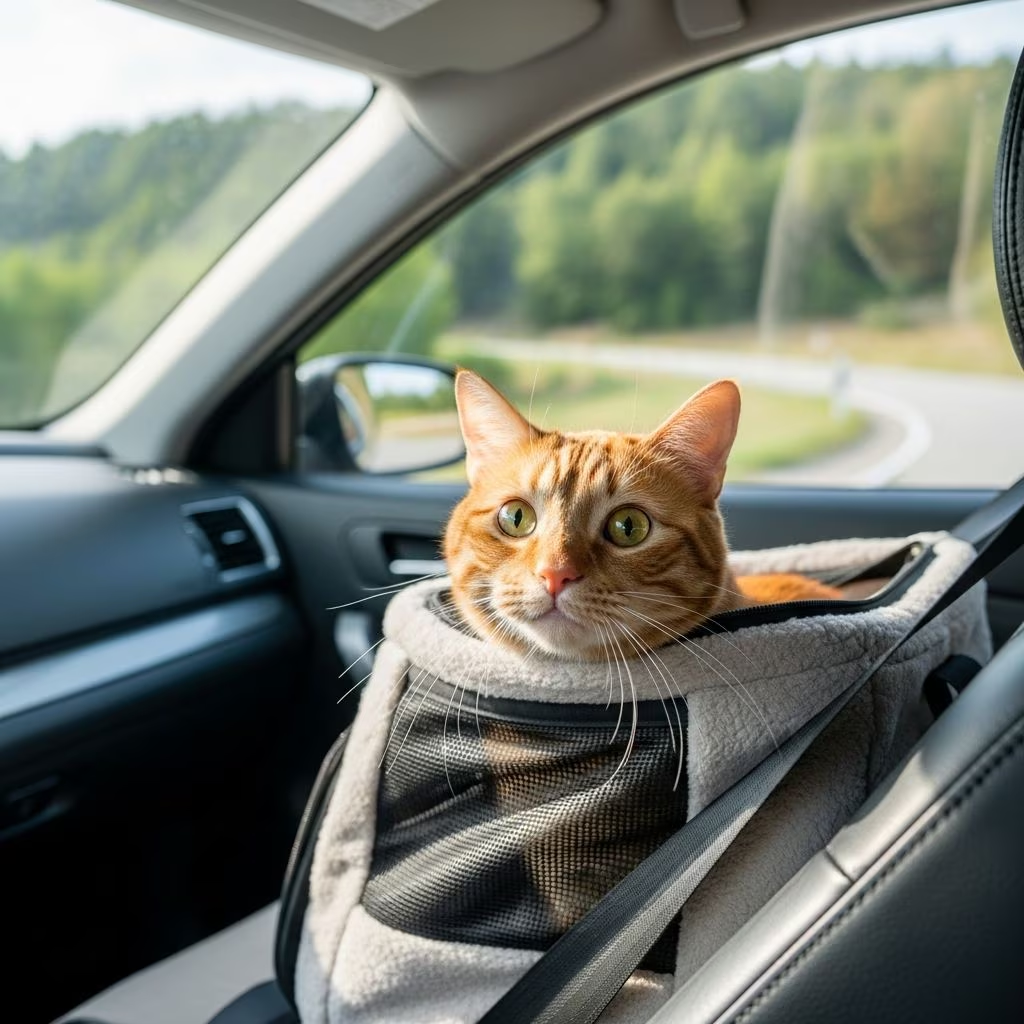
Cats can indeed experience car sickness, often manifesting as nausea, vomiting, drooling, or distress during vehicle travel. This condition stems primarily from stress, anxiety, and sensory conflicts in the inner ear, making car rides challenging for many felines.
Quick Answer: Yes, Cats Can Get Car Sick
Unlike dogs that often enjoy car trips, most cats associate vehicles with stressful events like vet visits, leading to motion sickness symptoms. The inner ear sends mismatched signals to the brain about motion, compounded by unfamiliar sounds, smells, and confinement, triggering nausea.
Why Do Cats Get Car Sick?
Car sickness in cats arises from a combination of physiological and psychological factors. The primary physiological cause is motion sickness from the inner ear’s vestibular system, where balance signals conflict with visual input, confusing the brain and inducing nausea.
Psychologically, cats rarely travel by car, viewing it as a threat. Stress from carriers, engine noise, or anticipation of discomfort amplifies symptoms, even before movement begins. Rare cases may involve underlying health issues, warranting a vet check.
- Inner Ear Conflict: Vestibular mismatch causes true motion sickness.
- Stress and Anxiety: Novelty and negative associations trigger nausea.
- Sensitivity Variations: Some cats are genetically more prone to motion intolerance.
Signs Your Cat Is Car Sick
Recognizing car sickness early allows for intervention. Common symptoms include:
- Vomiting: The most frequent sign, often shortly after starting the drive.
- Excessive Drooling: Salivation as a nausea precursor.
- Loud Vocalization: Meowing, yowling, or howling from discomfort.
- Lethargy or Depression: Unusual tiredness or hiding post-trip.
- Diarrhea or Defecation: Severe gastrointestinal upset in intense cases.
- Other Signs: Yawning, panting, whining, or restlessness.
Symptoms may appear before motion or persist after stopping if stress-related. Panting in cool conditions signals anxiety over heat.
How to Prevent Car Sickness in Cats
Prevention focuses on desensitization, comfort, and reducing stimuli. Gradual exposure builds positive associations, minimizing stress.
Carrier Training
Make the carrier a daily safe space: leave it out with treats, toys, and bedding. Feed meals inside to create comfort. Gradually close the door for short periods.
Gradual Car Introduction
Progress from sitting in the stationary car to short drives. Reward calm behavior with treats or play upon return. Repeat until relaxed.
Travel Day Tips
- Withhold food 2-4 hours before travel to prevent vomiting, but ensure hydration.
- Use pheromone sprays like Feliway in the carrier for calming effects.
- Cover carrier partially with a blanket to block visuals and muffle noise.
- Maintain cool ventilation; avoid direct AC blasts.
- Secure carrier on the seat facing you for reassurance.
- Play soft music or white noise to soothe.
- Take frequent breaks on long trips for fresh air and relief.
| Prevention Strategy | Why It Works | Implementation Tip |
|---|---|---|
| Carrier Conditioning | Reduces fear of confinement | Daily treats inside for 1-2 weeks |
| Pheromone Products | Mimics calming cat scents | Spray 15 min before travel |
| Short Practice Drives | Builds tolerance gradually | Start with 5-min trips |
| Breaks Every 1-2 Hours | Allows recovery from motion | Let cat stretch safely |
Treatment for Car Sick Cats
If prevention fails, treatments address nausea and anxiety. Symptoms from motion often resolve post-stop within 30 minutes; stress-induced ones may linger.
- Over-the-Counter Aids: Pheromone diffusers or calming treats.
- Prescription Meds: Consult a vet for Cerenia (anti-vomiting), gabapentin (anxiety/nausea), or sedatives. These are often off-label but effective.
- During Travel: Stop safely, offer cool water, or use a fan for fresh air.
Never medicate without vet advice, as some human drugs like Dramamine are ineffective or unsafe for cats.
When to See a Vet
Seek professional help if sickness persists despite prevention, occurs without travel, or accompanies weight loss, lethargy, or appetite changes. Rule out ear infections, vestibular disease, or GI issues.
Vets may recommend diagnostics or tailored meds. Conditioning overcomes many cases long-term.
Frequently Asked Questions (FAQs)
Can all cats get car sick?
Most can, but frequency varies. Kittens and seniors are more susceptible due to developing or declining vestibular systems.
Does car sickness improve with age?
Yes, through repeated positive exposure and conditioning, many cats adapt over time.
Is there a cure for motion sickness in cats?
No full cure, but it’s manageable with training and meds. It rarely indicates serious illness.
Can car sickness be fatal?
No, it’s uncomfortable but not life-threatening. Dehydration from repeated vomiting warrants monitoring.
Is motion sickness contagious?
No, though shared motion may affect humans similarly.
How long does car sickness last after a trip?
Motion-related: 30 minutes; stress-related: hours, easing in a familiar environment.
Long Trips with Cats: Advanced Tips
For vacations or moves, plan ahead: use airline-approved carriers for flights if needed, but focus on road prep. Hydrate frequently during stops, avoid feeding large meals pre-trip, and consider travel anxiety vests.
Test routines weeks in advance. Some cats thrive with window views; others prefer darkness. Observe preferences during training.
Conclusion
With patience, most cats can enjoy or at least tolerate car travel. Start training early, use vet-recommended tools, and prioritize comfort for stress-free journeys. Your feline companion will thank you with purrs instead of pukes.
References
- Do cats get car sick? Prevention and treatment — SingleCare. 2023-05-15. https://www.singlecare.com/blog/do-cats-get-car-sick/
- Motion Sickness in Cats: 10 Tips to Help a Car Sick Cat — Bond Vet. 2024-02-10. https://bondvet.com/blog/motion-sickness-in-cats
- Motion Sickness in Cats – Cat Owners — Merck Veterinary Manual. 2025-01-01. https://www.merckvetmanual.com/cat-owners/brain-spinal-cord-and-nerve-disorders-of-cats/motion-sickness-in-cats
- Help Cats Battle Carsickness — Fear Free Happy Homes. 2023-08-20. https://www.fearfreehappyhomes.com/help-cats-battle-carsickness/
- Car Sick Pets — BLVD Vet Chicago. 2024-03-12. https://www.blvd.vet/blog/car-sick-pets
- Carsickness and Motion Sickness in Cats — Small Door Veterinary. 2024-06-05. https://www.smalldoorvet.com/learning-center/wellness/carsickness-cats
- Motion Sickness in Cats – Causes, Treatment — Vetster. 2023-11-18. https://vetster.com/en/conditions/cat/motion-sickness-in-cats



