

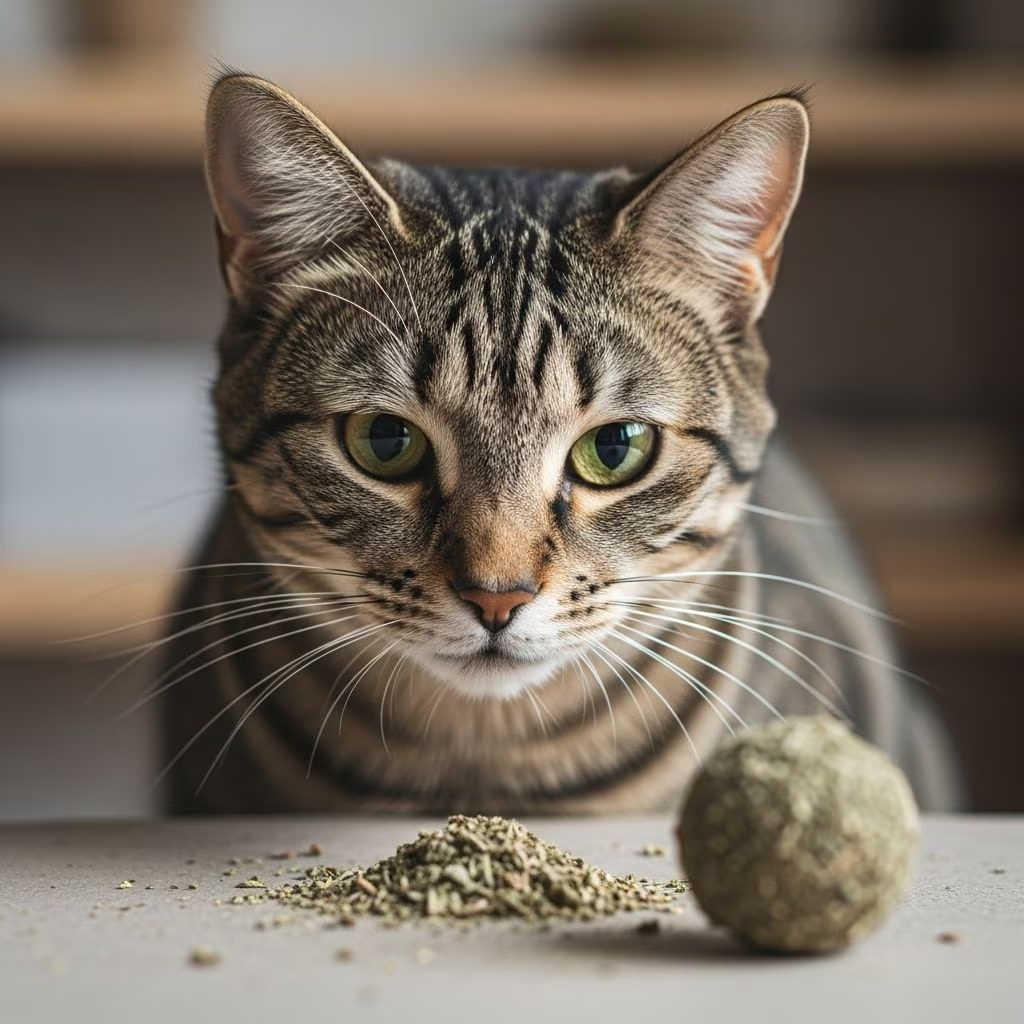
Catnip, known scientifically as Nepeta cataria, captivates many cats with its irresistible allure, prompting playful antics and euphoric displays. But can cats truly get addicted to it? The short answer is no—cats do not develop addiction to catnip like humans do to substances such as opioids or nicotine. Instead, they experience temporary euphoria driven by nepetalactone, a volatile oil that mimics feline pheromones and triggers endorphin release without leading to dependency or withdrawal.
This article delves into the science behind catnip’s effects, typical behaviors observed, safety concerns, potential for tolerance, overdose risks, and effective alternatives. Understanding these aspects helps cat owners enrich their pets’ lives safely while dispelling myths.
What Is Catnip and How Does It Affect Cats?
Catnip belongs to the mint family, Lamiaceae, and contains nepetalactone, a terpenoid responsible for its psychoactive properties in cats. This compound is produced through a unique two-step enzymatic process in the plant: first, an activation enzyme forms an intermediate, followed by a cyclization enzyme that creates the final nepetalactone structure. Unlike typical plant terpenes formed by a single enzyme, this process mirrors mechanisms in pharmaceutical plants like those producing vinblastine for chemotherapy.
When cats sniff catnip, nepetalactone binds to receptors in their nasal tissue, stimulating sensory neurons. This interaction prompts the release of endorphins—natural opioids that induce pleasure—via the cat’s internal opioid system. Effects onset within seconds and last 5-15 minutes, characterized by a refractory period of 1-2 hours before sensitivity returns. Not all cats respond; genetic factors determine sensitivity, with about 68-70% of domestic cats affected, similar to inheritance patterns of certain feline traits. Kittens under 6-8 weeks and some seniors show little to no reaction.
Typical Catnip-Induced Behaviors in Cats
Cats exhibit a predictable sequence of behaviors when exposed to catnip, primarily driven by olfaction rather than taste. Common responses include:
- Sniffing and rubbing the face, chin, or cheeks against the plant.
- Head shaking and rolling on the back.
- Licking, biting, and chewing the material.
- Drooling and kicking with hind feet.
- A wavelike skin motion over the back as muscles contract and relax.
These actions resemble sexual or territorial behaviors, possibly an evolutionary response where nepetalactone mimics feline pheromones, encouraging rolling to mark territory or deter insects. Intensity varies: younger cats often show intense responses (88% vs. 65% in older cats), with milder effects in seniors. The response is short-lived, transitioning to relaxation or normal activity without lingering impairment.
Can Cats Get Addicted to Catnip? The Science Says No
Despite dramatic reactions, catnip does not cause addiction. Cats lack the neural pathways for dependency seen in mammals abusing opioids or stimulants. Nepetalactone triggers endorphin release, but the body’s tight regulation prevents overuse or withdrawal symptoms. Repeated exposure may lead to mild habituation—reduced response over time—rather than tolerance requiring higher doses.
Studies confirm no opioid-like withdrawals occur, even with frequent use. A study on 100 domestic cats found 94% responded to at least one plant stimulant (including catnip), with no evidence of craving or negative behaviors post-exposure. Researchers note cats become desensitized, not addicted, making catnip a safe enricher. This aligns with observations in big cats like tigers, who also respond positively without dependency.
Is Catnip Safe for Cats? Risks and Precautions
Catnip is non-toxic and safe when sniffed or used in moderation. The ASPCA lists it as harmless, with no long-term health risks. Ingesting small amounts may cause mild digestive upset like vomiting or diarrhea, but fatal overdose is impossible due to self-limiting effects.
| Exposure Method | Effects | Safety Level |
|---|---|---|
| Sniffing | Euphoria, playfulness | Completely safe |
| Chewing/Eating (small amounts) | Mild GI upset possible | Generally safe |
| Excessive ingestion | Vomiting, diarrhea | Rare, self-resolves |
Precautions include offering dried or toy-infused catnip to minimize ingestion, storing it securely to prevent overindulgence, and monitoring kittens or sensitive cats. Nepetalactone also repels mosquitoes naturally, adding incidental benefits without flea/tick efficacy.
Does Catnip Build Tolerance in Cats Over Time?
Mild tolerance can develop with daily exposure, where cats require breaks for sensitivity to reset. The 1-2 hour refractory period exemplifies this short-term reset. Long-term, habituation occurs as olfactory receptors adapt, reducing euphoria intensity. Rotating with alternatives prevents this, maintaining enrichment value. No escalation to harmful doses happens, unlike true addictions.
Catnip Alternatives for Non-Responders
About 30-32% of cats ignore catnip. Effective substitutes target similar receptors:
- Silver Vine (Actinidia polygama): Highest response rate (79%), potent due to actinidine and nepetalactones. Fruit galls elicit strongest reactions.
- Tatarian Honeysuckle (Lonicera tatarica): Wood sawdust triggers 68% response.
- Valerian Root (Valeriana officinalis): Actinidine-rich, affects 80% of non-catnip responders.
These overlap in efficacy; 94% of cats respond to at least one. Big cats like tigers react similarly, suggesting conserved mechanisms across Felidae.
Frequently Asked Questions (FAQs)
What chemical in catnip makes cats go crazy?
Nepetalactone, produced via a two-step enzymatic process, binds nasal receptors to release endorphins.
How long do catnip effects last?
Typically 5-15 minutes, followed by a 1-2 hour refractory period.
Can kittens have catnip?
Kittens under 6-8 weeks usually don’t respond; introduce gradually after.
Is catnip addictive for cats?
No, it causes habituation, not addiction or withdrawal.
What if my cat eats too much catnip?
Mild vomiting or diarrhea may occur but resolves quickly; no overdose risk.
Why doesn’t my cat react to catnip?
Genetic non-responsiveness affects ~30%; try silver vine.
Conclusion: Safe Feline Fun Without the Hook
Catnip offers harmless joy, backed by science showing no addiction risk. Use it for enrichment, rotate with alternatives, and enjoy your cat’s bliss responsibly. (Word count: 1678)
References
- Scientists reveal how chemical that drives cats ‘crazy’ is produced — University of York. 2018-12-10. https://www.york.ac.uk/news-and-events/news/2018/research/how-chemical-that-drives-cats-crazy-is-produced/
- Responsiveness of cats (Felidae) to silver vine (Actinidia polygama … — PMC (NCBI). 2017-03-15. https://pmc.ncbi.nlm.nih.gov/articles/PMC5356310/
- Does Catnip Make Cats High? — PetMD. Recent (post-2023). https://www.petmd.com/cat/general-health/does-catnip-make-cats-high
- Is Catnip a Mind-Altering Drug For Cats? An Expert Explains — ScienceAlert. Recent. https://www.sciencealert.com/is-catnip-a-mind-altering-drug-for-cats-an-expert-explains
- Are catnip and treats like it safe for cats? Here’s how they affect their … — University of Melbourne. Recent. https://findanexpert.unimelb.edu.au/news/74658-are-catnip-and-treats-like-it-safe-for-cats%3F-here’s-how-they-affect-their-minds-and-moods
- Why Do Cats Go Wild for Catnip? — AACT ChemMatters. 2025-10. https://teachchemistry.org/chemmatters/october-2025/why-do-cats-go-wild-for-catnip



