

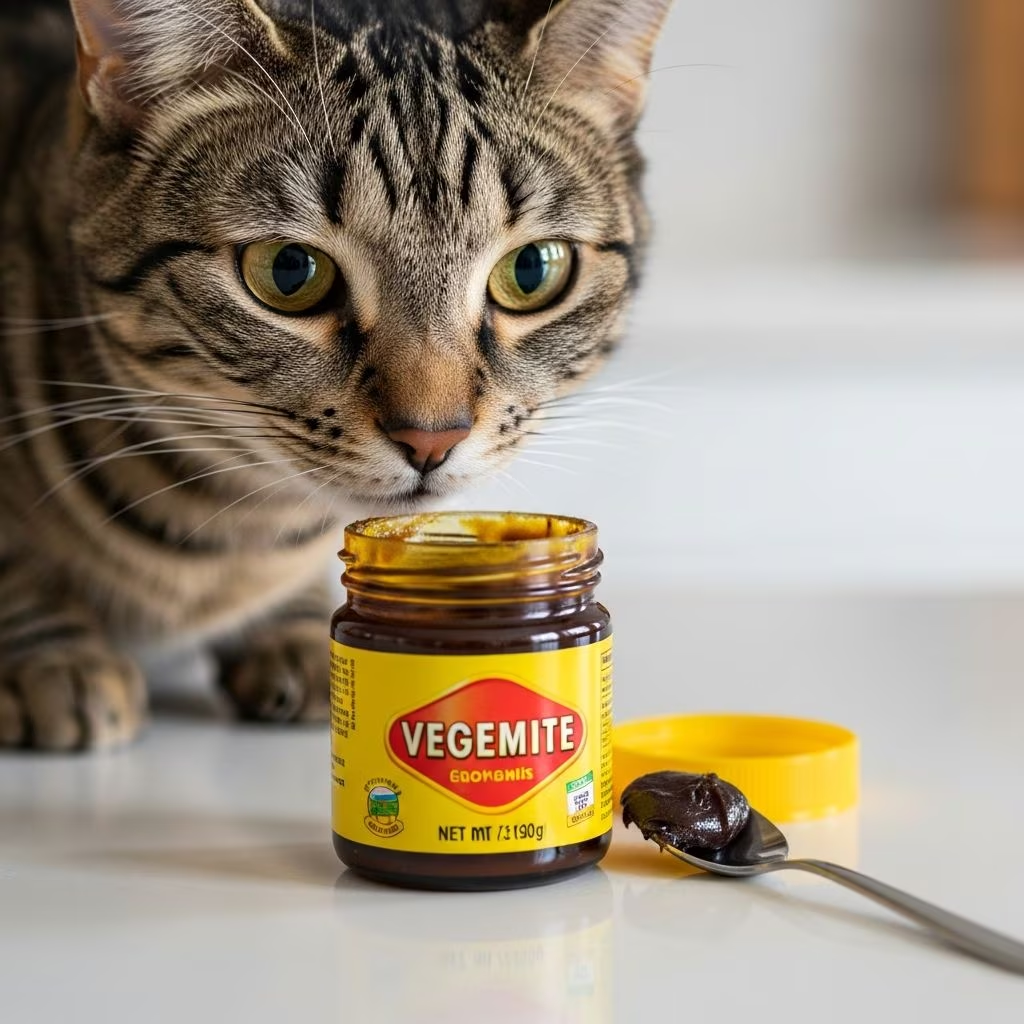
Vegemite, the iconic Australian yeast extract spread rich in B vitamins and salt, is a human favorite but poses significant risks for cats. Cats are obligate carnivores with specific nutritional needs that Vegemite does not meet and may harm due to its high sodium content and inappropriate nutrient profile.
What Is Vegemite?
Vegemite is a thick, dark brown paste made from brewer’s yeast extract, vegetable extracts, malt extract from barley, and added salt and spices. It provides concentrated B vitamins like thiamine, riboflavin, niacin, and folate, along with minimal protein and fat. Per 5g serving, it contains about 690mg of sodium, which is roughly 30% of the daily recommended intake for humans but dangerously high for cats.
While marketed as a nutritious spread for toast or sandwiches, its composition—primarily yeast byproducts and salt—makes it unsuitable for feline consumption. Cats lack the metabolic pathways to efficiently process many plant-derived nutrients, relying instead on animal-based proteins for essential amino acids like taurine and arachidonic acid.
Can Cats Eat Vegemite?
No, cats should not eat Vegemite. Although small amounts might not cause immediate harm in healthy adults, it offers no nutritional benefit and carries risks, especially for kittens, seniors, or cats with health conditions. Veterinary consensus emphasizes that cats require meat-based diets high in protein (around 40-50% of calories), moderate fat, and low carbohydrates (1-2% ideally), which Vegemite contradicts with its high salt and yeast base.
- High Sodium Content: A single lick could exceed a cat’s daily sodium needs, risking toxicity symptoms like vomiting, diarrhea, lethargy, tremors, or seizures.
- Yeast Extract: Can ferment in the gut, potentially causing bloating or alcohol poisoning in rare cases.
- Plant-Based: Lacks bioavailable taurine, preformed vitamin A, and other carnivore essentials.
Nutritional Breakdown of Vegemite for Cats
Vegemite’s nutrients sound impressive for humans but are mismatched for cats. Here’s a comparison of key components against feline requirements:
| Nutrient | Vegemite (per 5g) | Cat Daily Need (Adult 4kg) | Issue for Cats |
|---|---|---|---|
| Sodium | 690mg | ~50-100mg | Excess leads to hypertension, kidney strain |
| Protein | 1g | 10-15g minimum | Plant/yeast protein poorly utilized |
| B Vitamins (e.g., B1, B2) | High | Required, but synthetic forms less bioavailable | |
| Taurine | 0mg | 200-500mg | Absent; critical for heart/eyes |
| Carbs | 1g | Minimal (1-2% diet) | Cats synthesize glucose from protein |
Cats cannot convert plant beta-carotene to vitamin A or absorb B12 efficiently from non-animal sources, making Vegemite an inadequate supplement. Studies confirm cats digest carbs well up to 35% but thrive on low-carb, high-protein diets mimicking wild prey.
Health Risks of Feeding Vegemite to Cats
Sharing Vegemite might seem harmless, but risks escalate quickly:
- Sodium Toxicity: Symptoms include increased thirst, urination, vomiting, and in severe cases, hypernatremia affecting the brain.
- Digestive Upset: Yeast can cause gas, diarrhea; high salt draws water into intestines.
- Nutrient Imbalance: Displaces essential animal proteins, risking taurine deficiency (dilated cardiomyopathy, blindness).
- Long-Term Issues: Repeated exposure linked to obesity, diabetes from carb-heavy treats, though Vegemite is low-carb.
Recent studies challenge strict carnivore myths, showing some vegan cat foods maintain health via supplements, with lower disorder rates (37% vs 42% in meat-fed). However, Vegemite isn’t formulated for cats—it’s not a complete vegan diet—and lacks taurine/B12 bioavailability. Guardian reports indicate vegan-fed cats had normal taurine in 82% cases, but only with balanced commercial formulas, not spreads like Vegemite.
What to Do If Your Cat Eats Vegemite
If your cat consumes Vegemite:
- Assess amount: Tiny taste (under 1g) likely fine; monitor for 24-48 hours.
- Watch symptoms: Vomiting, lethargy, tremors—contact vet immediately.
- Prevent dehydration: Offer fresh water; avoid forcing milk.
- Seek vet care: For >1g or symptoms, induce vomiting if advised, or blood tests for sodium levels.
Early intervention prevents complications; most recover fully from small ingestions.
Healthier Alternatives to Vegemite for Cats
Skip Vegemite; opt for cat-safe treats:
- Commercial Cat Treats: Low-sodium, taurine-enriched (e.g., freeze-dried meat).
- Plain Cooked Meat: Chicken, turkey (no seasoning)—high protein, moisture.
- Commercial Wet Food: 60-87% moisture, palatable, balanced.
- Vet-Approved Supplements: Taurine chews if needed, not yeast extracts.
For B-vitamin boosts, rely on AAFCO-approved complete diets. Wet foods aid hydration, crucial for kidney health. Grain-inclusive diets provide fiber benefits without excess carbs.
Frequently Asked Questions (FAQs)
Is a small amount of Vegemite okay for my cat?
A tiny lick occasionally unlikely to harm healthy adults, but not recommended. Risks outweigh zero benefits.
Why can’t cats have salty foods like Vegemite?
Cats’ kidneys handle less sodium; excess causes toxicity.
Can Vegemite replace cat food nutrients?
No—lacks taurine, arachidonic acid, preformed vitamin A.
Are there vegan options safe for cats?
Some commercial vegan diets show health parity or better if supplemented properly, per studies. Vegemite isn’t one.
What is the ideal cat diet?
High animal protein (45%+ ME), moderate fat, low carb (<10% ME), with all essentials like taurine.
Conclusion: Keep Vegemite for Humans
Vegemite delights humans but endangers cats due to salt, nutrient gaps, and carnivore biology. Prioritize balanced, meat-based or properly supplemented diets for thriving felines. Consult vets for personalized advice.
References
- Commercial vs Homemade Cat Diets: What you need to know — Journal of Feline Medicine and Surgery. 2022. https://journals.sagepub.com/doi/10.1177/1098612X221090389
- The Dangers of Vegetarian & Vegan Diets in Cats — Woof Doctor Vet. N/A. https://www.woofdoctor.vet/vegetarian-cats/
- Vegan versus meat-based cat food: Guardian-reported health outcomes — PLOS ONE. 2023. https://journals.plos.org/plosone/article?id=10.1371/journal.pone.0284132
- Cats and Carbohydrates: The Carnivore Fantasy? — PMC/NCBI. 2017-12-20. https://pmc.ncbi.nlm.nih.gov/articles/PMC5753635/
- Study finds cats on plant-based diet tend to be healthier — ProVeg International. N/A. https://proveg.org/press-release/study-finds-cats-on-plant-based-diet-tend-to-be-healthier-than-those-fed-meat/
- Feeding Your Cat: Know the Basics of Feline Nutrition — CatInfo.org. N/A. https://catinfo.org
- Vegan diet healthier for cats than meat according to new survey — University of Winchester. N/A. https://www.winchester.ac.uk/news-and-events/press-centre/media-articles/vegan-diet-healthier-for-cats-than-meat-according-to-new-survey.php



