

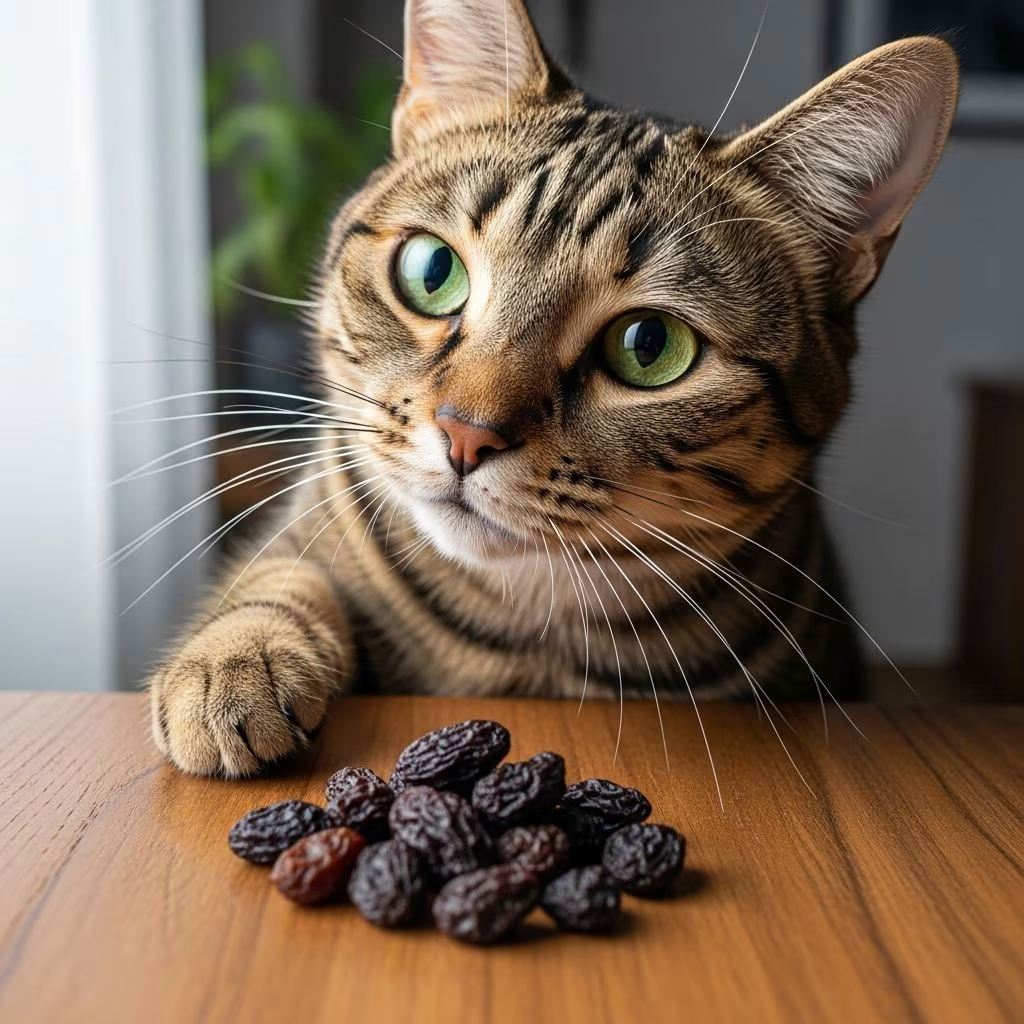
Raisins are a popular human snack, but they are highly toxic to cats and should never be fed to them under any circumstances. Even small amounts can lead to severe health issues, including acute kidney failure, which may be fatal if not treated promptly.
The Dangers of Raisins for Cats
Raisins, derived from grapes, contain unidentified toxins that cats cannot process safely. While the precise mechanism remains under investigation, recent theories point to tartaric acid—a compound in grapes responsible for cream of tartar—as a likely culprit. Cats metabolize foods differently from humans, making seemingly harmless treats like raisins potentially deadly.
Unlike dogs, where raisin toxicity is more frequently documented, cats are generally more selective eaters, reducing incidence rates. However, curiosity or opportunistic scavenging can lead to ingestion, and no cat is immune. Toxicity is unpredictable: some cats react severely to just one or two raisins, while others tolerate more without immediate symptoms. Factors like individual sensitivity, age, health status, and concurrent conditions influence outcomes.
Ingestion triggers rapid physiological damage, primarily targeting the kidneys. Within 6-12 hours, gastrointestinal distress begins, progressing to renal impairment in 24-72 hours. Untreated cases escalate to oliguric or anuric kidney failure, where urine production halts, leading to toxin buildup, electrolyte imbalances, and multi-organ failure. Statistics from veterinary reports indicate mortality rates up to 50% in severe exposures without intervention.
Symptoms of Raisin Toxicity in Cats
Recognizing early signs is critical for timely intervention. Symptoms typically onset within 6-12 hours post-ingestion, starting mildly and intensifying rapidly.
- Vomiting: Often the first indicator, occurring within hours; may contain undigested raisins or bile.
- Diarrhea: Loose, watery stools, sometimes bloody in advanced stages.
- Lethargy and weakness: Cat appears unusually tired, reluctant to move, or hides excessively.
- Anorexia: Complete loss of appetite, refusing even favorite foods.
- Abdominal pain: Hunching, vocalizing when touched, or guarding the belly.
- Dehydration: Sunken eyes, dry gums, tacky mouth, skin tenting on scruff.
- Thirst and urination changes: Initial polydipsia (excessive drinking) and polyuria (frequent urination), progressing to oliguria (reduced urine) or anuria.
- Severe indicators: Tremors, seizures, coma, or halitosis from uremia (uremic breath).
Monitor closely if exposure is suspected, even without immediate symptoms, as delayed renal signs can appear suddenly.
What Happens If a Cat Eats Raisins?
Upon ingestion, toxins are absorbed through the gastrointestinal tract, entering the bloodstream and concentrating in the kidneys. Proximal renal tubular cells necrose, impairing filtration and reabsorption functions. This leads to acute kidney injury (AKI), classified by stages: Stage I (mild, reversible with prompt care), Stage II (moderate azotemia), up to Stage III (severe, dialysis-requiring).
Biochemical changes include elevated blood urea nitrogen (BUN), creatinine, phosphorus, and potassium. Urinalysis reveals casts, proteinuria, and glucosuria. In cats, smaller body size amplifies dose-per-kg toxicity; as little as 0.1-0.3g/kg raisins can provoke reactions, equivalent to 1-2 raisins for a 4kg cat.
Long-term survivors may develop chronic kidney disease (CKD), necessitating lifelong management. Prognosis hinges on ingestion amount, time to treatment, and pre-existing health—early decontamination yields >90% survival.
What to Do If Your Cat Eats Raisins
Immediate action is paramount—do not wait for symptoms. Contact a veterinarian or pet poison hotline (e.g., ASPCA at 888-426-4435) within minutes.
- Remove access: Confine cat and eliminate remaining raisins/grapes.
- Assess: Note amount ingested, time, cat’s weight, and observe mouth for residue.
- Decontaminate: Vet may induce emesis (if <2 hours post-ingestion), administer activated charcoal, or perform gastric lavage.
- Supportive care: IV fluids (aggressive diuresis), antiemetics (maropitant), gastroprotectants (sucralfate), and monitoring (bloodwork, urine output).
- Hospitalization: 48-72 hours for serial labs, ECG, and renal support; dialysis in extreme cases.
Home remedies like hydrogen peroxide or milk are dangerous—never attempt without professional guidance.
Are Grapes and Other Dried Fruits Safe for Cats?
No—grapes, sultanas, currants, and all Vitis genus products are toxic, sharing the same nephrotoxic profile. Grape juice appears safer, lacking concentrated solids, but avoidance is advised.
Other dried fruits (e.g., apricots, prunes, dates, figs) are not acutely toxic but problematic: high sugar promotes obesity, diabetes, and dental issues; fiber causes diarrhea. Products like raisin bread, trail mix, cereals, muffins, or holiday mincemeat pies pose hidden risks.
| Food Item | Safe for Cats? | Risks |
|---|---|---|
| Raisins/Grapes | No | Kidney failure |
| Sultanas/Currants | No | Same as above |
| Apricots (dried) | Avoid | Sugar overload, GI upset |
| Dates/Figs | Avoid | Obesity, choking hazard |
| Cat treats/meat | Yes (moderation) | Nutritionally balanced |
How to Prevent Raisin Ingestion in Cats
Proactive measures minimize risks:
- Storage: Seal in high cabinets or fridge; use child-proof containers.
- Counter vigilance: Never leave out during meals; clean drops instantly.
- Education: Inform household/guests/kids; label pantries “No Pet Food.”
- Baking awareness: Isolate dough/products containing raisins.
- Environment: Use deterrents like citrus sprays on counters; train “leave it.”
- Alternatives: Offer vet-approved treats: freeze-dried meat, commercial kibble pieces.
Annual toxoplasmosis risk assessments and kidney health checks aid early detection.
Safe Treat Alternatives for Cats
Opt for feline-specific options comprising <10% daily calories:
- Plain cooked chicken/turkey (skinless, unseasoned).
- Commercial cat treats (low-cal, dental-focused).
- Fish like salmon (cooked, deboned; limit mercury-rich types).
- Vegetables: steamed green beans, cucumber slices (hydrating, low-sugar).
- Avoid dairy (lactose intolerance common), onions, chocolate, xylitol.
Consult vets for personalized diets, especially for seniors or CKD cats.
Frequently Asked Questions (FAQs)
Q: Can one raisin hurt my cat?
A: Yes, even a single raisin can trigger toxicity in sensitive cats due to unpredictable dosing. Seek vet care immediately.
Q: What if I’m unsure if my cat ate raisins?
A: Err on caution—call poison control or vet for monitoring advice; better safe than facing kidney failure.
Q: Are dogs affected similarly?
A: Yes, raisins are more commonly toxic in dogs, causing identical renal damage.
Q: Is raisin bread safe?
A: No—baked goods with raisins retain toxicity; yeast/dough adds fermentation risks.
Q: How quickly do symptoms appear?
A: Vomiting within 6-12 hours; renal signs in 24-48 hours.
Q: Can cats recover fully?
A: With prompt treatment, yes—many regain normal function, though monitoring is lifelong.
References
- Can Cats Eat Raisins? Dangers and What to Do — Dial A Vet. 2023. https://www.dialavet.com/blog/can-cats-eat-raisins
- Are Raisins Bad For Dogs & Cats? — Ark Wildlife. 2023. https://www.arkwildlife.co.uk/blogs/articles/why-are-raisins-so-bad-for-pets
- Raisin Toxicity in Dogs and Cats: What You Need to Know — Pawsquad. 2023. https://home.pawsquad.com/raisin-toxicity-in-dogs-and-cats-what-you-need-to-know/
- Can Cats Eat Grapes or Raisins? — Whisker (Litter-Robot). 2023. https://www.whisker.com/blog/can-cats-eat-grapes-or-raisins
- Grape and Raisin Poisoning in Cats — Joii Pet Care. 2023. https://www.joiipetcare.com/blogs/poisons/grape-and-raisin-poisoning-in-cats
- 8 Common Human Foods Poisonous to Cats — Vets Now. 2023-12-01. https://www.vets-now.com/2023/12/foods-poisonous-to-cats/
- Are Grapes or Raisins Toxic to Pets? — 30th Street Animal Hospital. 2021-08-15. https://eastindyvet.com/2021/08/15/are-grapes-or-raisins-toxic-to-pets/



