

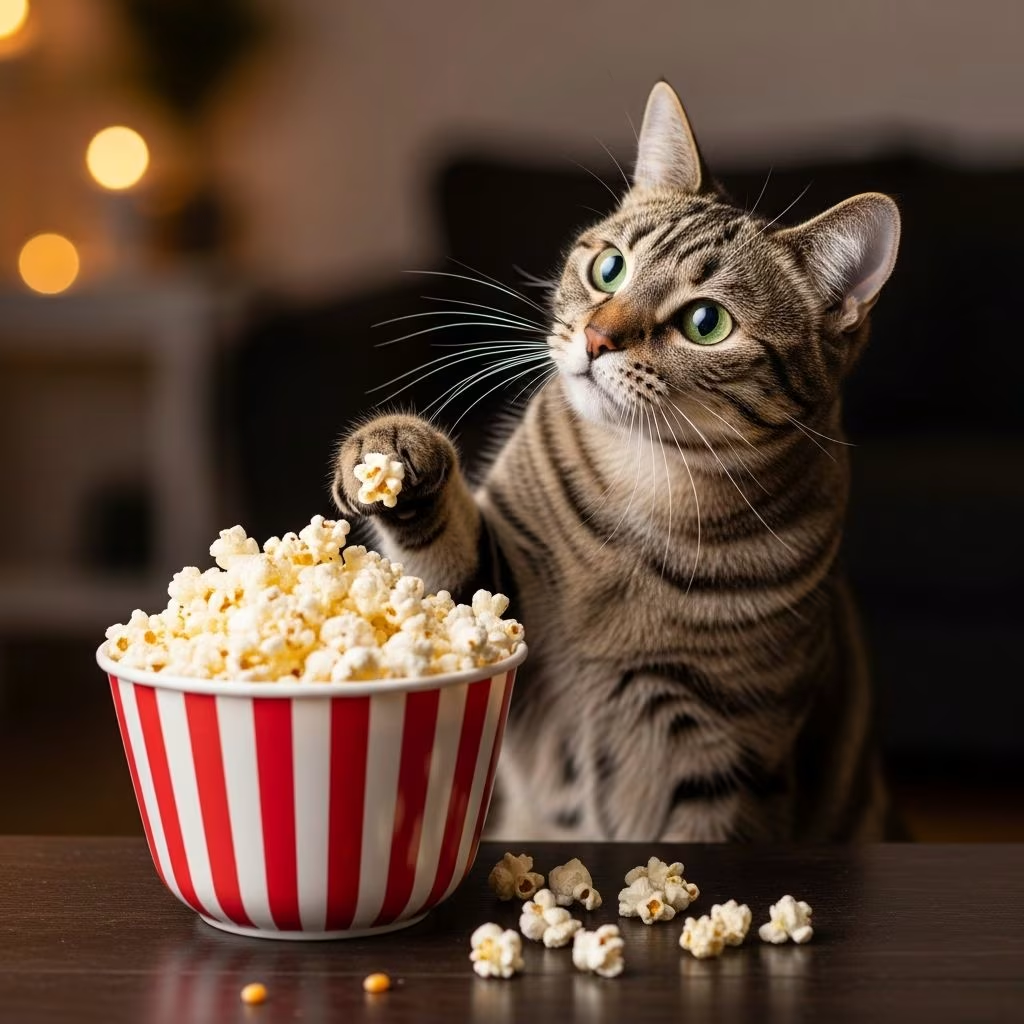
Popcorn is a popular human snack, but cat owners often wonder if it’s safe to share with their feline companions. The short answer is that plain, air-popped popcorn is not toxic to cats and can be given in very small amounts as an occasional treat. However, it provides no meaningful nutritional benefits for obligate carnivores like cats and comes with several potential risks, including choking, digestive upset, and issues from added flavors or toppings.
Cats derive their essential nutrients from animal-based proteins, not plant-based snacks like popcorn. While a few kernels won’t harm most healthy adult cats, flavored varieties with butter, salt, or oils can lead to vomiting, diarrhea, or more serious health problems. This comprehensive guide covers everything you need to know about feeding popcorn to cats, drawing from veterinary insights and nutritional science.
Is Popcorn Safe for Cats?
Plain popcorn itself is non-toxic to cats. Veterinary sources confirm that air-popped popcorn without additives poses minimal risk in tiny portions. However, “safe” doesn’t mean “recommended.” Cats are obligate carnivores, meaning their biology is optimized for meat-based diets rich in taurine, proteins, and fats—not carbohydrates and fiber from corn.
Popcorn kernels expand when popped, creating a light, airy texture that’s enjoyable for humans but problematic for cats. The hulls (outer shells) can be sharp and indigestible, potentially irritating the digestive tract. Flat-faced breeds like Persians or Scottish Folds face higher choking risks due to their facial structure.
- Plain air-popped popcorn: Safest option, limit to 1-5 kernels occasionally.
- Flavored or buttered popcorn: Avoid entirely due to high fat, salt, and additives.
- Microwave or store-bought: Often contains harmful preservatives, oils, and artificial flavors.
Nutritional Value of Popcorn for Cats
Popcorn offers trace amounts of vitamins (A, B, E, K) and minerals, plus carbohydrates and fiber, but these are irrelevant to feline nutrition. Cats cannot efficiently process plant-based nutrients and require animal-sourced taurine, arachidonic acid, and high-quality proteins.
Wild cats consume prey with less than 3% carbohydrates, while many commercial foods with corn exceed 30-50%, contributing to obesity and diabetes risks. Popcorn’s fiber can even hinder nutrient absorption from proper cat food.
| Popcorn Type | Fat per 100g (mg) | Sodium Concerns |
|---|---|---|
| Air-popped | 1 mg | Low |
| Oil-popped | 97 mg | Medium |
| Air-popped with butter | 45 mg | High |
| Oil-popped buttered | 109 mg | Very High |
| Cheese-flavored | 98 mg | Very High |
This table highlights why buttered or flavored popcorn is a poor choice—excess fat and sodium can cause immediate GI distress or long-term issues like heart disease.
Why Buttered Popcorn Is Bad for Cats
Butter turns low-calorie popcorn into a high-fat treat loaded with cholesterol. Even small amounts can trigger vomiting, diarrhea, or pancreatitis in cats. Regular indulgence leads to obesity, arterial plaque, and cardiovascular problems.
Salt in seasoned popcorn exacerbates dehydration and hypertension risks. Veterinary experts advise sticking to 2-5 plain kernels max for high-sodium varieties, but plain is always preferable. Greasy toppings overwhelm a cat’s short digestive tract, designed for quick protein processing, not fats.
Risks of Feeding Popcorn to Cats
Beyond additives, plain popcorn carries inherent dangers:
- Choking hazard: Light, irregular shapes can lodge in airways. Coughing or gagging requires immediate vet intervention, possibly Heimlich maneuver.
- Fiber overload: Cats need negligible fiber; excess causes malabsorption, bloating, and loose stools.
- Unpopped kernels: Hard and sharp, leading to constipation, blockages, or dental fractures.
- Allergies: Rare but possible; watch for itching, swelling, or GI symptoms. Consult a vet first.
- Obesity and diabetes: Carbs spike blood sugar unsuited to feline metabolism.
PetMD notes that while popcorn won’t kill cats, large quantities risk obstruction or aspiration.
When Cats Should Not Eat Popcorn
Certain cats must avoid popcorn entirely:
- Kittens: Developing digestive systems can’t handle hulls or fiber; risk of malnutrition.
- Senior cats: Sensitive stomachs prone to constipation or vomiting.
- Sick or recovering cats: Bland diets (e.g., chicken/rice) needed; popcorn stresses digestion.
- Pregnant cats: GI upset could harm kittens; stick to vet-approved nutrition.
- Breeds with flat faces: Higher choking risk (e.g., Exotic Shorthairs).
If your cat shows disinterest in regular food, suspect illness—don’t offer popcorn.
How to Safely Feed Popcorn to Cats
If you choose to share, follow these rules:
- Pop plain kernels at home using air-popper—no oil, butter, or salt.
- Break into tiny pieces to minimize choking.
- Limit to 1-3 kernels per week for a 10-lb cat.
- Supervise eating; remove unpopped kernels.
- Monitor for reactions: vomiting, lethargy, or stool changes mean stop immediately.
Popcorn should never exceed 10% of calories; prioritize meat-based treats.
Healthier Alternatives to Popcorn for Cats
Opt for feline-friendly snacks:
- Freeze-dried meat treats: High protein, low carb (e.g., chicken, salmon).
- Cooked plain chicken or turkey: Shredded, unseasoned.
- Commercial cat treats: Vet-formulated with taurine.
- Steamed veggies: Tiny bits of carrot or pumpkin for fiber (sparingly).
- Dental chews: Better for tartar than popcorn.
These align with cats’ carnivorous needs, supporting muscle health, vision, and coat without risks.
Frequently Asked Questions (FAQs)
Can kittens eat popcorn?
No, kittens’ sensitive digestion can’t process the fiber or hulls, risking severe upset.
Is microwave popcorn safe for cats?
No, it contains oils, salts, and chemicals harmful to cats.
What if my cat ate a lot of popcorn?
Watch for choking, vomiting, or lethargy. Contact a vet if symptoms appear.
Does popcorn help cat dental health?
Minimal benefit; chewing provides light abrasion but risks outweigh gains. Use dental products.
Can popcorn cause allergies in cats?
Rarely, but corn allergies exist. Introduce slowly and observe.
In summary, while cats can technically eat small amounts of plain popcorn, it’s not worth the risks. Focus on species-appropriate nutrition for a healthy, happy feline.
References
- Can cats eat popcorn? Safety rules explained – Untamed Cat Food — Untamed. 2023. https://untamed.com/blogs/nutrition/can-cats-eat-popcorn
- Can Cats Eat Popcorn? Find Out The Truth! – Genius Litter — Genius Litter. 2023. https://geniuslitter.com/blogs/cat-nutrition/can-cats-eat-popcorn-find-out-the-truth
- Cats and Popcorn: Safe Feline Snack? – Bailey’s CBD — Bailey’s CBD. 2023. https://baileyscbd.com/blogs/cat-nutrition/cats-and-popcorn-safe-feline-snack
- Can Cats Eat Popcorn? – PetMD — PetMD. 2024-05-15. https://www.petmd.com/cat/nutrition/can-cats-eat-popcorn
- Can Cats Eat Popcorn? What About Buttered Popcorn? – HowStuffWorks — HowStuffWorks. 2023. https://animals.howstuffworks.com/pets/can-cats-eat-popcorn.htm



