

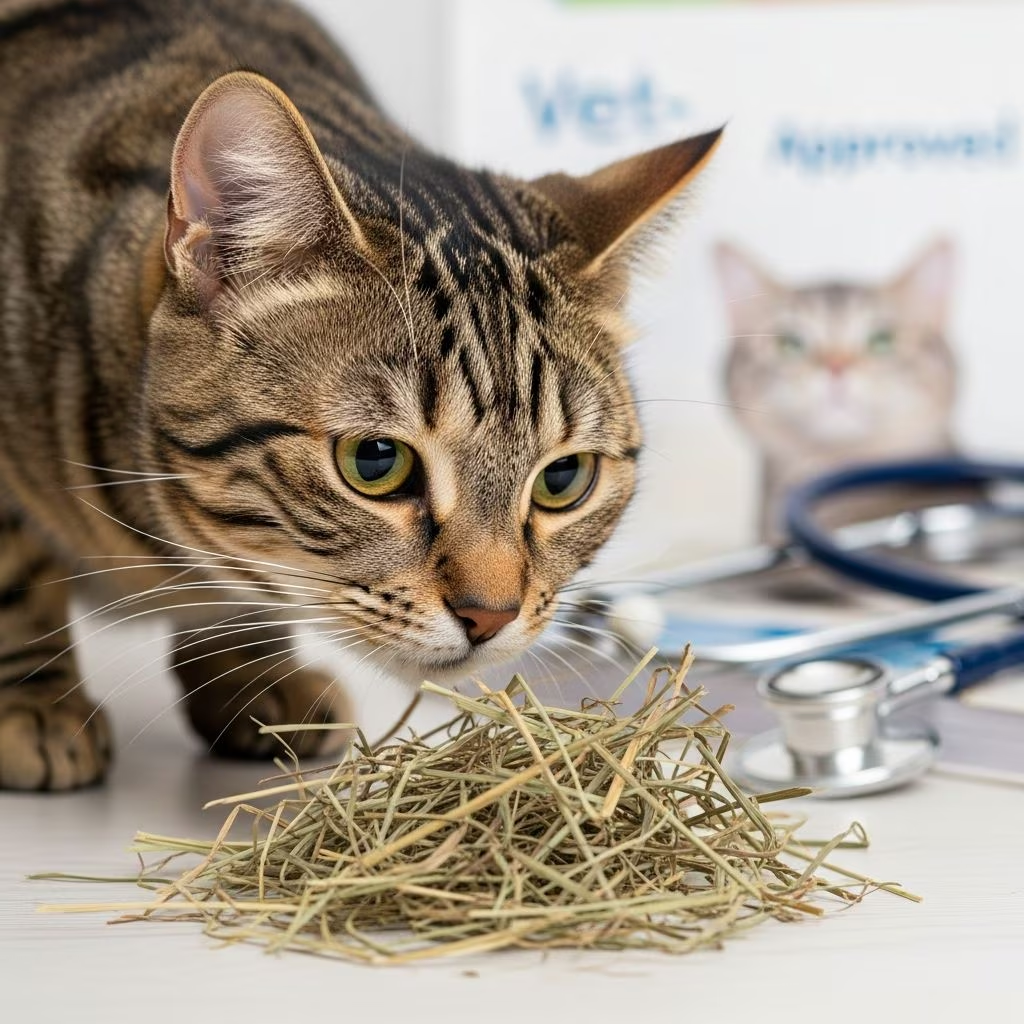
Can Cats Eat Hay? Understanding Feline Safety
As a cat owner, you may have noticed your feline companion displaying curious—and sometimes unusual—eating habits. If your cat has nibbled on hay, whether from a rabbit hutch, hamster bedding, or horse stable, you’ve probably wondered if this behavior is safe. The straightforward answer is that while hay is non-toxic to cats, it doesn’t mean your cat should regularly consume it.
Cats can safely eat small amounts of hay without experiencing toxic effects, but hay offers no nutritional benefits for felines and can cause digestive issues when consumed in larger quantities. Understanding why cats are attracted to hay and how to manage this behavior is essential for every pet owner with access to hay in their home.
Is Hay Toxic to Cats?
One of the primary concerns cat owners have is whether hay poses a toxicity risk. The good news is that hay, which is essentially dried grass, is not toxic to cats. However, this doesn’t mean it’s completely harmless in all quantities.
While hay may cause some digestive upset in large amounts, most cats won’t consume enough hay to create serious health problems. The real issue isn’t toxicity but rather digestive incompatibility. Cats that ingest excessive amounts of hay may experience diarrhea and vomiting, though these symptoms are typically mild unless consumption is substantial.
Occasional, small amounts of hay are unlikely to cause harm, making this more of a “better safe than sorry” situation rather than a genuine emergency. However, hay should never become a regular part of your cat’s diet.
Why Cats Shouldn’t Eat Hay: The Digestive Reality
To understand why hay is inappropriate for cats, it’s important to examine feline digestive anatomy and nutritional requirements. Cats possess a fundamentally different digestive system compared to herbivores and omnivores.
The Feline Digestive System
Cats have a very simple, short digestive tract specifically designed to process meat efficiently. This short gastrointestinal system cannot properly digest plant matter, which is why cats are classified as obligate carnivores. Their digestive system lacks the necessary enzymes to break down and extract nutrients from vegetables, fruits, and other plant-based foods—including hay.
Because of this anatomical limitation, cats cannot extract valuable nutrients from plant material. Even if hay contained beneficial nutrients for cats, their bodies simply cannot access them. The fiber in hay cannot be properly processed by their short digestive tract, making it essentially useless as a nutritional source.
Nutritional Deficiencies
Hay has nothing to offer cats nutritionally. While hay is high in fiber—a nutrient valuable to herbivores—it provides no protein, essential amino acids, vitamins, or minerals that cats require. Cats need specific nutrients that only come from animal sources, including taurine, an amino acid that is critical for feline heart health and vision.
Allowing your cat to fill up on hay can displace more nutritious foods from their diet, potentially leading to nutritional deficiencies over time if consumption becomes habitual.
The Optimal Diet for Cats: What Felines Really Need
Understanding the ideal feline diet helps explain why hay is so inappropriate for cats.
Obligate Carnivore Requirements
Cats are obligate carnivores, meaning they require meat to survive and thrive. Unlike dogs or humans, who can survive on plant-based diets, cats have evolved to depend entirely on animal protein. In the wild, cats survive solely on small mammals like mice, which are high in protein and extremely low in carbohydrates.
Nutritional Breakdown
For optimal health, cats require a diet with the following approximate nutritional profile:
- 60–70% animal protein: Essential for muscle maintenance, immune function, and overall health
- No more than 10% carbohydrates: Cats have minimal carbohydrate requirements and process carbs poorly
- Healthy fat sources: Comprising the remainder of daily calories for energy and nutrient absorption
Some cats can live a completely healthy life consuming zero carbohydrates, depending entirely on animal-based proteins and fats.
Food Type Recommendations
When selecting commercial cat food, experts generally recommend wet canned cat food over dry kibble or raw food diets. The additional moisture content in wet food is beneficial for feline hydration and mimics the moisture cats would obtain from prey in the wild.
While raw meat diets are gaining popularity among some cat owners, they carry inherent risks and require careful, safe preparation to prevent bacterial contamination. Dry kibble is convenient but often contains excessive carbohydrates and lacks the moisture cats need.
Why Do Cats Eat Hay? Exploring Feline Behavior
If hay is so nutritionally inappropriate for cats, why do some felines seem interested in it? Several factors explain this curious behavior:
- Natural curiosity: Cats are naturally inquisitive creatures who taste and explore unfamiliar textures and objects in their environment
- Texture appeal: The thin, stringy nature of hay mimics grass, which cats may nibble occasionally for various reasons
- Boredom or stress: Cats may chew on inappropriate items when understimulated or anxious
- Habit formation: Once a cat discovers hay, some develop a preference for it and return repeatedly
- Underlying health issues: Pica (eating non-food items) can indicate nutritional deficiencies, digestive problems, or medical conditions
While occasional hay consumption due to curiosity is generally harmless, repeated hay eating warrants investigation into potential causes.
How to Stop Your Cat From Eating Hay
If you have hay in your home and want to prevent your cat from consuming it, several practical strategies can help.
Prevention Methods
The most effective approach is limiting your cat’s access to hay. Keep hay stored in sealed containers and provide barriers between your cat and any animals (rabbits, hamsters, horses) that require hay as bedding or food.
When complete separation isn’t possible, consider these additional deterrent strategies:
- Deterrent sprays: Commercial cat-repellent sprays can make hay less appealing when applied to hay piles or storage areas
- Textured mats: Placing uncomfortable-textured mats around hay areas may discourage cats from approaching
- Water spray: A spray bottle filled with water can startle cats away from hay (though this requires consistent application)
- Enclosed barriers: Baby gates or pet playpens can physically separate cats from hay sources
- Environmental enrichment: Providing adequate toys, climbing structures, and interactive play reduces boredom-related chewing behavior
When to Consult a Veterinarian
If your cat is eating hay repeatedly despite your prevention efforts, or if hay consumption is accompanied by vomiting, diarrhea, or behavioral changes, consult your veterinarian. They can rule out underlying health issues like pica, digestive disorders, or nutritional deficiencies that might be driving this behavior.
Potential Digestive Complications
While occasional hay consumption is unlikely to cause serious problems, larger quantities can create digestive complications. Cats ingesting significant amounts of hay may experience:
- Vomiting: Hay cannot be properly digested and may be regurgitated
- Diarrhea: The high fiber content can cause loose stools
- Constipation: In some cases, hay may contribute to blockages or difficulty with bowel movements
- Intestinal blockage: Though rare, excessive hay consumption could theoretically contribute to digestive obstruction
- Nutritional displacement: Filling up on hay reduces appetite for nutritionally complete food
These complications are more likely in cats with sensitive digestive systems or those consuming hay regularly over extended periods.
Frequently Asked Questions About Cats and Hay
Q: Can hay hurt my cat if eaten in small amounts?
A: Small, occasional amounts of hay are unlikely to cause harm to most cats. The risk increases significantly with larger quantities consumed regularly.
Q: Is timothy hay different from other types of hay for cats?
A: Timothy hay, orchard grass, and other hay varieties are equally unsuitable for cats. The type of hay doesn’t change the nutritional reality that cats cannot digest or benefit from it.
Q: Why does my cat vomit after eating hay?
A: Cats vomit hay because their digestive system cannot properly break down plant material. Vomiting is the body’s way of expelling indigestible material.
Q: Could my cat have pica if it eats hay?
A: Occasional hay consumption from curiosity is normal, but repeated, compulsive hay eating could indicate pica. Consult your veterinarian if this behavior is frequent or obsessive.
Q: Is there any nutritional value in hay for cats?
A: No. Hay provides zero nutritional value for cats and should not be considered part of their diet in any capacity.
Q: What should I do if my cat eats a large amount of hay?
A: Monitor your cat for vomiting, diarrhea, or signs of digestive distress. If symptoms develop or persist beyond 24 hours, contact your veterinarian.
Conclusion
While hay is non-toxic and generally not harmful to cats in small quantities, it provides absolutely no nutritional value and can cause digestive issues when consumed in larger amounts. Cats are obligate carnivores with digestive systems specifically designed to process meat, not plant material. Hay should never become a regular part of your cat’s diet.
If your cat shows occasional interest in hay, there’s no need for panic, but you should take steps to limit access and monitor consumption. For cats with repeated hay-eating behavior, veterinary consultation can help identify and address underlying causes. Focus instead on providing your feline friend with species-appropriate nutrition rich in animal protein to support their optimal health and longevity.
References
- Can Cats Eat Hay? Vet Approved Health & Safety Guide — Hepper. https://articles.hepper.com/can-cats-eat-hay/



