

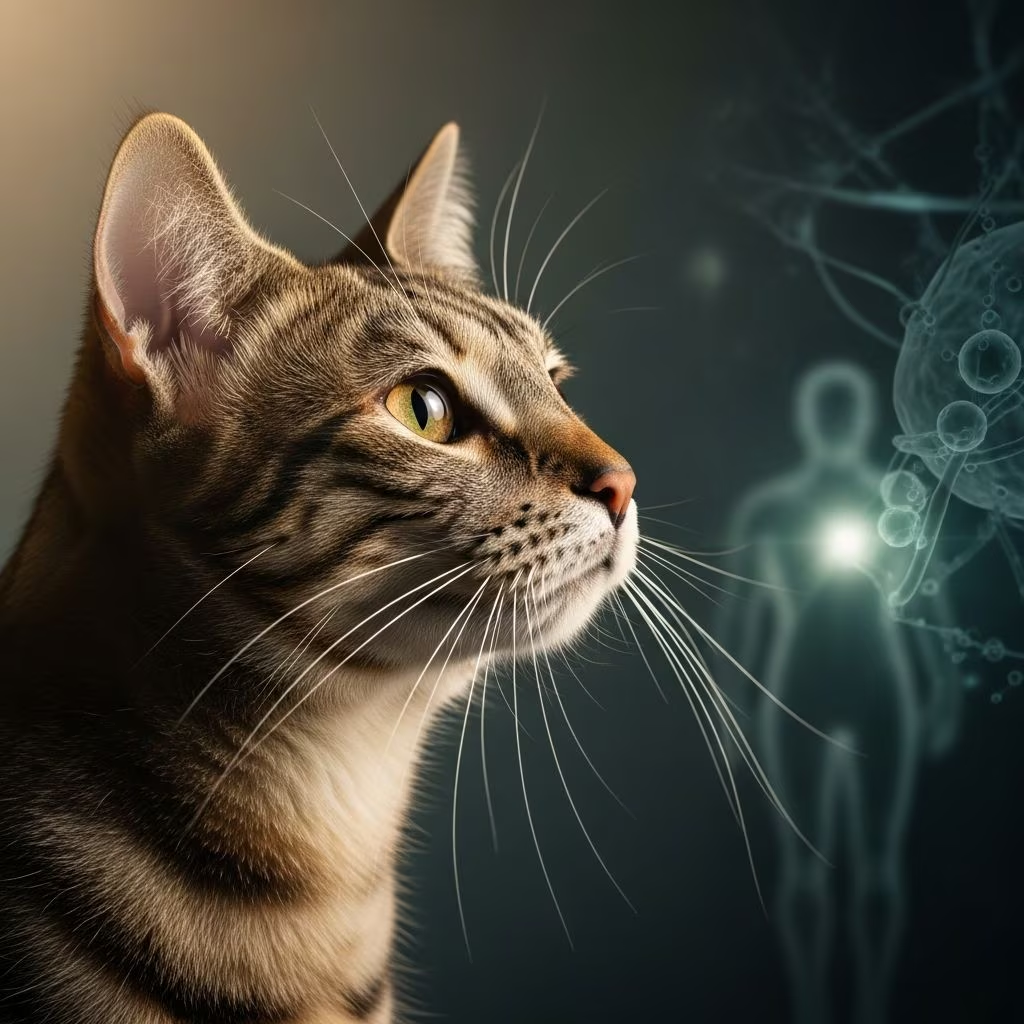
Cats possess an exceptional sense of smell that may enable them to detect cancer in humans by identifying subtle chemical changes in body odor.
The Remarkable World of Feline Olfaction
Cats’ olfactory capabilities far exceed those of humans, equipped with over 200 million scent receptors compared to humans’ mere 5 million, making their sense of smell approximately 14 times more acute. This heightened sensitivity stems from a large olfactory epithelium and a specialized vomeronasal organ (VNO), which detects pheromones and other chemical signals. When intrigued by a scent, cats exhibit the flehmen response, curling their upper lip to draw molecules deeper into the VNO for analysis.
These adaptations allow cats to perceive volatile organic compounds (VOCs) released by the body, which can shift during illness. Unlike humans, whose visual cortex dominates brain function, cats’ brains prioritize olfactory processing, enhancing their environmental awareness.
Scientific Foundations of Scent-Based Illness Detection
Illnesses like cancer alter the body’s chemical profile, producing distinct VOCs from tumor cells or necrotic tissue. Cats’ numerous olfactory receptors enable differentiation of these scents, potentially signaling disease presence. While dogs have been extensively trained for medical detection, cats show superior olfactory discrimination in some studies, suggesting untapped potential.
Research indicates pets can smell low concentrations of compounds from malignant tumors in breath, urine, or stool. For cats, their olfactory mucosa surface—nearly twice that of humans—supports this capability. However, formal training for cats remains challenging due to their independent nature.
Anecdotal Evidence: Cats as Intuitive Health Guardians
Numerous stories highlight cats alerting owners to health issues. Owners report felines becoming unusually attentive, sniffing specific body areas, or staying glued to affected regions before diagnoses. One common narrative involves cats fixating on tumor sites, such as breast cancer locations, long before medical confirmation.
These behaviors often coincide with biochemical shifts imperceptible to humans, fostering a deeper human-cat bond through shared awareness of subtle changes. While anecdotal, such accounts align with scientific hypotheses on scent detection.
Comparing Cats and Dogs in Medical Detection
| Aspect | Cats | Dogs |
|---|---|---|
| Scent Receptors | 200+ million | Up to 300 million (breed-dependent) |
| Olfactory Discrimination | Superior in studies | Well-trained for tasks |
| Trainability | Low, independent | High, responsive |
| Detection Examples | Anecdotal cancer alerts | Trained for bladder cancer |
This table illustrates key differences, emphasizing cats’ natural prowess despite less training focus.
Potential Mechanisms Behind Cancer Sensing
Cancerous tumors release alkanes and aromatic compounds, alongside diamines like cadaverine and putrescine from necrosis, creating detectable odors. Surface-level tumors are easier to sense than deep ones. Cats may learn their owner’s baseline scent over time, flagging deviations.
Behavioral cues, such as increased clinginess or fixation, often accompany these detections, blending olfactory input with observation of physiological shifts. Emotional states tied to illness may also influence feline responses via pheromones.
Research Landscape and Future Prospects
While dog studies dominate, emerging evidence supports cats’ role. A paper in Applied Animal Behaviour Science notes cats’ olfactory edge, proposing applications in medical scent detection. Peer-reviewed work affirms pets’ ability to smell tumor-related odors, though screening practicality is limited by personalization needs.
Future research could train cats for non-invasive diagnostics, leveraging nanotechnology-inspired sensors that mimic pet olfaction. Current limitations include sparse cat-specific trials and validation challenges.
Enhancing the Human-Cat Bond Through Awareness
Recognizing these abilities strengthens companionship. Owners noticing unusual behaviors—persistent sniffing, proximity to pain sites, or alert postures—should consult professionals promptly. Integrating cats into health monitoring could yield emotional and practical benefits.
- Monitor feline reactions to bodily areas for potential alerts.
- Combine pet observations with regular check-ups.
- Foster environments encouraging natural scent exploration.
Practical Tips for Owners
To harness this potential:
- Observe baseline behaviors to spot deviations.
- Avoid dismissing clinginess as mere affection-seeking.
- Document patterns correlating with health events.
- Support research by sharing verified anecdotes ethically.
These steps promote proactive health while celebrating feline instincts.
Frequently Asked Questions (FAQs)
Can all cats detect cancer?
Not all, but many possess the sensory hardware; individual sensitivity varies.
How accurate are cats compared to medical tests?
Anecdotal and preliminary; not a substitute for diagnostics.
Can cats be trained like detection dogs?
Possible but difficult due to temperament; research ongoing.
What other illnesses might cats sense?
Potentially seizures, diabetes via scent or behavior shifts.
Is there scientific proof for cats smelling cancer?
Supportive evidence exists, but more studies needed.
Cats’ olfactory superpowers offer intriguing possibilities for early illness detection, blending ancient instincts with modern science. Continued exploration may unlock new roles for these enigmatic companions in human health.
References
- How Cats Detect Illness in Humans: The Science and Secrets Behind Their Amazing Senses — ArtYourCat. 2024. https://artyourcat.com/blogs/art-your-cat-blog/how-cats-detect-illness-in-humans-the-science-and-secrets-behind-their-amazing-senses
- The Unseen Bond: How Cats May Sense Cancer in Humans — OreaTe AI. 2024. https://www.oreateai.com/blog/the-unseen-bond-how-cats-may-sense-cancer-in-humans/fd357491725a103b8483573c7b9088ef
- Cancer and the Case of the Clairvoyant Cat — Cure Today. 2024. https://www.curetoday.com/view/cancer-and-the-case-of-the-clairvoyant-cat
- Inside a mystery of oncoscience: The cancer-sniffing pets — PMC – NIH. 2019-11-01. https://pmc.ncbi.nlm.nih.gov/articles/PMC6855366/
- What Do Cats Do When They Smell Cancer? — PetGuide360 (YouTube). 2024-12-15. https://www.youtube.com/watch?v=i29bV1tjGMA
- Feline olfaction and the extraordinary superpower of cat smell — Felidae Fund. 2024. https://felidaefund.org/news/general/feline-olfaction-and-the-extraordinary-superpower-of-cat-smell



