

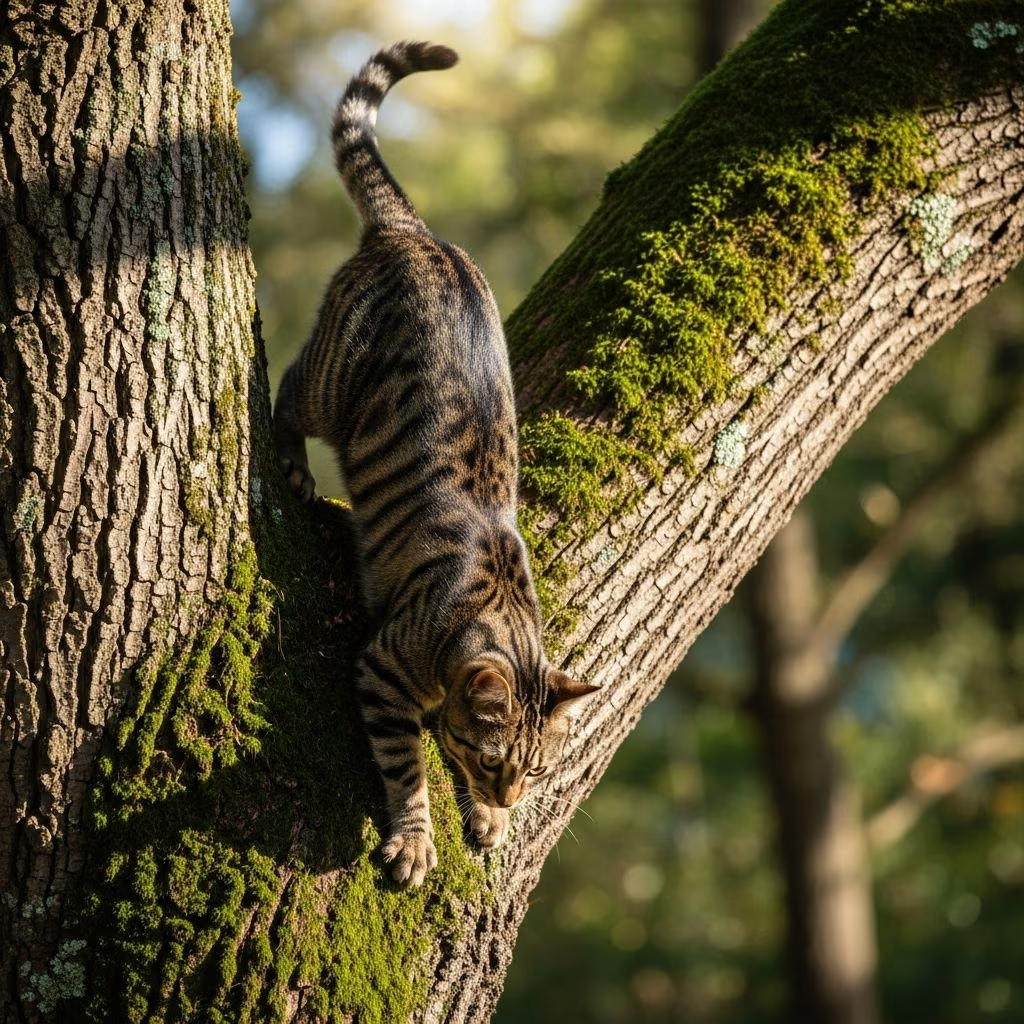
Cats possess remarkable climbing abilities due to their anatomy but often struggle to descend trees headfirst because their claws curve inward, making grip difficult on the way down. This leads to many instances where felines get stranded at heights, requiring intervention to ensure their safety.
The Anatomy Behind Feline Climbing Prowess
Cats’ bodies are evolutionary masterpieces for vertical mobility. Their powerful hind legs provide explosive leaps, often propelling them several times their body length upward. Flexible spines allow twisting mid-air for balance, while sharp, retractable claws dig into bark for secure ascent. These adaptations make trees ideal for hunting, escaping threats, or surveying territory in the wild.
However, descent poses a unique challenge. Claws oriented for upward grip curve backward, preventing effective downward hold on smooth or vertical trunks. Cats typically descend stern-first or via branches, but fear or injury can paralyze them, turning a fun climb into a crisis.
Why Do Cats Get Stranded in Trees?
Beyond anatomy, behavioral factors contribute. Curiosity drives exploration, but panic sets in at height. Kittens, seniors, or injured cats face heightened risks—young ones misjudge distances, while older felines battle arthritis limiting mobility.
- Claw orientation: Inward curve excels for climbing up, fails for down.
- Fear response: Stress freezes movement, worsening exhaustion.
- Environmental factors: Slick bark, few branches, or high winds amplify peril.
- Health issues: Overweight, illness, or age reduce descent capability.
Urban environments exacerbate problems, with fewer natural perches and more hazards like traffic below.
Recognizing Signs Your Cat Needs Help
Not all tree perches signal distress. Cats may nap aloft safely for hours. Watch for prolonged meowing, pacing branches, or refusal to descend after dark—these indicate trouble. Dehydration risks rise after 24-48 hours without water, compounded by exposure or starvation.
| Normal Behavior | Distress Signals |
|---|---|
| Relaxed grooming or sleeping | Continuous crying or pacing |
| Occasional descent attempts | Rigid posture, dilated pupils |
| Responsive to calls/food | Ignores treats, appears lethargic |
Safe Strategies to Retrieve Your Cat
Encouragement Techniques
Start non-invasively: Offer smelly tuna or favorite treats at the base. Place food trails leading down. Use a long board or ladder as a ramp for alternative footing. Patience works—many cats descend when hunger overrides fear.
Personal Rescue Methods
If heights allow, climb wearing sturdy shoes and gloves. Prioritize your safety; falls injure rescuers too. Avoid grabbing the scruff—stressed cats scratch. Instead, lure into a carrier lowered by rope. Ladders suit low branches; for taller trees, reconsider solo efforts.
Safety First: Never climb if unstable, dizzy, or tree exceeds 20 feet without experience.
Professional Assistance Options
Fire departments often decline cat rescues due to policy and liability, focusing on human emergencies. Seek tree service pros or animal rescue groups like Canopy Cat Rescue, specializing in safe descents via ropes and harnesses. Arborists use professional gear unavailable to most owners.
Preventing Tree-Climbing Mishaps
Harness and Leash Training
Supervised outdoor walks with a harness mitigate risks. Unleash for climbing in familiar, safe spots to avoid tangles. Limit height to leash reach, ensuring quick retrieval. Train gradually—cats adapt with positive reinforcement.
- Choose escape-proof harnesses.
- Practice in low trees first.
- Carry treats for recall.
Indoor Alternatives for Climbing Instincts
Channel urges with cat trees or towers. Select stable models with wide bases, non-slip surfaces, and weight-rated platforms. Ideal for multi-cat homes or heavy breeds.
| Feature | Why It Matters |
|---|---|
| Wide, heavy base | Prevents tipping during leaps |
| Wrapped sisal posts | Satisfies scratching needs safely |
| Multiple platforms/ramps | Suits kittens/seniors |
| Weight capacity >20lbs | Accommodates larger cats |
Anchor furniture to walls, providing perches without real trees. Window seats with shelves encourage safe vertical play.
Special Considerations for Vulnerable Cats
Kittens need low-entry structures to build skills without falls. Seniors benefit from ramps, wide platforms, and soft landings. Overweight cats require reinforced trees; consult vets for mobility aids.
Common Myths About Cats in Trees
- Myth: They’ll always come down hungry. Exhaustion or injury prevents this; intervene timely.
- Myth: Firefighters always help. Policies vary; pros are better.
- Myth: High falls are harmless (high-rise syndrome). Survival possible, but injuries common from trees.
Frequently Asked Questions
How long can a cat stay safely in a tree?
Up to 24 hours if healthy and sheltered, but monitor closely. Risks escalate overnight.
Should I throw sticks at the cat?
No—causes panic, potential falls, or injury.
Is it okay to leave the cat overnight?
Avoid if possible; predators, weather, or dehydration threaten.
What if my indoor cat climbs a Christmas tree?
Tether securely, use plastic ornaments, and supervise to prevent ingestion or falls.
Can cats learn to descend better?
Training with low trees and positive reinforcement improves confidence over time.
Long-Term Health Implications
Tree strandings stress cats, potentially causing urinary issues or appetite loss. Post-rescue, check for injuries: limps, wounds, or labored breathing warrant vet visits. Annual checkups catch arthritis early.
Enrich environments reduce risky behaviors. Puzzle feeders, interactive toys, and vertical spaces fulfill instincts indoors, minimizing escapes.
References
- Cats Climbing Trees While Walking On a Harness and Leash — Cat Explorer. 2023. https://catexplorer.co/stories-posts/cats-climbing-trees-while-walking-on-a-harness-and-leash
- Are Cat Trees Safe? Everything You Need to Know Before Buying One — Cydeals. 2024. https://cydeals.cy/pets/are-cat-trees-safe/
- Cat Up A Tree? How To Get Him Safely Down — Fear Free Happy Homes. 2023-01-15. https://www.fearfreehappyhomes.com/cat-up-a-tree-how-to-get-him-safely-down/
- Is Cat Tree Safe for Cats — KBS Pets. 2024. https://kbspets.com/blogs/news/is-cat-tree-safe-for-cats



