

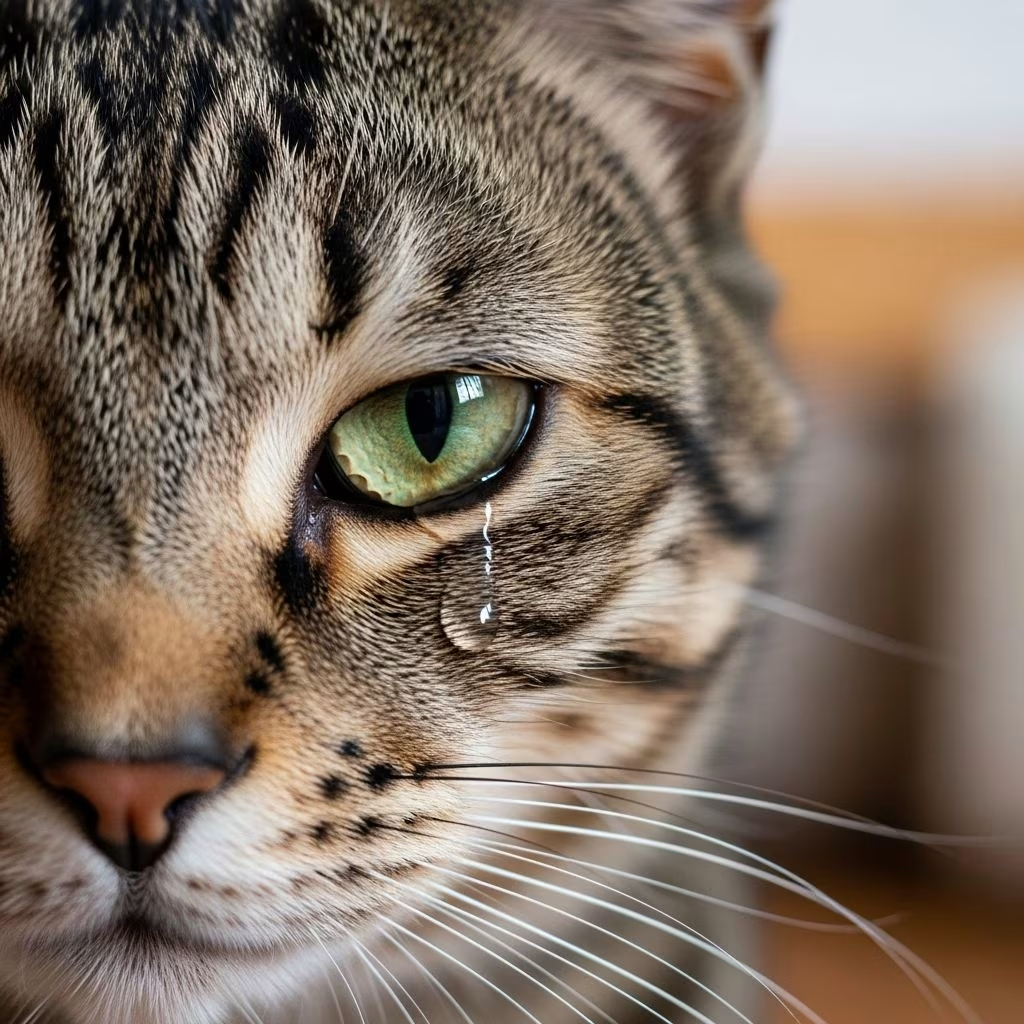
Cats possess a rich emotional world, but they don’t express sadness through tears like humans do. Instead, they rely on vocalizations, body language, and subtle behavioral changes to communicate distress, pain, or needs. While **cats can produce tears**, these are typically due to medical issues rather than emotions, making it crucial for owners to distinguish between the two.
This comprehensive guide explores cat emotions, types of ‘crying,’ reasons behind vocalizations and tears, and when to seek veterinary help. Understanding these signals strengthens the human-cat bond and ensures your pet’s well-being.
Do Cats Have Emotions?
**Yes, cats experience a full range of emotions** including joy, fear, anger, and sadness, supported by scientific research. A study published in Animals demonstrated that cats integrate visual and auditory cues to recognize emotions in both humans and other cats, modulating their behavior accordingly. Cats looked longer at matching emotional faces when hearing related vocalizations, such as a hiss or purr, indicating cognitive representation of emotions.
Unlike humans, cats express emotions subtly to avoid vulnerability in the wild. Veterinary expert Brittany Klesznyski, DVM, notes that a bothered cat may flick its tail or act aloof, while stressed cats hide or tuck their bodies tightly. They recognize human emotions too—approaching happily vocalized humans more positively while showing stress to angry tones.
Cats form strong attachments, often mirroring dog-like bonds with owners. Research shows they distinguish familiar voices and faces, responding with reduced stress to positive signals. This emotional intelligence evolved from domestication, enhancing interspecies communication.
Do Cats Cry Tears?
No, **cats do not cry emotional tears**. Their tear production serves physiological purposes like lubricating eyes and flushing irritants, not emotional release. If you notice tears streaming down your cat’s face, it’s almost always a sign of an underlying health issue rather than sadness.
Cats have tear ducts and lacrimal glands, but emotional crying is a uniquely human trait linked to brain structures absent in felines. Instead, a sad or pained cat might vocalize excessively (meowing or howling), withdraw socially, eat less, sleep more, or groom obsessively. Dr. Klesznyski emphasizes these nonverbal cues over tears.
Watery eyes (epiphora) occur when tears overflow due to blockages, infections, or anatomical issues. Normal tear production keeps eyes healthy, but excess signals problems needing attention.
Types of Cat Crying
While tears aren’t emotional, cats ‘cry’ through diverse **vocalizations** that convey needs, emotions, or discomfort. These sounds vary by context, intensity, and individual cat. Here’s a breakdown:
- Meowing: Primarily directed at humans, signaling hunger, attention-seeking, or discomfort. Kittens meow to mothers; adults refine it for pet parents. Persistent meowing may indicate stress or illness.
- Moaning/Howling: Low, drawn-out sounds expressing pain, confusion, or anxiety, especially in seniors with cognitive decline. These are more urgent than standard meows.
- Yowling: Loud, prolonged cries often linked to mating, territory disputes, or disorientation at night (common in older cats).
- Purring: Not always happy—can indicate pain relief, hunger, or stress. Contextual body language clarifies meaning.
- Chirping/Chattering: Excitement or frustration when spotting prey, like birds outside a window.
- Hissing/Growling: Defensive fear or aggression, warning of discomfort.
These vocalizations, combined with ear positions, tail flicks, and pupil dilation, form a communication palette. Cats are masters of subtlety, honed by survival instincts.
Reasons Your Cat’s Crying
Cat ‘crying’ stems from emotional, behavioral, or medical causes. Avoid anthropomorphizing—investigate systematically. Emotional cries include:
- Hunger or Thirst: Meowing at mealtimes or near empty bowls.
- Loneliness/Boredom: Excessive vocalizing in single-cat homes; remedied by play or companions.
- Stress/Anxiety: Changes like moves or new pets trigger hiding and crying.
- Pain or Illness: Subtle moans from arthritis, dental issues, or hyperthyroidism.
- Attention-Seeking: Learned behavior if rewarded previously.
For actual **tears**, common medical triggers include:
| Condition | Symptoms | Causes |
|---|---|---|
| Conjunctivitis | Redness, discharge, squinting | Bacterial/viral infection, allergies |
| Blocked Tear Ducts | Constant overflow, staining | Congenital, inflammation |
| Upper Respiratory Infection | Sneezing, nasal discharge | Herpesvirus, calicivirus |
| Corneal Ulcers | Pawing at eye, light sensitivity | Scratches, foreign bodies |
| Dental Disease | Bad breath, drooling | Tooth resorption, gingivitis |
Other factors: allergies, entropion (inward eyelids), or breed predispositions (e.g., Persians’ flat faces). If tears accompany lethargy or appetite loss, consult a vet promptly.
When to See a Vet for Crying or Tears
Not all crying requires intervention, but persistent or changing patterns do. Schedule a vet visit if:
- Vocalizing increases suddenly or nightly.
- Tears persist >24 hours with redness/swelling.
- Accompanied by discharge, limping, vomiting, or hiding.
- Cat is senior (risk for hypertension, kidney disease).
Vets may perform eye staining, bloodwork, or imaging. Early detection prevents complications like vision loss.
How to Comfort a Crying Cat
Respond appropriately without reinforcing bad habits:
- Check Basics: Food, water, litter, quiet space.
- Enrich Environment: Toys, scratching posts, perches reduce boredom.
- Provide Affection: Gentle petting for stressed cats; respect boundaries.
- Use Pheromones: Feliway diffusers calm anxiety.
- Avoid Punishment: Increases stress; ignore attention-seeking meows selectively.
For pain, vets may prescribe pain relief or anxiety meds. Interactive play strengthens bonds, mimicking natural hunting.
Frequently Asked Questions (FAQs)
Can cats cry tears when they’re sad?
No, cats don’t produce emotional tears. Sadness manifests as withdrawal, reduced eating, or excessive vocalizing.
Why does my cat cry tears?
Tears indicate irritation, infection, or blockages—not emotions. Common in breeds with flat faces.
Is a cat crying good or bad?
Context-dependent: Joyful chirps are positive; moans or howls signal issues needing address.
Should you let a cat cry?
Comfort pained or stressed cats; ignore non-urgent attention bids to prevent reinforcement. Dr. Mitchell advises balance.
Do cats cry from pain?
Yes, via moaning, howling, or behavior changes like aggression or hiding—not tears.
Why do older cats cry at night?
Cognitive dysfunction, pain, or disorientation (sundowning). Vet check and routines help.
References
- Do Cats Cry? – PetMD — PetMD. 2023-10-15. https://www.petmd.com/cat/general-health/do-cats-cry
- Emotion Recognition in Cats — PMC / PubMed Central (Finka et al.). 2020-07-22. https://pmc.ncbi.nlm.nih.gov/articles/PMC7401521/
- Can Cats Cry Tears of Sadness? — HowStuffWorks. 2023. https://animals.howstuffworks.com/pets/can-cats-cry.htm
- Do Cats Cry? Everything You Need to Know — Great Pet Care. 2024-05-10. https://www.greatpetcare.com/cat-behavior/do-cats-cry/



