

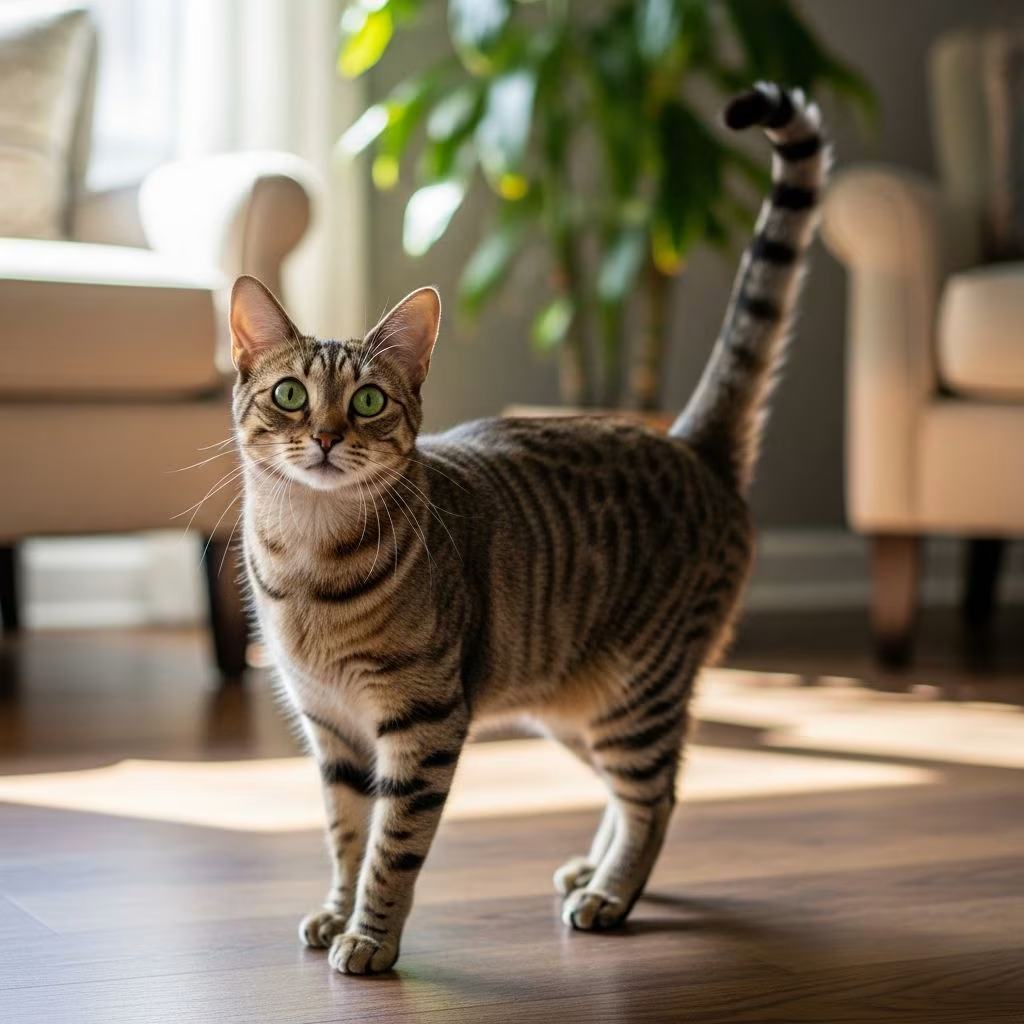
Cats possess remarkable control over their tails, thanks to a complex structure of muscles, nerves, tendons, ligaments, and 18-23 vertebrae extending from the spine, allowing voluntary movements from base to tip. This control enables cats to use their tails for balance, speed, communication, and emotional expression, though some reflexive actions occur.
Table of Contents
- Cat Tail Anatomy
- Functions of the Cat Tail
- Can Cats Control Their Tail?
- Common Cat Tail Positions and What They Mean
- Why Do Cats Chase Their Tails?
- Cat Tail Injuries
- When to See a Vet for Tail Issues
- Frequently Asked Questions
Cat Tail Anatomy
The cat tail is an extension of the spine, comprising approximately 18 to 23 vertebrae, which account for about 10% of a cat’s body mass. These vertebrae are connected by muscles, ligaments, and tendons, providing flexibility and precise control. Six primary muscles enable curling, swishing, and other motions, supported by a network of nerves for sensory feedback and motor function. This intricate anatomy allows cats to manipulate their tails with intention, much like any other limb, while also responding to involuntary reflexes.
Unlike dogs, whose tails are often waggled broadly, cats exhibit nuanced, targeted movements. The tail’s bones decrease in size toward the tip, enhancing agility for flicks and twitches. Nerves throughout detect touch and position, feeding information to the brain for coordinated actions. This structure not only supports physical feats but also serves as a vital communication tool in feline social interactions.
Functions of the Cat Tail
A cat’s tail serves multiple essential roles beyond mere aesthetics. Primarily, it acts as a counterbalance during high-speed chases, jumps, and sharp turns, swinging opposite to body shifts to stabilize the feline. For instance, when leaping from heights, the tail adjusts to ensure soft landings by maintaining balance and proper posture.
In locomotion, the rotating tail realigns hips and legs, functioning like a rear-end stabilizer to boost speed—similar to a race car’s spoiler, especially evident in wild cats like cheetahs. Tails also aid sensory perception, helping cats navigate tight spaces or detect nearby objects via subtle vibrations.
Communication is another key function. Cats use tail positions to convey emotions to humans and other cats, from confidence to aggression. Socially, wrapping a tail around another cat signals friendship, akin to a friendly arm around shoulders. Thermoregulation plays a minor role too, as the tail can help disperse heat.
- Balance and Stability: Counterweights during runs, jumps, and climbs.
- Speed Enhancement: Stabilizes rear end for faster sprints.
- Communication: Expresses mood via positions and movements.
- Sensory Aid: Detects environmental cues.
Can Cats Control Their Tail?
Yes, cats have full voluntary control over their tails, manipulating every inch through muscular action tied to the spinal cord. This control expresses feelings, enhances balance, and supports agile movements. However, like all body parts, the tail can exhibit involuntary reflexes, such as sudden twitches in response to stimuli.
The tail’s 19-23 vertebrae, muscles, and nerves allow precise positioning—curling it question-mark style for play or tucking it in fear. Veterinary experts confirm cats consciously deploy tail signals during interactions, proving intentional use. While reflexes exist, primary movements are under conscious control, making the tail a dynamic extension of the cat’s intent.
Common Cat Tail Positions and What They Mean
Decoding tail language reveals a cat’s inner state. Here’s a breakdown of key positions:
| Tail Position | Meaning | Context |
|---|---|---|
| Upright/Straight Up | Happy, confident, friendly | Social approach; quivering adds excitement |
| Curved like Question Mark | Playful, affectionate | Invites interaction or petting |
| Low/Straight Down | Stressed, aggressive (breed exceptions like Persians) | Warning to back off |
| Tucked Under Body | Fearful, submissive, pained | Seeks safety; possible illness |
| Puffed Up/Bushy | Scared, threatened | Defensive posture to appear larger |
| Wrapped Around Body | Content or defensive (context-dependent) | Relaxed with purrs; tense otherwise |
| Wrapped Around Cat/Human | Affection, trust | Kitty hug |
Movement Meanings:
- Slow Swish/Sway: Focused attention, pre-pounce concentration
- Fast Whip/Thrash: Agitation, anger, overstimulation—stop petting!
- Twitch at Tip: Hunting/play excitement or mild irritation
- Quivering Upright: Extreme happiness or spraying intent
Always consider body language: relaxed ears and posture amplify positive signals; flattened ears indicate negativity.
Why Do Cats Chase Their Tails?
Tail-chasing is often playful, mimicking hunting instincts as kittens spot their moving tail like prey. Common in young cats learning coordination, it persists occasionally in adults for fun. However, frequent chasing signals boredom—provide toys like fishing rods to redirect energy.
Excessive or sudden tail-chasing, especially with biting, may indicate stress, allergies, fleas, or neurological issues. Monitor for skin irritation or obsession, as self-attack harms the tail. Enrich environments with perches and interactives to curb boredom-driven behavior.
Cat Tail Injuries
Tails are prone to trauma from doors, fights, or falls, causing fractures, degloving (skin stripping), or nerve damage. Symptoms include limping, swelling, hair loss, or unnatural positions. “Tail pull” injuries from grabs sever nerves, leading to incontinence or paralysis.
Minor sprains heal with rest; severe cases need veterinary splinting or amputation to prevent infection. Happy tail syndrome (constant wagging causing wounds) occurs in active cats. Prevention: trim claws, supervise outdoors, and teach gentle handling.
- Common Injuries: Fractures, lacerations, dislocations.
- Symptoms: Dragging, bleeding, sensitivity.
- Treatment: Pain meds, surgery if needed.
When to See a Vet for Tail Issues
Consult a vet if the tail hangs limp, shows open wounds, excessive licking, or behavioral changes like hiding. Persistent abnormal positions (e.g., constant tucking) suggest pain or illness. Incontinence post-injury warrants immediate care.
Regular checks catch issues early; X-rays diagnose fractures. Home care: isolate, apply cold packs, but avoid forcing movement. Breeds with low tails (e.g., Persians) may normally hold tails down, but sudden changes signal problems.
Frequently Asked Questions
Can cats fully control their tails?
Yes, cats voluntarily control tail movements via muscles and vertebrae, though reflexes exist.
What does it mean when a cat’s tail is up?
An upright tail signals confidence and friendliness.
Why is my cat’s tail twitching?
Twitching indicates focus, play, or irritation—context matters.
Is a swishing tail always angry?
No, slow swish means focus; fast thrashing signals anger.
What if my cat chases its tail obsessively?
Play is normal, but excess suggests boredom or health issues—vet check recommended.
How can I tell if my cat’s tail is injured?
Look for limping, swelling, or dragging; seek vet care promptly.
References
- What Your Cat is Telling You with Their Tail — Hill’s Pet Nutrition. 2023-05-15. https://www.hillspet.com/cat-care/behavior-appearance/cat-tail-language
- Common Cat Tail Signs and What They Mean — York Veterinary Hospital. 2024-02-10. https://yorkveterinaryhospital.ca/blog/common-cat-tail-signs-and-what-they-mean/
- Do Cats Have Control Over The Movement Of Their Tails? — YouTube (Video Transcript). 2023-08-20. https://www.youtube.com/watch?v=ZkqUF3rjo4g
- Why Do Cats Have Tails? — Cats Protection. 2024-11-05. https://www.cats.org.uk/cats-blog/why-do-cats-have-tails
- How to Read Your Cat’s Tail Language and Meaning — PetMD. 2024-06-12. https://www.petmd.com/cat/behavior/cat-tail-language



