

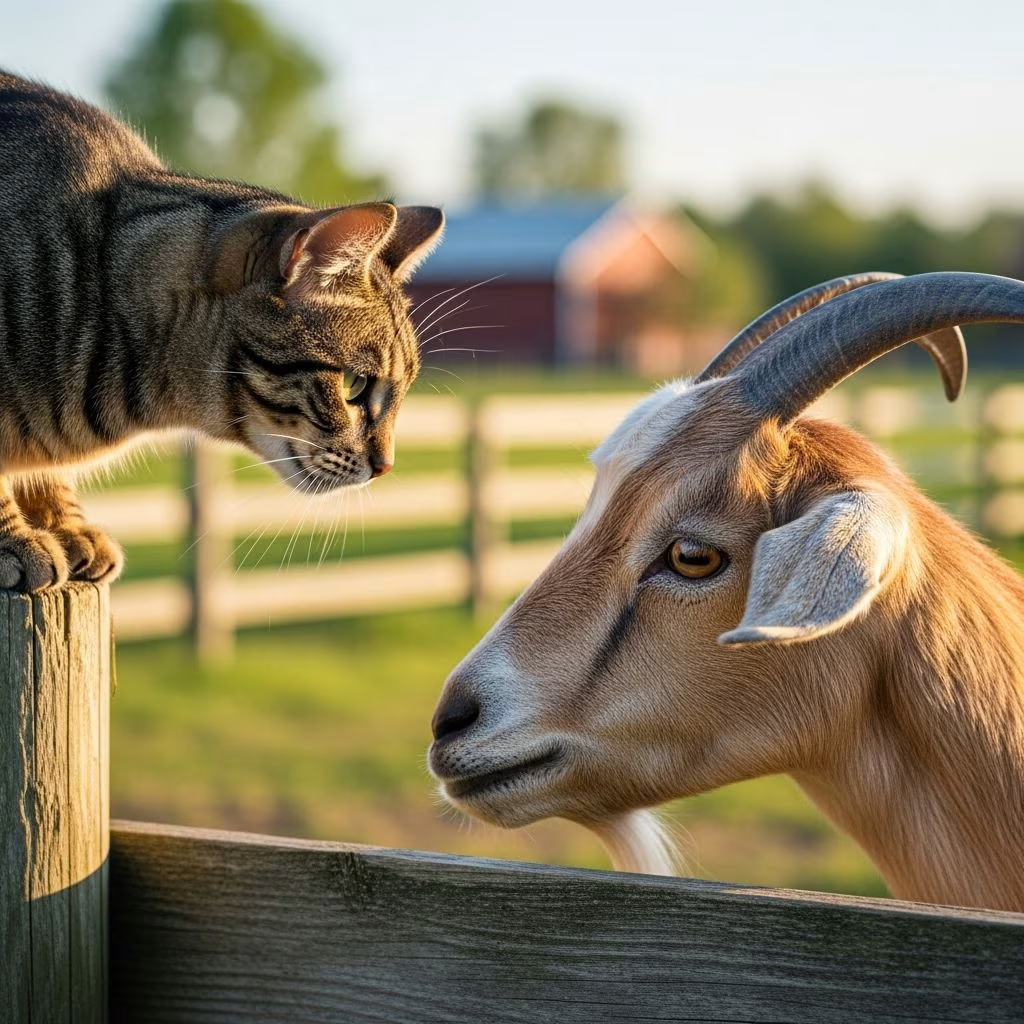
In multi-species households or farms where cats and goats coexist, pet owners often wonder about disease transmission risks. While cats are definitive hosts for certain parasites like Toxoplasma gondii, the primary concern is typically diseases passing from cats to goats or humans, but evidence shows bidirectional potential, especially for zoonoses like Q fever. This article examines key diseases, transmission routes, symptoms, and prevention strategies based on veterinary research.
What Diseases Can Cats Catch from Goats?
Cats can potentially catch diseases from goats, though documented cases are rare compared to reverse transmission. The most notable is **Q fever** caused by Coxiella burnetii, a bacterium carried by goats, sheep, and cattle. Cats rarely show symptoms but can become infected via inhalation of contaminated dust from goat birthing fluids or direct contact. Other risks include bacterial infections like Salmonella or Campylobacter from shared environments, but these are less species-specific.
- Q Fever (Coxiella burnetii): Goats shed the bacteria heavily during kidding; cats inhale aerosols or contact placentas.
- Bacterial Pathogens: Shared water, feed, or feces can spread Salmonella or ringworm fungi.
- Parasitic Risks: Minimal direct cat-to-goat parasite transfer, but environmental contamination poses indirect threats.
Toxoplasmosis: The Primary Concern (Cats to Goats)
Although the query focuses on cats catching from goats, **toxoplasmosis**—caused by Toxoplasma gondii—is the leading disease where cats infect goats. Cats shed infectious oocysts in feces after eating infected prey; these become infective after 1-5 days in the environment. Goats ingest them via contaminated hay or feed, leading to abortions or weak kids if pregnant. Cats themselves rarely suffer from clinical toxoplasmosis unless immunocompromised.
| Aspect | Cats’ Role | Goats’ Impact |
|---|---|---|
| Transmission | Shed oocysts in feces (once, usually kittens) | Ingest via cat feces on feed/hay |
| Infectivity | Oocysts sporulate in 1-5 days | Causes placental infection ~2 weeks post-ingestion |
| Symptoms in Goats | N/A (cats asymptomatic) | Abortion, stillbirths, mummification, weak/neurologic kids |
Humans risk infection similarly, especially pregnant women handling contaminated materials without gloves.
Q Fever: Bidirectional Zoonotic Risk
**Q fever** transmits from goats to cats (and humans) primarily through inhalation of birthing fluids aerosols. Goats asymptomatically carry C. burnetii; heavy shedding occurs at kidding. Cats, like dogs, rarely clinical but can shed via milk or birth products. Direct cat-goat spread is unlikely, but shared spaces amplify human risk.
- Goat-to-Cat: Inhalation during kidding; rare symptoms in cats.
- Prevention: Wear gloves handling placentas; pasteurize milk.
Other Potential Diseases
Ringworm (Dermatophytosis)
Fungal infection transmissible between species via direct contact or fomites. Microsporum canis from cats spreads easily to goats, causing skin lesions, but goat strains can infect cats.
Bacterial Infections (Salmonella, Campylobacter)
Shared contaminated water/feed facilitates spread. Immunosuppressed cats at higher risk from goat sources.
Rabies and Less Common Risks
Free-roaming cats risk rabies exposure, potentially transmissible bidirectionally if bitten, though rare in vaccinated herds. Tularemia or plague from wildlife vectors indirectly link species.
Symptoms to Watch For in Cats
Cats exposed to goat diseases show subtle signs:
- Q Fever: Fever, lethargy, rarely pneumonia; often subclinical.
- Toxoplasmosis: In immunocompromised cats: fever, jaundice, respiratory issues.
- Ringworm: Circular alopecia, scaling, itching.
- Bacterial: Diarrhea, vomiting from Salmonella.
Monitor for changes post-goat contact; consult vets for diagnostics like PCR testing.
Prevention Tips for Cats and Goats Coexisting
Key strategies minimize cross-transmission:
- Separate Feeding: Store goat feed/hay in cat-proof containers; elevate hay racks.
- Litter Management: Daily scoop cat boxes (fresh feces non-infective); dispose securely.
- Hygiene Protocols: Gloves for kidding/placentas; thorough disinfection (Q fever resists many cleaners—use bleach post-removal).
- Vaccination & Testing: Vaccinate goats against toxoplasmosis if available; test herds for Q fever.
- Control Cats: Indoor-only, spay/neuter, no raw meat; limit farm cat populations.
- Human Safety: Pasteurize goat milk; cook meat; pregnant owners avoid all animal births.
Are There Treatments?
- Toxoplasmosis: No effective goat treatment; supportive care. Cats: Clindamycin if clinical.
- Q Fever: Doxycycline for humans/cats; goats supportive.
- Ringworm: Topical/systemic antifungals like itraconazole.
Frequently Asked Questions (FAQs)
Can cats get toxoplasmosis from goats?
Cats are definitive hosts and get it from prey, not goats directly. Goats pass tissue cysts via undercooked meat, but cats prefer hunting.
Is Q fever dangerous for cats from goats?
Rarely symptomatic in cats, but transmissible via goat birthing aerosols. Humans at higher risk.
How to prevent cats from infecting my goats?
Keep cats from goat feed/hay; daily clean contaminated areas; limit outdoor cats.
Can I keep cats and goats together safely?
Yes, with strict hygiene, separation of resources, and monitoring. Risks low in managed settings.
What if my pregnant goat aborts—cats involved?
Test for toxoplasmosis/Q fever; isolate cats from aborted materials.
Conclusion: Safe Coexistence Possible
With vigilant management, cats and goats can share spaces safely. Focus on toxoplasmosis prevention from cats to goats and Q fever hygiene during goat kidding. Regular vet checkups ensure early detection.
References
- Toxoplasmosis-Cats, Goats and People — Sale Creek Veterinary Clinic. Accessed 2026. https://salecreek.vet/toxoplasmosis-cats-goats-and-people/
- Goat Toxoplasmosis — Goat Extension. Accessed 2026. https://goats.extension.org/goat-toxoplasmosis/
- Q Fever – From goats to people (and pets!) — Worms & Germs Blog, University of Guelph. 2008-08. https://www.wormsandgermsblog.com/2008/08/articles/diseases/other-diseases/q-fever-from-goats-to-people-and-pets/
- Zoonotic Diseases in Cats — VCA Animal Hospitals. Accessed 2026. https://vcahospitals.com/know-your-pet/zoonotic-diseases-in-cats
- Toxoplasmosis in Cats — Cornell University College of Veterinary Medicine. Accessed 2026. https://www.vet.cornell.edu/departments-centers-and-institutes/cornell-feline-health-center/health-information/feline-health-topics/toxoplasmosis-cats
- Zoonotic Diseases Associated with Free-Roaming Cats — American Bird Conservancy. 2012. https://abcbirds.org/wp-content/uploads/2015/05/Gerhold-and-Jessup-2012-Zoonotic-diseases-and-free-roaming-cats.pdf
- Toxoplasmosis: Causes and How It Spreads — Centers for Disease Control and Prevention (CDC). Accessed 2026. https://www.cdc.gov/toxoplasmosis/causes/index.html



