

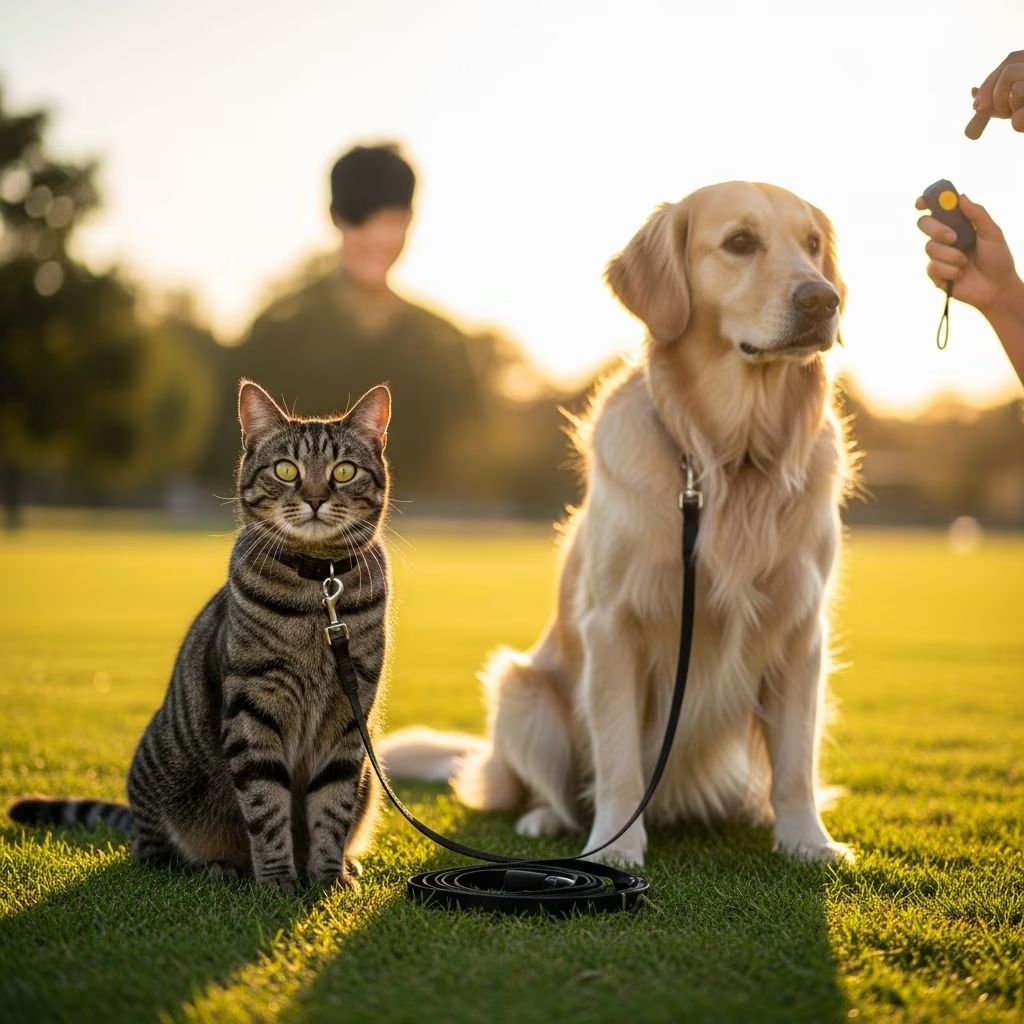
Cats can indeed be trained using many of the same principles as dogs, though their independent nature requires tailored approaches like positive reinforcement and cat-specific motivators.
Tackling the Misconception: Can You Train a Cat?
One of the most enduring myths in pet ownership is that cats are untrainable, stemming from their reputation for independence compared to eager-to-please dogs. This misconception arises because cats don’t naturally seek human approval like dogs do, leading many to believe they can’t learn new behaviors. In reality, cats are highly intelligent and adaptable learners, constantly picking up cues from their environment. Every time a cat uses the litter box, avoids scratching furniture after redirection, or comes when called, training has occurred—often unintentionally by the owner.
The belief that ‘cats can’t be trained’ ignores their evolutionary history and cognitive abilities. Unlike dogs, bred for centuries as companions to humans, domestic cats descend from solitary hunters, making them more self-reliant. However, this doesn’t preclude trainability; it simply demands understanding their motivations, such as food, play, or security, rather than social bonding alone. Studies and expert observations confirm cats respond well to structured training, with many performing complex tricks rivaling dogs when motivated properly.
Training isn’t just for show; it addresses real-life issues like aggression, litter box avoidance, or excessive meowing, improving harmony in multi-pet homes or apartments. As cat ownership rises—with over 42 million U.S. households owning cats—more owners are discovering training’s value, boosting demand for feline behaviorists.
Understanding the Differences Between Cats and Dogs in Training
Successful cat training hinges on recognizing fundamental differences between felines and canines in instincts, social structure, and learning styles. Dogs, pack animals by nature, view owners as pack leaders and thrive on praise and social rewards. Cats, solitary hunters from wild ancestors like the African wildcat, see humans as beneficial providers rather than authority figures, prioritizing personal comfort and security.
Natural Behaviors and Instincts
Dogs’ social evolution makes them attuned to human body language and group dynamics, facilitating commands like ‘sit’ or ‘stay’ through eye contact and verbal cues. Cats, evolved for independence, are more cautious about social interactions and rely on environmental safety cues. They learn through observation and trial-and-error, associating actions with outcomes like food or avoidance of discomfort. This means cat training must leverage their predatory instincts—short bursts of activity, hunting simulations via toys—rather than long sessions suited to dogs’ endurance.
Motivations and Rewards
Dogs often work for affection or play, but cats are pragmatic: they train for direct benefits like treats, playtime, or access to prime spots. Positive reinforcement works for both, but cats demand high-value rewards (e.g., tuna-flavored treats over kibble) and immediate timing. Punishment backfires with cats, increasing stress and avoidance, whereas dogs may tolerate it better due to their forgiving nature. Clicker training, bridging the action-reward gap with a precise sound, excels for cats’ quick reflexes.
In essence, while principles overlap, cat training respects their ‘equal partner’ view of owners, fostering cooperation over obedience.
How to Train a Cat: Basic Techniques
Training cats effectively uses positive reinforcement, consistency, short sessions (5-10 minutes), and patience. Start in low-distraction environments, gradually increasing complexity. Identify your cat’s motivators through trial: food for foodies, wand toys for hunters, or praise for social cats.
1. Positive Reinforcement
Reward desired behaviors immediately with treats, play, or affection to create positive associations. For ‘come when called,’ say the name enthusiastically, lure with a treat, and reward upon approach. Repeat daily; fade lures over time. Success rate soars with high-value rewards—cats repeat what benefits them most.
2. Clicker Training
A clicker marks exact moments of good behavior, followed by a treat. ‘Charge’ the clicker first by pairing it with rewards sans commands. Teach ‘sit’ by holding a treat above the head, clicking as the butt lowers. Effective for tricks like high-five or spin, as seen in trained shelter cats.
3. Target Training
Use a stick or ball as a target; reward nose-touches. Progress to following it for ‘come’ or ‘spin.’ Ideal for leash walking or vet visits.
4. Litter Box and Scratching Training
Place kittens in clean boxes post-meals; reward usage. For scratching, provide posts with catnip, redirect, and reward post-use. Enzyme cleaners eliminate urine appeal on rugs.
Sessions: 3-5 daily for kittens, fewer for adults. Track progress in a journal.
Advanced Tricks: Yes, Cats Can Do Them!
Beyond basics, cats learn ‘sit,’ ‘stay,’ ‘high-five,’ ‘roll over,’ and even agility courses. Videos show cats fetching or jumping hoops, debunking laziness myths. Kittens excel due to plasticity; adults need refreshers. Benefits include mental stimulation, reducing boredom-induced issues like spraying.
Why Train Your Cat? The Benefits
- Behavior Improvement: Curbs scratching, biting, night zooming.
- Bonding: Builds trust via fun interactions.
- Enrichment: Prevents obesity, stress; mimics hunting.
- Safety: Recall prevents escapes; carrier tolerance eases vet trips.
- Adoptability: Trained shelter cats find homes faster.
Common Challenges and Solutions
| Challenge | Solution |
|---|---|
| Short Attention Span | Keep sessions under 10 mins; end on high note. |
| Ignores Commands | Increase reward value; train when hungry. |
| Regression | Refreshers weekly; consistency key. |
| Fear/Aggression | Desensitize slowly; consult behaviorist. |
Age isn’t a barrier—seniors train for mobility-matched behaviors like gentle sits.
Frequently Asked Questions (FAQs)
Can any cat be trained like a dog?
Yes, all cats are trainable with patience and right motivators, though personality varies.
How long does cat training take?
Basics in 1-2 weeks; tricks 4-6 weeks with daily practice.
What’s better: treats or toys?
Depends on cat—test both; combine for best results.
Can you train an older cat?
Absolutely; match to energy, use familiar rewards.
Why use a clicker for cats?
Precise timing bridges behavior-reward for quick learners.
So, Can You Train a Cat Like a Dog?
Yes, using positive reinforcement tailored to cats’ independent, benefit-driven nature—not identical to dogs, but equally effective. Training enhances lives, dispelling myths and unlocking potential. Start small, stay consistent, and enjoy the journey with your feline companion.
References
- Can You Train a Cat Like a Dog? Cat Training Explained! — Feliway. 2023-05-15. https://us.feliway.com/blogs/news/can-you-train-a-cat-like-a-dog-cat-training-explained
- Can Cats Be Trained? — Animal Behavior College. 2024-02-10. https://www.animalbehaviorcollege.com/blog/pet-training/can-cats-be-trained/
- Training Cats? Yes Really! (Part 1) — KONG Company. 2023-11-20. https://www.kongcompany.com/training-cats-yes-really/
- Can You Train Cats? — Zoetis Petcare. 2024-08-05. https://www.zoetispetcare.com/blog/article/can-train-cats
- Can a Kitten Be Trained Like a Dog? — Comfort Zone. 2023-09-12. https://www.comfortzone.com/behavior-blog/cat-behavior/can-a-kitten-be-trained-like-a-dog



