

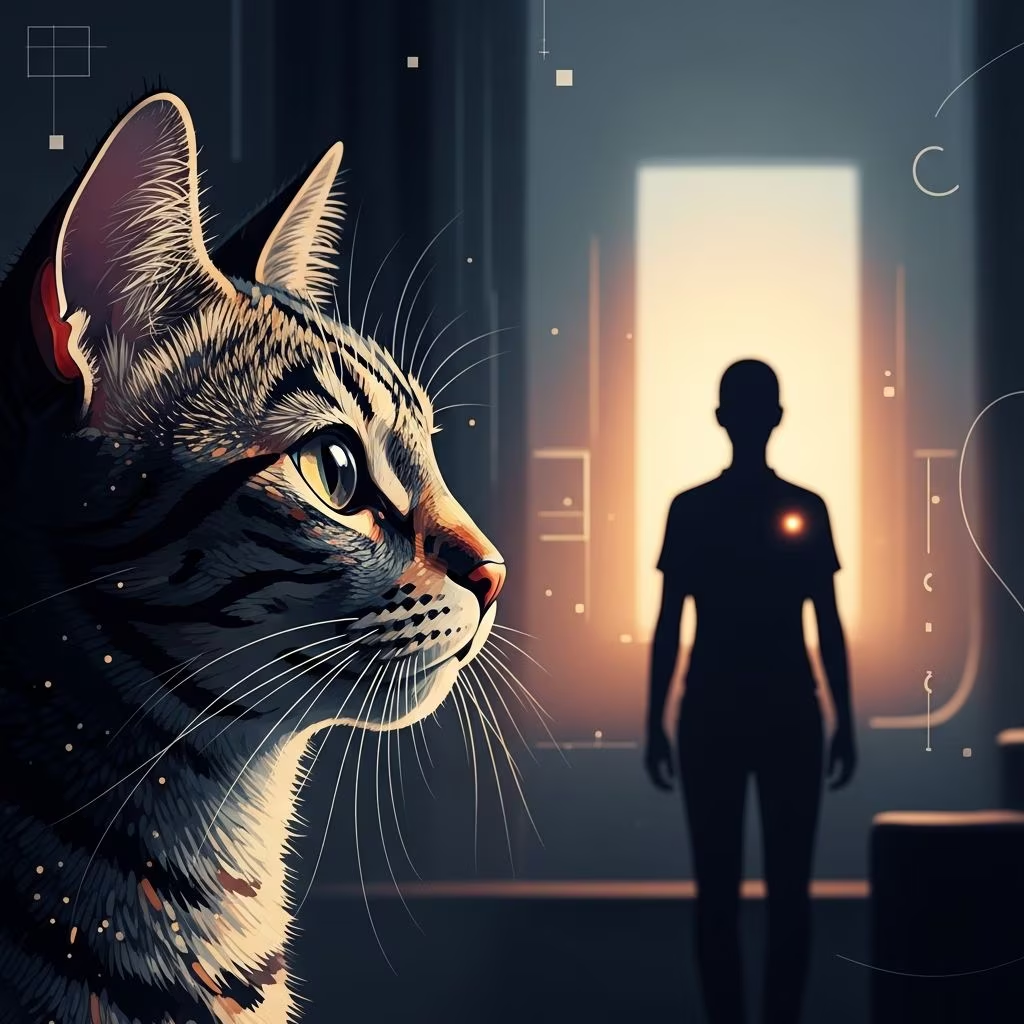
Can Cats Be Sexually Attracted to Humans? Dispelling the Myths
The relationship between cats and their human companions has long been a subject of fascination and curiosity. Among the many questions pet owners ask is whether cats can experience sexual attraction toward humans. This question touches on deeper issues about animal behavior, bonding mechanisms, and the nature of feline-human interactions. Research proves ample evidence that felines bond with their owners and express affection physically and vocally; however, sexual attraction is not a part of that mix.
Understanding Feline Bonding Mechanisms
Cats form complex relationships with their human caretakers, but these connections operate through fundamentally different neurobiological pathways than sexual attraction. When cats interact with humans, they engage in various bonding behaviors including rubbing against legs, purring, slow blinks, and seeking physical proximity. These actions reflect affection and comfort rather than sexual interest.
Research has shown that interactions between cats and humans can trigger the release of oxytocin, often called the “bonding hormone” or “love hormone.” While the research remains limited, studies have demonstrated that human-animal interactions can increase oxytocin release in both dogs and humans, and similar effects can occur with cats. This neurochemical response explains how cats develop genuine attachment to their owners, but it operates in an entirely different capacity from sexual arousal.
Oxytocin plays a crucial role in social bonding across species, facilitating trust, caregiving behavior, and emotional connection. In the context of cat-human relationships, this hormone contributes to the warmth and affection cats display toward their owners, but it does not translate into sexual attraction or desire.
The Role of Hormones in Cat Behavior
Hormonal factors significantly influence how cats behave toward humans, though not in the way some might assume. Research investigating the relationship between cat behavior and hormone concentrations reveals fascinating insights into feline sociability.
A pilot study examining hormonal influences on cat behavior found that testosterone levels and the age at which cats begin living with humans both modulate their affinity behavior toward humans. Specifically, male cats that began living with humans earlier in life showed more contact with humans. Additionally, individual male cats with lower testosterone levels were more likely to interact with experimenters and show greater affinity toward human companions.
This research suggests that while hormones do influence cat behavior, they do so by affecting sociability and comfort with human presence, not by generating sexual attraction. The hormonal modulation of cat behavior operates within the social and bonding domains rather than the sexual domain.
What About Mating Behaviors in Cats?
It is important to distinguish between feline mating behaviors directed at appropriate partners (other cats) and any potential sexual interest in humans. When cats reach sexual maturity, they exhibit specific mating behaviors exclusively toward members of their own species. These behaviors are triggered by pheromones, visual cues, and behavioral signals specific to other cats.
The feline reproductive system is designed to respond to stimuli from other cats. Even in cases where cats might display mounting behavior or other sexual behaviors toward humans or inanimate objects, these represent misdirected or displaced behaviors rather than genuine sexual attraction. Such behaviors typically indicate stress, confusion, or abnormal development rather than actual sexual interest.
The Toxoplasmosis Connection and Misconceptions
One source of confusion regarding sexual behavior and cats stems from research on toxoplasmosis, a parasitic infection caused by Toxoplasma gondii. This research has nothing to do with cats being attracted to humans, but rather examines how the parasite affects the behavior of infected animals.
Studies have shown that Toxoplasma infection alters neural activity in limbic brain areas of rats, changing their response to cat odor. Remarkably, infected rats begin to prefer areas with cat urine, overriding their normal defensive behavior. The parasite increases activity in limbic regions associated with sexual attraction, essentially hijacking the rat’s brain to make cat odor appealing rather than frightening. This benefits the parasite by increasing the likelihood of rats being caught and eaten by cats, facilitating transmission of the parasite to its feline host.
Some sensationalized reports have suggested that humans infected with toxoplasmosis show increased sexual interest in various stimuli, including a higher attractiveness rating of highly diluted cat urine. However, this research addresses how parasites affect human perception and sexual preferences—not how cats feel attracted to humans. The confusion between these concepts has led to widespread misunderstanding about the relationship between cats and their human owners.
Cats as Therapy Animals and Emotional Support
Scientists have found that felines can be just as effective as canines for therapy animals. This effectiveness stems from their ability to form genuine bonds with humans and provide comfort through their presence. The oxytocin release that occurs during cat-human interaction explains the mechanism for how therapy cats provide emotional support and refine our understanding of how cats express affection.
When cats participate in therapeutic settings, they leverage their natural bonding capacity to help anxious, depressed, or isolated individuals. This represents one of the most meaningful ways cats connect with humans—through emotional support and companionship, not through any form of sexual attraction.
Behavioral Signals: What Cats Really Mean
Understanding cat body language helps clarify the nature of feline-human interactions. When cats engage in the following behaviors, they are expressing affection and bonding, not sexual attraction:
- Slow blinking: A sign of trust and affection, often called a “cat kiss”
- Rubbing against you: Marking you with scent glands to show ownership and bonding
- Purring: Indicates contentment and positive emotional state
- Kneading: A leftover behavior from kittenhood showing comfort and security
- Head bumping: A gentle greeting and affection display
- Bringing you “gifts”: Sharing resources as a sign of inclusion in their family unit
Each of these behaviors communicates attachment and belonging within a social structure, not sexual interest.
The Biology of Feline Sexual Behavior
From a biological perspective, cats are hardwired for reproduction exclusively with members of their own species. Their sensory systems—particularly their olfactory capabilities—are tuned to detect the pheromones and chemical signals produced by potential feline mates. Humans do not produce these signals, nor do they trigger the neural pathways associated with sexual behavior in cats.
A cat’s brain is fundamentally organized to recognize, respond to, and pursue only other cats for mating purposes. The neural circuits controlling feline reproduction are species-specific and do not activate in response to human presence or behavior.
Addressing Common Misconceptions
Several myths persist about cat behavior toward humans. By addressing these directly, we can better understand the genuine nature of feline-human relationships:
Myth 1: Cats rub against you sexually. Reality: Cats mark their owners with scent glands located around their face and body as a bonding and claiming behavior, similar to how they mark their territory.
Myth 2: Cats are attracted to certain physical attributes in humans. Reality: Cats respond to voices, handling patterns, feeding schedules, and familiarity—not physical attraction.
Myth 3: Unspayed/unneutered cats show sexual interest in humans. Reality: Even intact cats direct sexual behaviors exclusively toward other cats. Any misdirected behavior stems from confusion or stress, not attraction to humans.
Frequently Asked Questions About Cats and Sexual Attraction
Q: Can an intact (unspayed/unneutered) cat develop sexual feelings toward its owner?
A: No. Even in intact cats, sexual behaviors are exclusively directed toward other cats. While hormonal cycles influence a cat’s overall behavior and mood, they do not create sexual attraction toward humans. Spaying and neutering reduce problematic sexual behaviors, but the absence of these procedures does not lead to sexual interest in human owners.
Q: Does a cat’s affectionate behavior indicate sexual attraction?
A: No. Affectionate cat behaviors such as purring, rubbing, and seeking physical contact are expressions of emotional bonding and security, not sexual interest. These behaviors are driven by oxytocin and social attachment mechanisms, not sexual arousal.
Q: Why does my cat mount objects or other cats?
A: Mounting behavior in cats is a sexual behavior intended exclusively for reproduction with other cats. If your cat mounts objects or humans, it typically indicates stress, playfulness, or a response to hormonal cycles rather than genuine sexual attraction. If this behavior is concerning, consult a veterinarian.
Q: Does toxoplasmosis cause cats to be sexually attracted to humans?
A: No. Toxoplasmosis research involves how the parasite affects infected animals’ (particularly rodents and humans) behavior, not how it influences cats’ attraction to humans. Cats are the definitive host for the parasite, and the infection does not make them sexually interested in their human owners.
Q: What hormones influence cat behavior toward humans?
A: Testosterone, cortisol, and oxytocin all influence how cats interact with humans. These hormones affect sociability, comfort levels, and affection—not sexual attraction. Lower testosterone in male cats correlates with greater willingness to interact with humans, while oxytocin facilitates bonding and trust.
Q: How can I strengthen my bond with my cat?
A: Strengthen your bond through consistent positive interactions including play, feeding, gentle petting, and respecting your cat’s boundaries. Early socialization with humans also helps develop stronger affinity in adulthood. These practices enhance the oxytocin-mediated bonding between you and your feline companion.
Q: Are there breed differences in how cats bond with humans?
A: While individual personality varies widely, certain breeds tend to be more social and affectionate than others. However, bonding capacity and sexual behavior are distinct phenomena. No breed shows sexual attraction toward humans regardless of their general sociability level.
Conclusion: Understanding Feline Affection
The scientific evidence overwhelmingly demonstrates that cats cannot and do not experience sexual attraction toward humans. What cats do express is genuine emotional bonding, affection, and companionship through mechanisms rooted in oxytocin release, socialization history, and hormonal influences on sociability.
The distinction between affection and sexual attraction is crucial for pet owners to understand. By recognizing that cats bond with humans through emotional and social connections rather than sexual ones, we can better appreciate the authentic and meaningful relationships we share with our feline companions. These bonds, while non-sexual, are profoundly rewarding for both cats and their human families, supported by genuine neurobiological mechanisms that facilitate trust, comfort, and lasting attachment.
References
- Predator Cat Odors Activate Sexual Arousal Pathways in Brains of Toxoplasma-Infected Rats — PLOS ONE. 2011. https://journals.plos.org/plosone/article?id=10.1371%2Fjournal.pone.0023277
- Sociality of Cats toward Humans Can Be Influenced by Hormonal Status at Ontogeny and Interaction History — NIH National Center for Biotechnology Information. 2022. https://pmc.ncbi.nlm.nih.gov/articles/PMC9817699/
- Can Cats Be Sexually Attracted to Humans? Dispelling the Myths — Catster. 2024. https://www.catster.com/lifestyle/can-cats-be-sexually-attracted-to-humans/
- Does Toxoplasma Infection Increase Sexual Masochism and Bondage Interest — NIH National Center for Biotechnology Information. 2018. https://pmc.ncbi.nlm.nih.gov/articles/PMC5731508/
- The Relation of Toxoplasma Infection and Sexual Attraction to Fear and Danger — SAGE Journals. 2016. https://journals.sagepub.com/doi/10.1177/1474704916659746



