

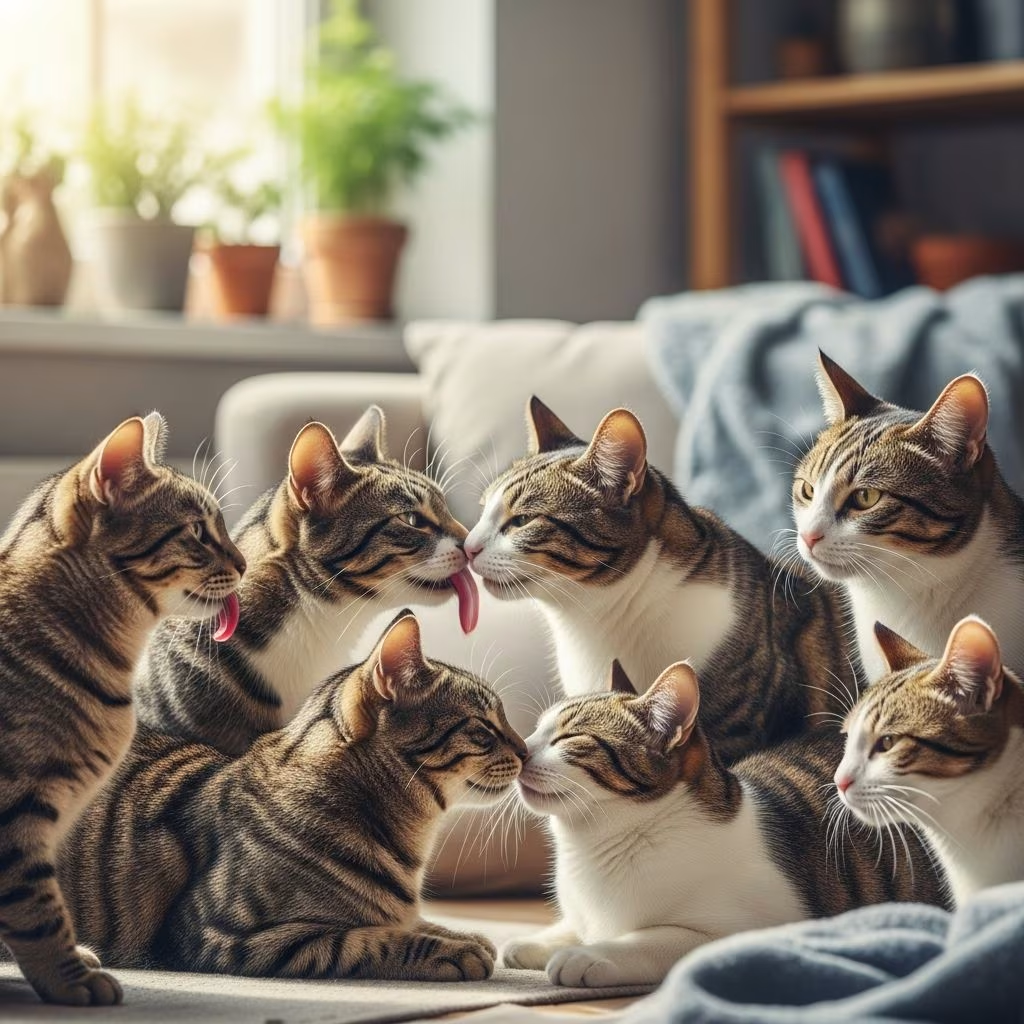
Cats exhibit a range of social and sexual behaviors that can mimic human concepts like homosexuality, bisexuality, or lesbianism, but these are often driven by instincts rather than fixed orientations. Scientific observations document same-sex mounting and affection in both wild and domestic cats, though interpretations vary from sexual frustration to territorial displays.
What Does ‘Gay,’ ‘Bisexual,’ or ‘Lesbian’ Mean in Cats?
Human sexual orientations like **gay**, **bisexual**, or **lesbian** imply consistent romantic or sexual preferences. In cats, behaviors resembling these—such as male-male mounting or female-female grooming—do not necessarily indicate orientation. Instead, they stem from hormones, dominance, practice, or affection. Domestic cats (*Felis catus*) show homosexual-like actions more frequently in unneutered males, but neutered cats display them too.
Key distinctions include:
- Homosexuality: Exclusive same-sex attraction, rare in cats due to their promiscuous breeding.
- Bisexuality: Both-sex interactions, common as cats mate opportunistically.
- Lesbianism: Female-female behaviors, less mounting-focused, more affiliative.
Cats lack pair-bonding typical in humans; females in heat seek multiple males, leading to multi-paternity litters.
Observed Same-Sex Behaviors in Cats
Same-sex mounting has been documented since the 1960s in scientific literature. In cat colonies, unneutered males frequently mount other males, sometimes penetrating, amid vocalizations and lordosis (arching posture). Neutered males show reduced but persistent behaviors.
Male-Male Interactions: Dominant toms mount subordinates to assert territory. Frustrated males, isolated from estrous females, mount males, furniture, or rabbits. Experienced males with female access mount less indiscriminately.
Female-Female Interactions: Less aggressive; includes allo-grooming, rubbing, and occasional mounting. Queens in heat may solicit other females mistakenly.
| Behavior | Male-Male | Female-Female | Common Triggers |
|---|---|---|---|
| Mounting | Frequent, with thrusting | Rare, gentle | Hormones, frustration |
| Grooming/Rubbing | Affiliative | Common | Social bonding |
| Vocalizing | Yes, during mount | Less so | Arousal |
Scientific Explanations for Homosexual Behavior in Cats
Several theories explain these behaviors, supported by peer-reviewed studies.
Sexual Frustration and Hypersexuality
Intact males separated from females in heat exhibit ‘hypersexuality,’ mounting any available target. A 1961 study observed normal males developing distorted patterns like prolonged mounting, previously linked to brain damage, as a training effect in colonies. Low female availability increases male-male attempts across species.
Territorial and Dominance Displays
Mounting reinforces hierarchy. Submissive males adopt female postures to appease dominants, reducing fights.
Practice for Heterosexual Mating
Juvenile males mount peers to hone skills, akin to play-hunting. This prepares for adult reproduction.
Mistaken Identity
Aroused toms confuse tomcats for queens in heat due to similar postures or scents.
Hormonal Influences
Testosterone drives male behaviors. Neutered males with residual adrenal testosterone remain sociable but less aggressive. Early human socialization correlates with lower testosterone and higher human affinity in males. A pilot study found males starting life with humans earlier (and with lower testosterone) interact more with people, suggesting endocrine-social links.
Females show no such hormone-behavior ties toward humans. Perinatal androgens shape male brains, influencing lifelong responses.
Do Cats Form Long-Term Same-Sex Pairs?
No evidence supports enduring homosexual partnerships in cats. Their strategy is promiscuous: estrous queens mate with 3-10 toms, litters often having multiple sires. Long-term bonds are rare even heterosexually; focus remains on transient encounters. Homosexual pairs would contradict this, though affectionate friendships occur.
Anthropomorphism: Why We Shouldn’t Label Cats’ Sexuality
Applying human labels to cats risks **anthropomorphism**—projecting our norms onto animals. Cat sexuality prioritizes reproduction over romance. Same-sex acts serve survival: tension relief, alliance formation, or practice. Labeling a mounting tom ‘gay’ ignores context; it’s often instinctual, not preferential.
Ecologist Joan Roughgarden notes animal homosexuality varies by context, species, and environment. Early neutering alters preferences in rodents, hinting hormones override orientation. Cats’ loose social structure allows fluid behaviors without fixed identities.
Health and Behavioral Implications for Cat Owners
Observing same-sex mounting alarms owners, but it’s normal. Unneutered cats amplify issues:
- Increased fights, injuries.
- Hypersexuality leading to stress.
- Unwanted litters.
Neutering reduces mounting by 90%, curbs roaming. Monitor for redirected aggression; provide enrichment like toys, scratching posts.
For bonded same-sex pairs showing affection, it’s positive—cats form platonic friendships via grooming, sleeping together.
Frequently Asked Questions (FAQs)
Can cats be gay?
Cats display same-sex behaviors, but not as a fixed orientation like humans. It’s often hormonal or social.
Why do male cats mount other males?
Due to frustration, dominance, practice, or confusion.
Do female cats show lesbian behavior?
Yes, through grooming and rare mounting, usually affiliative.
Does neutering stop homosexual mounting?
It greatly reduces it, especially in males.
Is same-sex behavior harmful to cats?
No, if no fighting; neuter to minimize risks.
Can hormones change a cat’s sexuality?
Yes, testosterone influences behaviors; early neutering affects sociality.
Conclusion: Understanding Feline Sexuality Holistically
Cats’ same-sex behaviors enrich our view of their complex instincts, not human-like identities. Owners benefit from science: neuter early, enrich environments, avoid labels. This fosters healthier, happier felines.
References
- Purr-ide Post: Are Gay Cats a Thing? — Class Act Cats. 2023. https://classactcats.com/blog/gay-cats/
- “Hypersexuality” in Male Cats without Brain Damage — Science. 1961-10-13. https://www.science.org/doi/10.1126/science.134.3478.553
- Sociality of Cats toward Humans Can Be Influenced by Hormonal Status — PMC (Animals). 2023. https://pmc.ncbi.nlm.nih.gov/articles/PMC9817699/
- Can Dogs and Cats be Gay? Exploring Homosexuality in Animals — Petcube. 2023. https://petcube.com/blog/can-cats-and-dogs-be-gay/



