

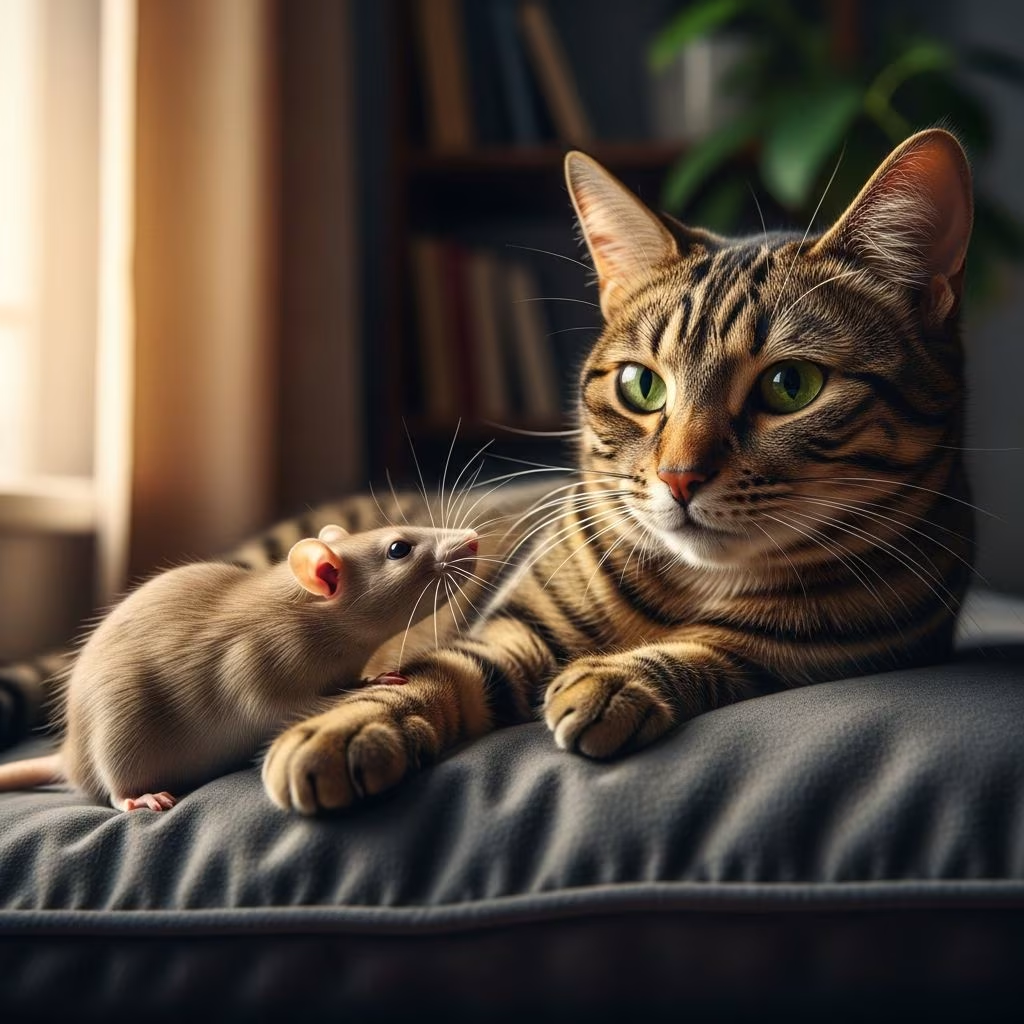
Cats and rats can form unlikely friendships in rare cases, defying their natural predator-prey instincts, as evidenced by several heartwarming real-life stories. However, success requires careful introductions, supervision, and understanding of inherent risks, making it exceptional rather than the norm.
Cat and Rat Instincts: Why It’s Challenging
Cats are natural predators descended from African wildcats that hunt small rodents on the savannah for sport, not just hunger, retaining this instinct even when well-fed. Rats, as prey animals, trigger this hunting drive, making harmonious coexistence risky without strict precautions.
Pet cats bring prey home to eat safely in their territory, mimicking wild behavior, which underscores why unsupervised interactions with rats can turn dangerous. Despite this, some cats raised with baby rats from the start may view them as family rather than food.
Real-Life Stories of Cat-Rat Friendships
Heartwarming examples prove exceptions exist, often starting when rats are introduced as babies.
- Perseya the Cat and Filya the Rat: This orange tabby and caramel rat play tag for hours, with Filya following Perseya like a ‘tail’ and providing emotional support by giving kisses when she’s upset.
- Peanut the Rat and Ranj the Cat: Rescued as a stray, Ranj befriended baby rat Peanut, who snuggled under his fur, shared kibble, and followed him everywhere like siblings until Peanut’s passing in 2010.
- Galaxy the Cat and Bernie the Rat: Galaxy adopted baby Bernie maternally, leading to play-fighting, chasing, grooming, and mutual affection where Bernie even grooms her ears.
These bonds highlight how early exposure and positive family dynamics can override instincts, with rats often initiating closeness.
Friendship Factors: What Makes It Work?
Several elements contribute to successful cat-rat friendships:
- Introducing rats as babies allows cats to imprint them as non-prey.
- Observant cats learn from owners’ calm treatment, viewing rats as family members.
- Maternal instincts in older cats can foster protective bonds.
- Constant supervision prevents accidents, as instincts may resurface.
Owners report play resembling roughhousing siblings, with mutual grooming and chasing where roles reverse—rats sometimes ‘chasing’ cats.
The Risks: When Friendships Fail
Despite cute stories, risks remain high. Cats’ hunting isn’t hunger-driven but instinctual, activated by movement or scent. Not all cats suppress this; some stories note failed bonds, like Mocha the rat avoiding Ranj. Rats’ short lifespans (2-3 years) add emotional challenges for surviving cats. Health risks include disease transmission if hygiene lapses.
| Factor | Pro-Friendship | Risk |
|---|---|---|
| Instincts | Overridable with early exposure | Hunting drive persists |
| Introduction Age | Babies succeed often | Adults trigger prey response |
| Supervision | Enables safe play | Unsupervised = potential injury |
| Lifespan | Bonds form quickly | Rat death causes grief |
Safety Tips for Introducing Cats and Rats
To attempt this, prioritize safety:
- Keep rats in secure cages out of cat reach at all times when unsupervised.
- Introduce gradually in neutral, fenced areas with constant monitoring.
- Enrich environments: Provide toys, puzzle feeders to redirect hunting urges.
- Confine cats indoors during dawn/dusk hunting peaks.
- Monitor for stress signs; separate immediately if aggression appears.
- Consult vets for health checks, especially parasites or diseases.
Never force interactions; if instincts prevail, maintain separation for welfare.
Alternatives to Live Rat Companions
For cats craving small companions without risks:
- Use interactive toys mimicking prey movement.
- Adopt another cat or dog for play.
- Offer puzzle feeders and scent games for mental stimulation.
Frequently Asked Questions (FAQs)
Can cats and rats ever live together safely?
Yes, in rare supervised cases with early introductions, but always use secure cages and monitor closely due to instincts.
Why do some cats not hunt pet rats?
Early exposure as babies lets cats see them as family; owners’ calm demeanor reinforces this.
What if my cat shows hunting behavior toward a rat?
Separate immediately, keep rat caged securely, and redirect with toys.
How long do these friendships last?
Often until the rat’s short lifespan ends (2-3 years), causing grief for the cat.
Are there health risks between cats and rats?
Yes, potential for parasites or bacteria; regular vet checks essential.
Conclusion: Rare but Possible Bonds
While cats and rats being friends challenges nature, real stories like Perseya-Filya, Peanut-Ranj, and Galaxy-Bernie show it’s possible with caution. Prioritize safety over ideals for happy homes.
References
- Playful Rat Loves Giving Her Cat Sister Hugs And Kisses — Greater Good. N/D. https://greatergood.com/blogs/news/rat-cat-friendship
- Cat and Rat’s Adorable Friendship Shatters Stereotypes — ABC News. 2015-10-20. https://abcnews.go.com/Lifestyle/cat-rats-adorable-friendship-shatters-stereotypes/story?id=36844877
- Can cats & rats be friends like The Amazing Maurice? — Cats Protection (cats.org.uk). N/D. https://www.cats.org.uk/cats-blog/can-cats-and-rats-be-friends-like-in-the-amazing-maurice
- Cat And Rat Love Each Other SO Much | The Dodo Odd Couples — The Dodo (YouTube). 2018-07-18. https://www.youtube.com/watch?v=u2spkG_wm8o



