

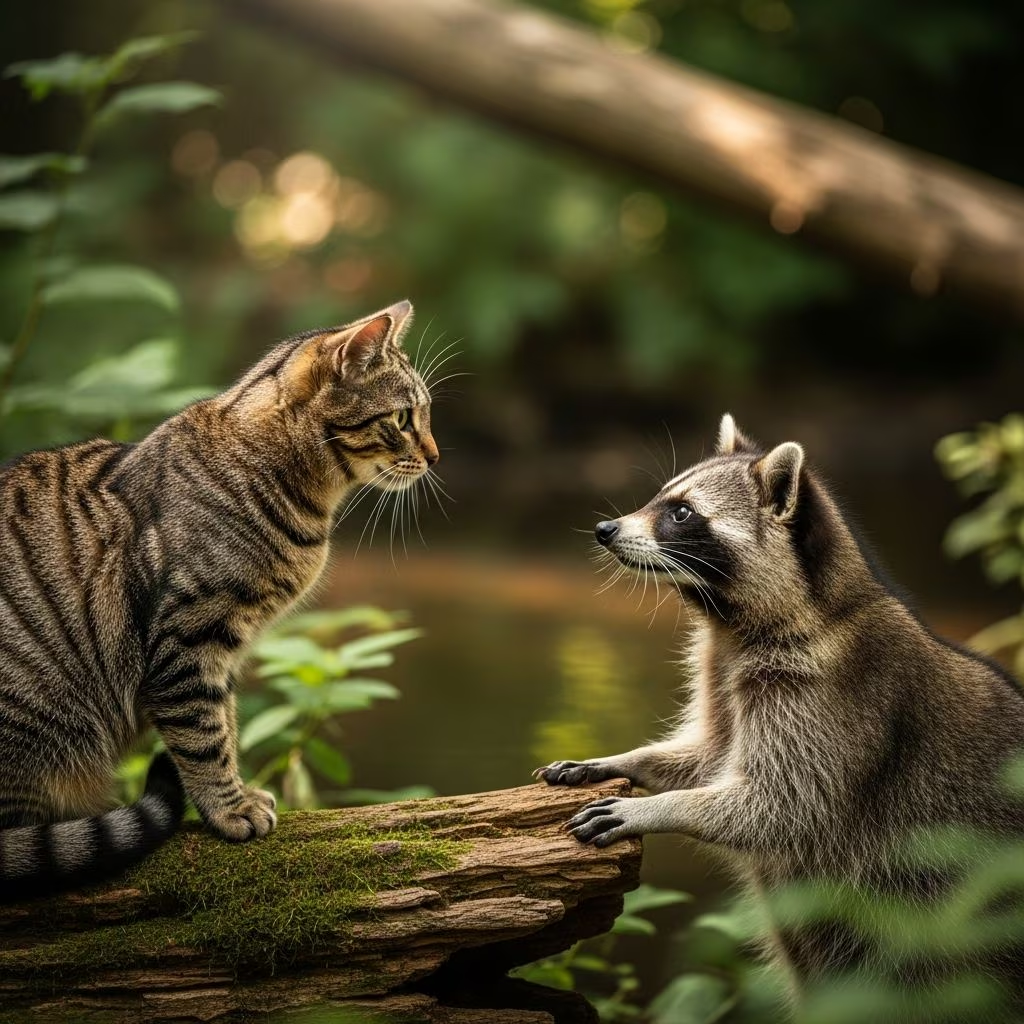
Cats and raccoons cannot mate or produce viable offspring due to profound genetic, chromosomal, and reproductive differences that prevent successful hybridization. Domestic cats (*Felis catus*) belong to the Felidae family, while raccoons (*Procyon lotor*) are Procyonids, diverged evolutionarily millions of years ago, making interbreeding biologically impossible. Despite urban myths and anecdotal reports of ‘raccoon cats,’ no scientific evidence supports such hybrids; resemblances are coincidental, often seen in breeds like Maine Coons.
Why Do People Think Cats and Raccoons Can Mate?
The myth persists due to superficial similarities in appearance and behavior, amplified by folklore and misidentifications. Raccoons’ masked faces and ringed tails mimic some cat breeds, leading to assumptions of hybrid origins, particularly for large, fluffy Maine Coons historically rumored to descend from raccoon-cat crosses. In urban environments, cats and raccoons coexist, scavenging similar food sources, which fuels sightings of interactions mistaken for mating. Nineteenth-century reports claimed hybrids, but these lack verification and predate modern genetics, often dismissed as hoaxes or errors. Social media perpetuates unverified stories of ‘cacoons’ or ‘squitters,’ but DNA analysis consistently debunks them.
Biological Barriers to Breeding
Several insurmountable barriers prevent cats and raccoons from producing offspring, rooted in their distinct evolutionary lineages.
Genetic and Chromosomal Incompatibility
Domestic cats possess 38 chromosomes (19 pairs), while raccoons have 54 (27 pairs), a mismatch that disrupts meiosis and gamete formation, rendering fertilization impossible. Even if sperm penetrated an egg, divergent gene sequences for embryonic development, organ formation, and immunity would cause zygote failure. Felids and Procyonids split ~40-50 million years ago, with incompatible genomes confirmed by molecular studies.
Reproductive Physiology Differences
Cats are induced ovulators, releasing eggs post-mating, with year-round heat cycles peaking in spring-summer. Raccoons are spontaneous ovulators, breeding January-March with a strict 63-day gestation. Sperm-egg recognition proteins are species-specific; feline sperm cannot fertilize raccoon ova or vice versa.
Mating Behaviors and Seasons
Cats mate briefly with aggression and neck-biting; raccoons form temporary bonds with prolonged courtship. Seasonal misalignment—cats polyestrous, raccoons monoestrous—minimizes encounters. While physical mating might occur rarely (e.g., tame male raccoons with cats), it yields no offspring.
| Feature | Domestic Cat | Raccoon |
|---|---|---|
| Family | Felidae | Procyonidae |
| Chromosomes | 38 (19 pairs) | 54 (27 pairs) |
| Gestation | 63-65 days | 63 days |
| Ovulation | Induced | Spontaneous |
| Mating Season | Year-round (spring peak) | Jan-Mar |
| Hybrid Viability | Impossible | Impossible |
Do Cats and Raccoons Get Along?
Cats and raccoons may tolerate proximity in shared habitats but rarely ‘get along’ peacefully. Both are territorial, competing for food and space, often leading to hissing, swatting, or fights. Raccoons, larger and aggressive, pose risks to cats via scratches or bites transmitting diseases like rabies or leptospirosis. Supervised interactions might occur with habituated animals, but wild raccoons view cats as competitors or prey. Pet owners should prevent contact to avoid injury or illness transmission.
- Territorial Conflicts: Both nocturnal scavengers defend resources aggressively.
- Size Disparity: Adult raccoons (10-30 lbs) overpower most cats (8-15 lbs).
- Disease Risk: Raccoons carry parasites/diseases absent in vaccinated cats.
Health Risks of Cats and Raccoons Interacting
Beyond failed breeding, interactions endanger both species. Raccoons transmit rabies, roundworms (*Baylisascaris procyonis*), leptospirosis, and fleas to cats. Cats risk physical trauma from raccoon aggression; raccoons may contract feline diseases like FIV if immunocompromised. Prevent access to food bowls, secure trash, and use deterrents like motion lights. Veterinary checks post-exposure are essential.
Myths vs. Facts: Cat-Raccoon Hybrids
Myth: Maine Coons are raccoon hybrids. Fact: Maine Coons’ bushy tails and size result from selective breeding within Felidae; genetic tests confirm pure cat ancestry.
Myth: Historical reports prove hybrids. Fact: 19th-century claims lack photos/DNA; modern science rules them out.
Myth: Urban ‘raccoon kittens’ exist. Fact: Misidentified kittens of other species or unusual cat breeds.
Real Cat Hybrids (That Actually Exist)
Unlike raccoons, cats hybridize with close Felidae relatives in captivity:
- Savannah Cat: Serval x Domestic (F1 fertile but rare naturally).
- Bengal Cat: Asian Leopard Cat x Domestic; bred for spots.
- Chausie: Jungle Cat x Domestic; athletic build.
These require human intervention; fertility drops in later generations. No Procyonid crosses verified.
Frequently Asked Questions (FAQs)
Can cats and raccoons mate?
No, their genetic incompatibility (different chromosome counts, families) prevents fertilization or viable embryos.
Are there cat-raccoon hybrids?
No verified hybrids exist; claims are myths or misidentifications.
Can a cat get pregnant from a raccoon?
Impossible due to reproductive barriers like ovulation types and gamete incompatibility.
Do raccoons attack cats?
Possible, especially over food; raccoons’ size gives them advantage, risking injury/disease.
Is a Maine Coon part raccoon?
No, Maine Coons are pure domestic cats; tail markings are coincidental.
Protecting Your Cat from Raccoons
To ensure safety:
- Feed cats indoors; remove outdoor food.
- Secure garbage and compost.
- Install fencing with raccoon-proof lids.
- Use repellents (ammonia, lights).
- Vaccinate/spay/neuter cats; monitor for illness.
Understanding these boundaries promotes harmonious urban wildlife coexistence without risking pets.
References
- Can a Cat and Raccoon Breed? — Zoorithm. 2023. https://www.zoorithm.com/cats/can-a-cat-and-raccoon-breed
- Can a Cat and Raccoon Breed? No, Here’s Why — Alibaba Cat Lovers. 2024. https://catlovers.alibaba.com/question/can-a-cat-and-raccoon-breed
- Can Cats and Raccoons Mate? Vet-Approved Facts & FAQ — Hepper. 2024. https://articles.hepper.com/can-cats-and-raccoons-mate/
- Cat-raccoon Hybrids — Macroevolution.net. 2023. http://www.macroevolution.net/cat-raccoon-hybrids.html
- Is a Maine Coon Cat Part Raccoon? — Maine Coon Cat Nation. 2024. https://www.maine-coon-cat-nation.com/is-a-maine-coon-cat-part-raccoon.html



