

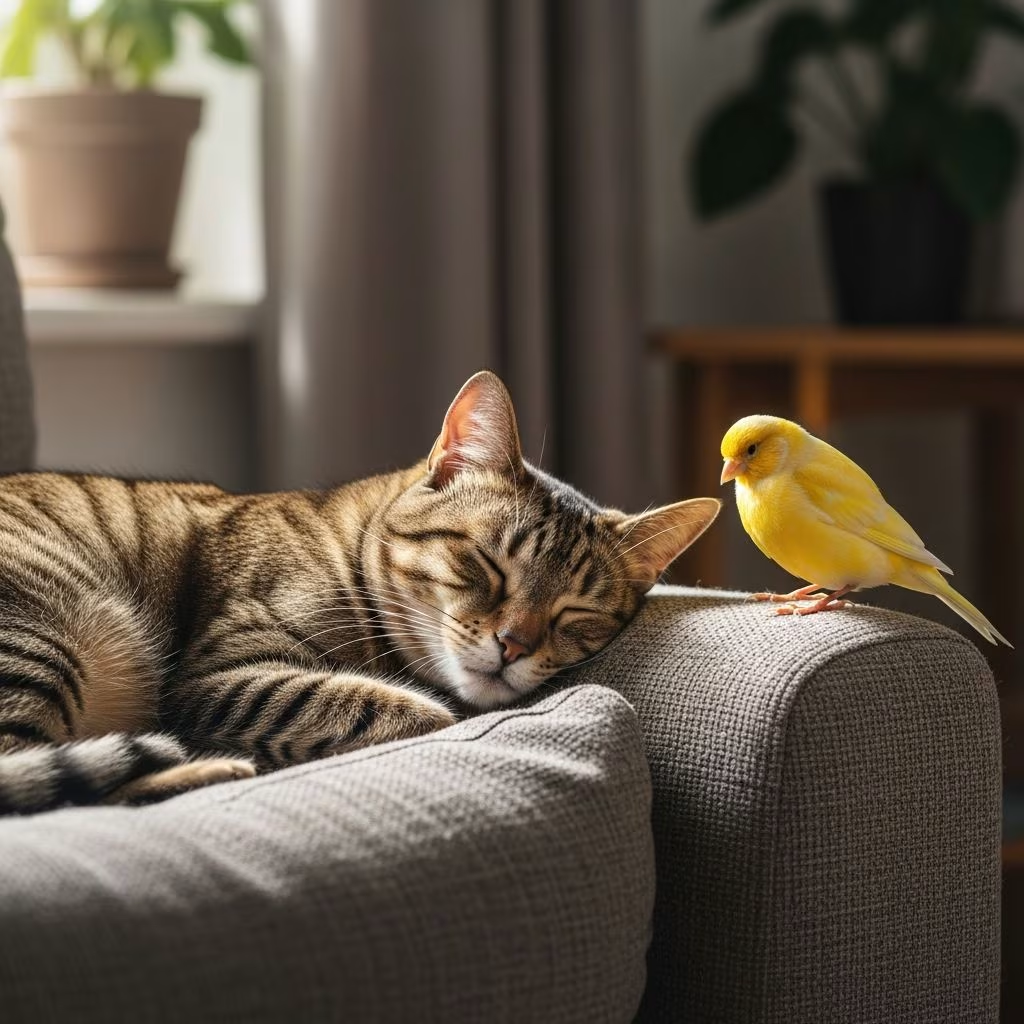
Cats and birds can live in the same household with strict safety precautions to manage their natural predator-prey instincts, but direct interactions must be avoided to prevent injury or death to the bird.
The Natural Predator-Prey Relationship Between Cats and Birds
Cats are obligate carnivores evolved as skilled hunters, with sharp claws, powerful jaws, and acute senses tuned to detect quick movements like those of flying birds. Their saliva contains Pasteurella multocida bacteria, which is highly lethal to birds even from minor bites or scratches, often causing fatal infections within hours.
Birds, particularly smaller species like finches, canaries, budgies, and parakeets, trigger a cat’s hunting drive due to their fluttering wings, hopping, and high-pitched calls. Larger birds such as parrots, macaws, or cockatoos may be less appealing prey because of their size, strong beaks, and slower movements, though risks remain high.
According to wildlife studies, domestic cats kill billions of birds annually worldwide, underscoring their predatory impact even on wild populations. In a home setting, this instinct doesn’t vanish; even well-fed, indoor cats retain the drive to stalk and pounce.
Understanding Cat Hunting Instincts
A cat’s hunting behavior is hardwired from their wild ancestors, Felis silvestris lybica. Key triggers include:
- Movement: Birds’ rapid flight or hopping mimics prey, activating the cat’s chase response.
- Sounds: Chirps, tweets, and wing flutters excite cats’ sensitive ears.
- Scent: Birds’ natural odors signal vulnerability.
Even “lazy” house cats can explode into action at the sight of a loose bird, leaping to heights of 5-6 feet to catch it mid-air. Never underestimate this; assuming your cat “wouldn’t hurt a fly” ignores biology.
Why Pet Birds Are Especially Vulnerable
Pet birds lack the wild survival skills to evade cats effectively. A single encounter can result in:
- Physical trauma from claws or teeth.
- Bacterial infection from saliva.
- Sudden death from shock or stress, as birds’ cardiovascular systems are fragile.
Stress from a cat’s proximity alone causes chronic issues like feather plucking, aggression, appetite loss, and immune suppression, shortening lifespan.
Essential Safety Precautions for Cats and Birds
To enable safe coexistence, prioritize total separation. Key measures include:
- Secure Aviaries: Use all-metal cages with bar spacing no wider than 1/2 inch for small birds. Place in a cat-proof room with doors always closed.
- Cage Covers: Employ full covers during cat presence to block sight and sound.
- Elevated Placement: Mount cages high (6+ feet) where cats can’t jump or climb to reach.
- No Free Flight: Never allow birds out unsupervised; a momentary escape can be fatal.
- Separate Feeding/Sleeping Areas: Keep birds in a “no-cat zone” for rest and meals.
For wild birds in your yard, install bird feeders 6 feet from cover, use motion-activated sprinklers to deter cats, and plant dense shrubs as escape cover.
Should You Introduce Cats and Birds?
Veterinarians unanimously advise against direct introductions. The risks far outweigh any potential benefits:
| Risk | Consequences for Bird | Prevention |
|---|---|---|
| Predatory Attack | Bites/scratches leading to infection or death | Strict separation |
| Stress Response | Feather picking, self-mutilation, organ failure | Sound/sight barriers |
| Accidental Injury | Falls from panic, collisions | Supervised-only sessions (rarely) |
Signs of bird stress include screaming, biting, reduced vocalization, and stereotypical pacing. Cats may stalk, dilate pupils, crouch, or twitch tails—immediate separation cues.
Creating Separate Living Spaces
Designate exclusive zones:
- Bird Room: Locked door, no cat access ever. Include toys, perches, and foraging for enrichment.
- Cat Zones: Ample scratching posts, toys, and windows for bird-watching without access.
- Neutral Areas: Use baby gates or netting for controlled, distant acclimation to scents/sounds only.
Gradual desensitization: Swap bedding to familiarize scents without visuals. Reward calm cat behavior with treats.
Training Your Cat to Ignore Birds
While elimination of instinct is impossible, management works:
- Start with bird in covered, secure cage in separate room.
- Leash/train cat; reward ignoring cage.
- Short sessions (5 mins), increasing slowly if no stalking.
- Use deterrents like compressed air or water spray for fixation.
- Enrich cat life: Puzzle feeders, laser pointers, daily hunts for toys.
Success varies by cat age/personality—kittens adapt best; seniors may fixate more.
Choosing the Right Bird Species
Not all birds pose equal risk:
- High-Risk (Avoid): Finches, canaries, lovebirds—small, fluttery, prey-like.
- Medium-Risk: Budgies, cockatiels—trainable but vigilant needed.
- Lower-Risk: Large parrots (African Greys, Amazons)—size deters most cats, but supervision essential.
Match bird size/activity to your cat’s prey drive. Test cat reaction to bird videos first.
Benefits and Challenges of Multi-Species Homes
Benefits:
- Enrichment for both: Cats get stimulation; birds thrive in calm homes.
- Family bonding with diverse pets.
Challenges:
- Constant vigilance required.
- Vet costs for stress-related issues.
- Unequal attention leading to jealousy.
Success stories exist with diligent owners, but many experts recommend single-species homes for simplicity.
Frequently Asked Questions (FAQs)
Can cats and birds ever be friends?
Rarely true friendship forms due to instincts, but peaceful ignorance is achievable with separation. Observed tolerance in some homes doesn’t mean safety.
Is it safe to let my cat watch my bird’s cage?
No—even watching stresses birds and tempts cats. Use covers and separate rooms.
What if my cat ignores the bird?
Temptation can spike suddenly (illness, escape). Assume risk always exists.
How do I protect outdoor birds from my cat?
Keep cat indoors; use feeders far from cover, baffles, and safe shrubs.
What are signs my bird is stressed by the cat?
Feather picking, screaming, hiding, appetite loss—remove cat exposure immediately.
Conclusion: Prioritizing Safety Above All
Cats and birds can share a home successfully only through unwavering commitment to separation, training, and monitoring. As pet owners, your role is to override nature’s design for harmony. With these strategies, both can thrive—cats hunting toys, birds soaring safely. Consult avian and feline vets for personalized advice; when in doubt, prioritize the more vulnerable bird.
References
- American Bird Conservancy: Cats Indoors! The Campaign for Safer Birds — American Bird Conservancy. 2023-05-15. https://abcbirds.org/program/cats-indoors/cats-indoors/
- Impact of Free-Ranging Domestic Cats on Birds — U.S. Fish & Wildlife Service. 2024-02-10. https://www.fws.gov/story/impact-free-ranging-domestic-cats-birds
- Pasteurella multocida in Avian Species — Journal of Avian Medicine and Surgery (peer-reviewed). 2022-08-01. https://doi.org/10.1647/1082-6742(2002)016[0150:PMIAS]2.0.CO;2
- Stress in Captive Birds: Behavioral Indicators — Association of Avian Veterinarians. 2023-11-20. https://aav.org/search/stress-captive-birds/
- Feline Hunting Behavior in Domestic Settings — Journal of Feline Medicine and Surgery. 2021-06-12. https://doi.org/10.1177/1098612X211021456



