

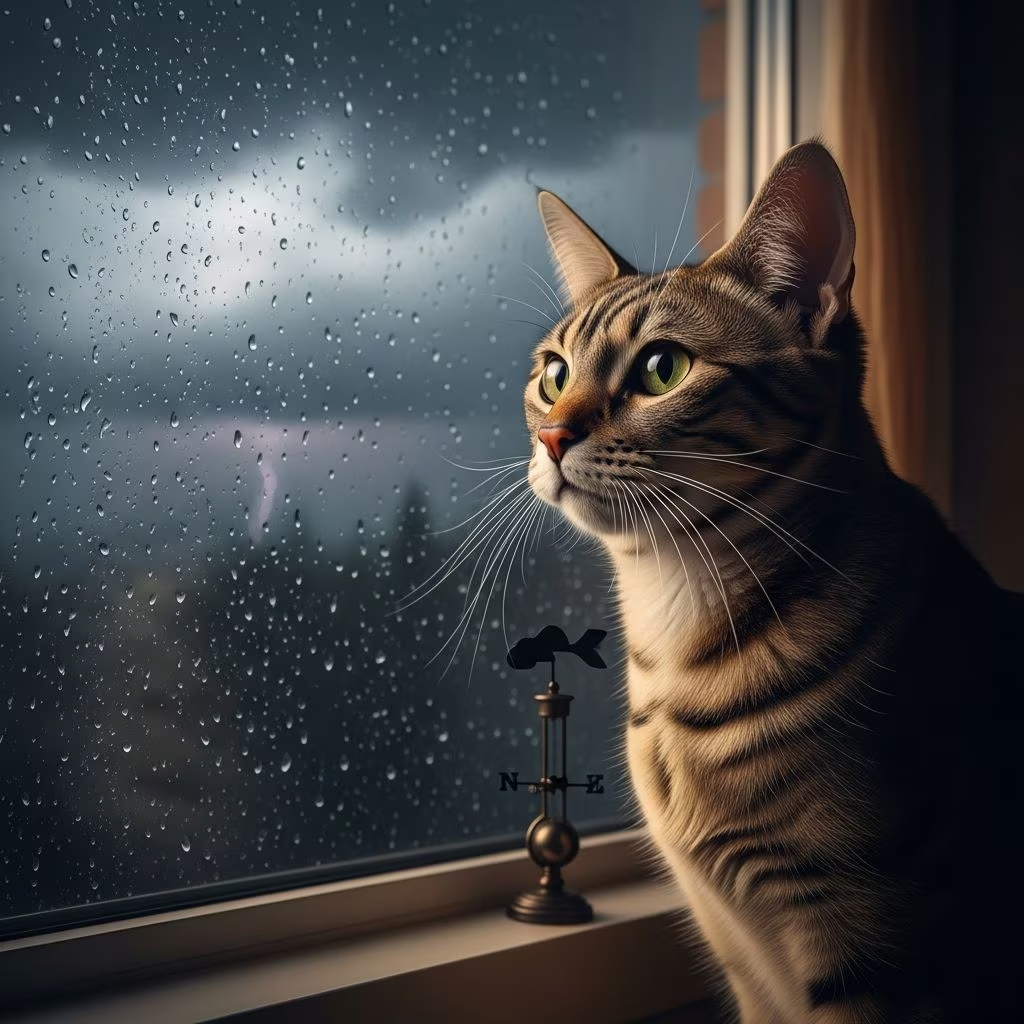
Cats have long been shrouded in mystery, with their uncanny ability to sense changes in their environment sparking curiosity among pet owners. One persistent question is whether cats can predict weather, particularly incoming storms. While folklore abounds with tales of cats as weather prophets, modern science offers intriguing insights into their heightened senses that may indeed allow them to detect atmospheric shifts before humans do. This article delves into the historical superstitions, observable behaviors, and biological mechanisms that suggest cats might have a knack for weather forecasting.
The Folklore and Superstitions Surrounding Cats and Weather
Throughout history, cats have been associated with weather prediction in various cultures, blending superstition with observation. In Welsh tradition, a cat grooming its ears was believed to herald rain, as if the feline was preparing for wet weather. Dutch folklore warned that a cat scratching at curtains or furniture signaled an approaching storm, possibly linking the behavior to restlessness from pressure changes.
In early American culture, specific postures were seen as omens. A cat warming itself by the fire but facing away from the flames supposedly indicated a cold front on the way. Similarly, the ‘cat loaf’ position—where a cat tucks all paws under its body—was thought to predict turbulent weather, as the animal conserved heat against impending cold or rain. These beliefs persisted for over a century, reflecting how observant people connected unusual cat behaviors to subsequent weather events.
Sailors, too, relied on ship cats for weather cues. Perkiness suggested fair skies, sneezing light rain, and odd actions like licking fur backward foretold gales. Though magical tails causing storms was pure myth, these tales highlight cats’ reputation as natural barometers.
Real Signals: How Cats Behave Before Bad Weather
Beyond superstition, contemporary observations and expert insights reveal genuine patterns in cat behavior preceding storms. Cats often deviate from routines when sensing inclement weather. Indoor cats might retreat to hiding spots during their usual active times, appearing skittish, nervous, or unusually energetic. Outdoor cats, who typically roam freely, may choose to stay inside, avoiding the outdoors before humans notice changes.
However, not all cats react visibly. Some tolerate storms stoically, detecting cues without distress. Sensitivity varies; anxious cats show more pronounced signs like pacing or vocalizing, while laid-back ones remain unfazed. Tracking these shifts can help owners prepare for pets’ needs during weather events.
- Retreating to safe spaces: Hiding under beds or in closets unusually early.
- Increased anxiety: Pacing, meowing, or dilated pupils.
- Energy bursts: Sudden playfulness or restlessness.
- Indoor preference: Outdoor cats lingering inside.
How Cats Sense Weather Changes: The Science
Cats’ weather-sensing prowess stems from superior sensory adaptations. Their inner ears detect subtle drops in barometric pressure hours before storms, a change meteorologists monitor with instruments. As pressure falls, air feels heavier to cats’ sensitive ears and noses.
A cat’s sense of smell is 40 times stronger than humans’, with more scent receptors enabling detection of rain’s scent or lightning’s ozone—a metallic odor from ionized air. Acute hearing picks up distant thunder inaudible to us, amplifying their predictive edge.
Scientific studies corroborate these abilities. A longitudinal study using accelerometers on seven domestic cats over 13 weeks found weather impacts behavior. Higher temperature-humidity-wind (THW) index and longer daylength increased eating, lying, and standing time, while reducing activity, grooming, littering, and sitting. Rain decreased grooming and scratching, indicating cats adjust to precipitation.
Seasonal patterns emerged: differences in eating, grooming, littering, lying, scratching, and sitting across seasons, but not activity or standing. These objective data from machine learning-classified behaviors (73% accuracy) confirm environmental sensitivity in controlled settings.
| Weather Factor | Behavior Increase | Behavior Decrease |
|---|---|---|
| Higher THW Index & Daylength | Eating, Lying, Standing | Active, Grooming, Littering, Sitting |
| Rainfall | – | Grooming, Scratching |
Can Cats Predict Weather Accurately?
While cats sense precursors like pressure drops, they don’t ‘predict’ like meteorologists using models. Their reactions are instinctual responses to immediate sensory input, not long-term forecasts. Studies show correlations, not causation; a cat hiding might signal a storm in 24-48 hours, but false positives occur from illness or stress.
Free-roaming cats show temperature-activity links: less movement in heat, more at night. Extreme cold boosts eating, heat reduces it. These align with survival instincts, not prophecy. Owners noting patterns can use cats as supplementary indicators alongside apps.
What to Do If Your Cat Senses a Storm
Recognizing storm signals allows proactive care. Create safe spaces with blankets, toys, and pheromone diffusers. Play calming music or use anxiety wraps. Keep routines consistent; feed and litter access unchanged reduces stress.
For outdoor cats, encourage indoor time pre-storm. Monitor health; persistent odd behavior warrants vet checks for pain or illness mimicking weather reactions. Enrich environments year-round combats seasonal shifts.
- Provide hiding spots and comfort items.
- Use Feliway or similar calming aids.
- Maintain feeding and play schedules.
- Consult vets for ongoing issues.
Seasonal Behavior Variations in Cats
Research reveals broader weather influences. Indoor cats under natural light travel more in spring/autumn than winter, linking daylength to activity. Pet cats in extreme weather eat more in sudden cold, less in heat.
These patterns inform care: extra brushing in high-grooming seasons, resources during low-activity winter. Facility managers benefit from data on rain-reduced scratching.
Frequently Asked Questions (FAQs)
Can all cats predict weather?
No, sensitivity varies. Some show clear signs, others none, depending on personality and experience.
Why does my cat hide before rain?
Low barometric pressure and ozone scents trigger instinctual shelter-seeking.
Is cat weather sensing scientifically proven?
Studies confirm sensory detection of changes, but not conscious prediction.
What if my cat acts weird but no storm comes?
Could be stress, health issues, or unrelated mood swings. Monitor and consult a vet if persistent.
Do dogs sense weather better than cats?
Both excel via similar senses, but cats’ indoor lifestyles make behaviors more observable.
Conclusion: Cats as Natural Weather Detectors
Cats may not rival apps, but their senses offer valuable insights. From folklore to accelerometers, evidence shows they detect storms via pressure, smell, and sound. Observe your cat to decode signals, enhancing your bond and preparedness. (Word count: 1678)
References
- Can my cat predict the weather? — Armarkat. 2023. https://www.armarkat.com/blog/can-my-cat-predict-the-weather/
- Longitudinal Study on the Effect of Season and Weather on the Behaviour of Domestic Cats — PMC / Animals. 2024-10-15. https://pmc.ncbi.nlm.nih.gov/articles/PMC11898201/
- Do cats know when it’s about to rain? — BBC Science Focus Magazine. 2023. https://www.sciencefocus.com/science/do-cats-know-when-its-about-to-rain



