

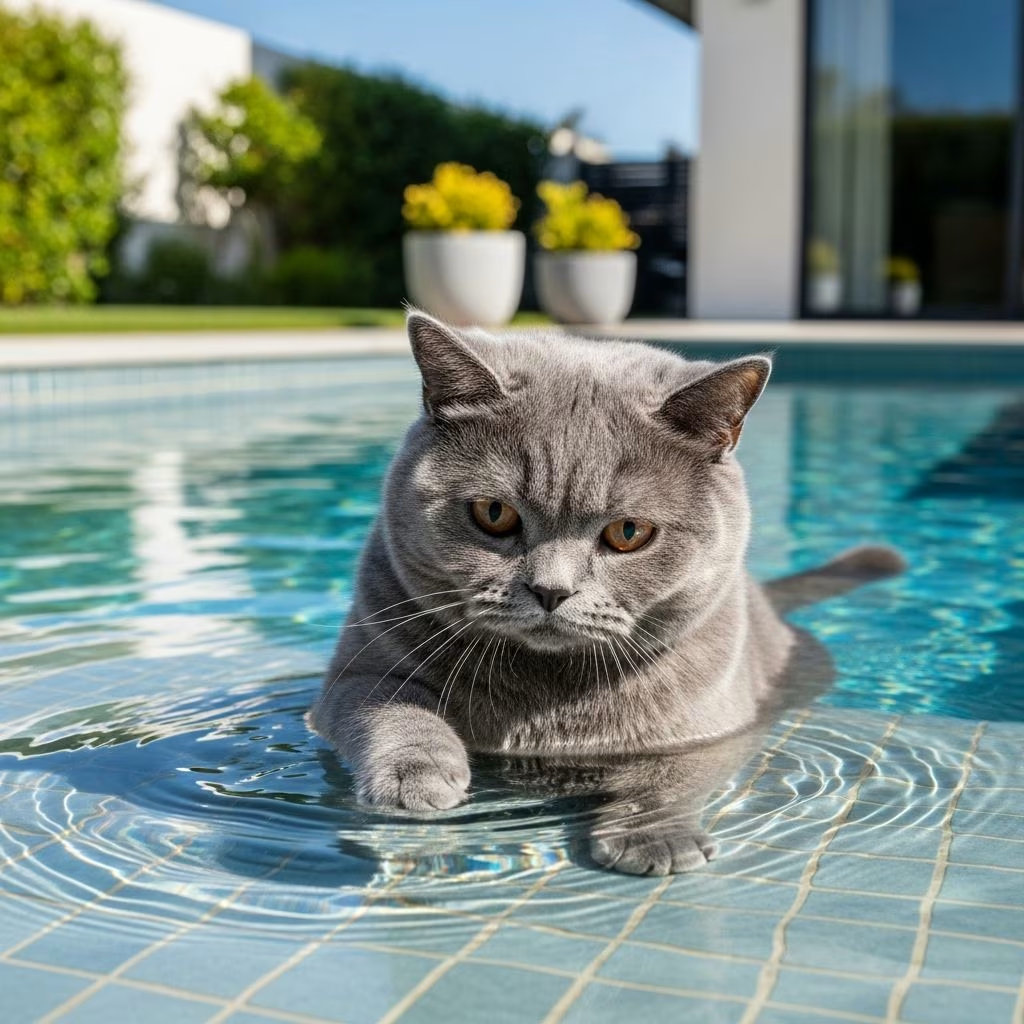
Swimming is instinctual in cats, meaning a **British Shorthair cat** won’t swim by choice, but if faced with a situation of danger, they will be capable thanks to their natural feline abilities. These plush, sturdy cats with dense coats have a mixed relationship with water—curious yet cautious. This comprehensive guide covers their swimming instincts, breed-specific traits, safety around water, and comparisons to breeds that adore it.
Quick Answer: Can British Shorthair Cats Swim?
Yes, British Shorthair cats can swim instinctively, like all cats, but they typically dislike water and avoid it unless necessary. Their thick, water-repellent undercoat allows some enjoyment in shallow splashes, but deep swimming isn’t their preference. Wild cats like tigers prove felines’ swimming prowess, yet domestic breeds like British Shorthairs prioritize dry land.
The Swimming Instinct in Cats
All cats possess an innate swimming ability from birth, a survival mechanism observed in wild relatives such as tigers, jaguars, and leopards who swim rivers and hunt in water. Domestic cats retain this, paddling effectively if submerged, but most panic in unfamiliar water due to lack of practice.
- Cats’ flexible bodies and strong legs enable a dog-like paddle.
- Instinct kicks in during emergencies, preventing immediate drowning.
- However, heavy wet fur hinders movement, increasing exhaustion risk.
British Shorthairs, with their robust build, share this trait but rarely seek water voluntarily. Their evolutionary roots in arid regions mean swimming wasn’t essential for survival.
Do British Shorthair Cats Like Water?
British Shorthairs show mild curiosity toward running water, often pawing at faucets or sinks, but dislike full immersion. Their **thick undercoat is water-repellent**, aiding brief splashes in pools or baths without sogginess.
- They may hop into showers or play in sinks if unsupervised.
- Aversion stems from wet fur’s weight, chlorine smells, and cold sensation penetrating their coat.
- Unlike aloof with strangers, they’re cuddly with family but prefer dry play.
Individual personalities vary; some enjoy ‘splash’ games with floating toys, while others flee baths. Early exposure can build tolerance without forcing affinity.
British Shorthair Physical Traits & Swimming Ability
The British Shorthair’s stocky frame, short legs, and dense double coat influence their water interaction:
| Trait | Impact on Swimming |
|---|---|
| Thick undercoat | Water-repellent, stays drier than average |
| Stocky build | Powerful strokes but less streamlined |
| Short legs | Effective paddling in shallows, tires in deep water |
| Dense fur | Becomes heavy if soaked fully, risks panic |
These traits make them better than slender breeds in brief dips but not endurance swimmers. Their chill demeanor reduces panic compared to high-strung cats.
Why Most Cats (Including British Shorthairs) Dislike Water
Several factors explain this:
- Heavy coat: Fur absorbs water, slowing agility crucial for predators/prey.
- Evolutionary background: Ancestors from dry areas didn’t need advanced swimming.
- Sensitive nose: Detects chlorine or chemicals, unlike scentless dry fur.
- Cold discomfort: Wet skin chills quickly without water-repellent oils like dogs.
British Shorthairs exemplify this, with their plush coat amplifying heaviness when drenched.
Cat Breeds That Love Water (Comparisons)
Unlike British Shorthairs, some breeds embrace water:
- Maine Coon: Thick water-resistant fur from ship-cat history; loves showers, swimming.
- Turkish Van: ‘Swimming cat’ with waterproof coat; dives for fish near Lake Van.
- Savannah: Energetic serval hybrid; enjoys lakes, sneaking into showers.
- Abyssinian: Playful, natural swimmers attracted to faucets.
- Selkirk Rex: Curly-coated, joins baths or dish play.
British Shorthairs are more like these in curiosity but less enthusiastic overall.
Safety Tips: British Shorthairs Around Water
Protect your British Shorthair from water hazards:
- Supervise near pools/ponds; install ramps for escape.
- Use pool covers; ensure low chlorine levels.
- Prevent drinking treated water to avoid toxicity.
- Dry ears post-exposure to prevent infections.
- Acclimate kittens gradually in shallow, warm water.
- Secure faucets; they may turn them on.
Never force swimming—stress harms health. Indoor cats face fewer risks.
FAQs
Can British Shorthair cats swim naturally?
Yes, instinctively like all cats, but they avoid it recreationally.
Do British Shorthairs like baths?
Most tolerate but dislike them; use warm water and gentle handling.
Are British Shorthairs good swimmers compared to Maine Coons?
They’re capable but less eager; Maine Coons have superior water-resistant coats.
How to introduce a British Shorthair to water safely?
Start with dripping faucets, progress to shallow basins; never force.
What if my British Shorthair falls in water?
Their instincts aid survival, but rescue promptly to avoid panic.
Conclusion
British Shorthair cats can swim instinctively but prefer avoiding water, thanks to their dense coat and temperament. With precautions, owners can ensure safe curiosity without risks. Compare to water-loving breeds for context, always prioritizing dry comfort.
References
- Can Cats Swim? — Purely Pets Insurance. 2023-05-15. https://www.purelypetsinsurance.co.uk/blogs/can-cats-swim/
- 11 Cat Breeds That Like Water — Tractive. 2024-02-20. https://tractive.com/blog/en/good-to-know/cats-that-like-water
- Can British Shorthair Cats Swim? Vet-Verified — Catster. 2024-08-10. https://www.catster.com/lifestyle/can-british-shorthair-cats-swim/
- 8 Cat Breeds Who Love Water — Chewy. 2023-11-05. https://www.chewy.com/education/cat/general/behavior-breeds-8-cat-breeds-that-love-water
- 7 Cat Breeds That Actually Like Water — Cats.com. 2024-01-12. https://cats.com/cat-breeds-that-like-water



