

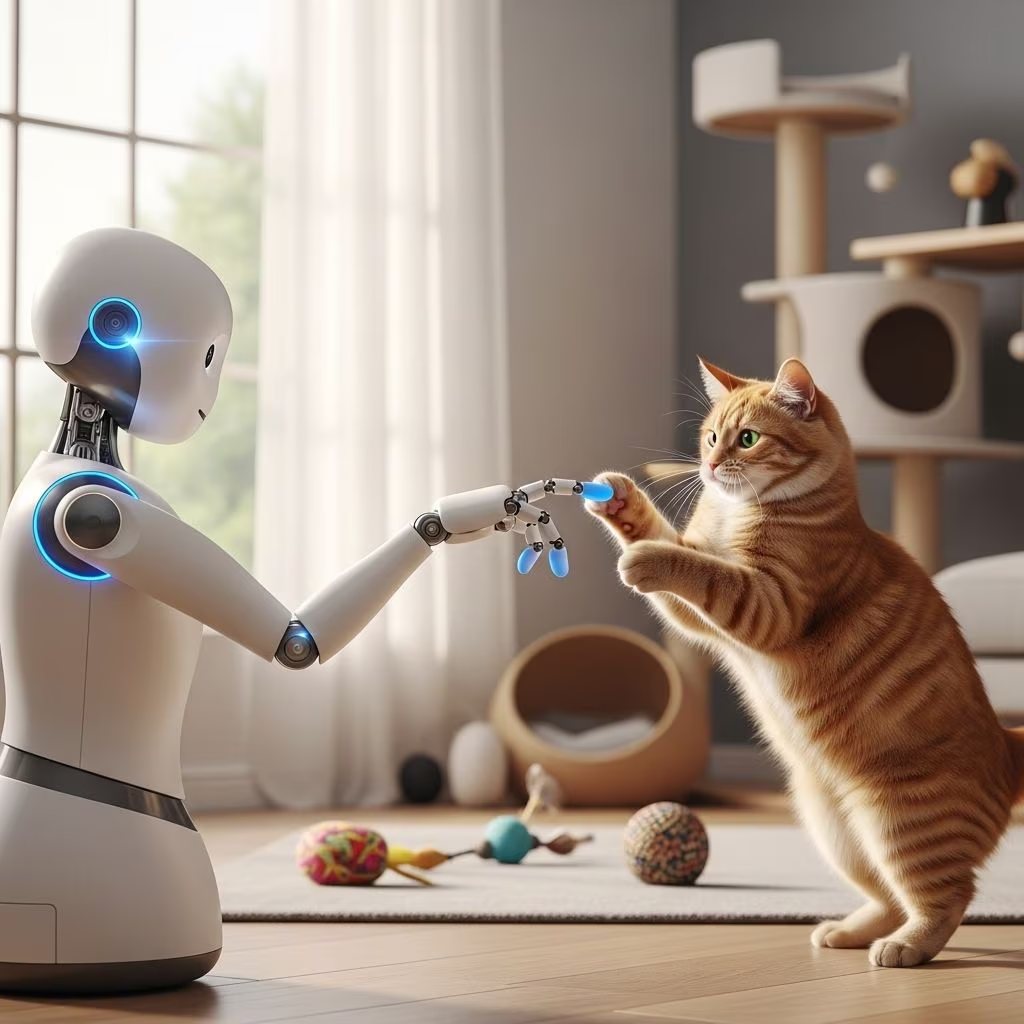
New research from the UK investigated whether AI-controlled robotics could effectively care for pet cats, yielding surprisingly positive outcomes that blend technology with the irreplaceable human element. While AI demonstrated remarkable capabilities in meeting cats’ basic needs and adapting play, experts stress it serves best as a supportive tool rather than a full replacement for pet parents.
The Experiment: Cats Meet AI Robotics
In a groundbreaking study, researchers created a controlled environment to test AI’s potential in cat caregiving. For 12 days, three cats—Ghostbuster, Pumpkin, and Clover—spent six hours daily in a specially designed space equipped solely with an AI-backed robotic arm for interaction. This setup provided all essentials: food, water, air conditioning, high ledges, and cozy cubbyholes for exploration.
At the heart of this ‘cat utopia’ was a flexible robotic arm linked to an adaptive AI system. Every 10 minutes, it initiated play sessions using various games tailored to feline interests, such as throwing balls, dangling feathers, offering treats, ringing bells, dragging toy mice or birds, and introducing cardboard boxes—a timeless cat favorite.
The AI’s intelligence shone through its learning mechanism. By observing the cats’ reactions, it adjusted offerings, prioritizing preferred toys at higher frequencies. For instance, Clover developed a fondness for the orange bird toy, which the system then presented more often.
Human-AI Collaboration: The Key to Success
While the robotic actions appeared autonomous, they relied on a hybrid model of software and human oversight. Researchers, led by Steve Benford, tracked cat movements via computer systems while human observers scored interactions. This data fed back into the AI, refining its behavior over time.
“Like much AI, it is a combination of software and human input,” Benford explained. This collaboration ensured the system evolved effectively, highlighting that pure AI alone falls short without human guidance.
Designing the Perfect Cat Utopia
Beyond the robot, the environment’s design proved crucial. The mostly carpeted space featured calming colors that relaxed the cats and aided AI object recognition by making felines stand out. High perches and walkways allowed cats to engage or retreat at will, out of the robot’s reach, fostering choice and safety.
“We quickly learned that it’s not just about getting a robot to pick up and move toys but rather you need to design the wider world in which both robot and cats live in order to enable them to interact safely and successfully,” Benford noted. This holistic approach resulted in a near-symbiotic relationship, dubbed a ‘cat utopia’.
- Key Environmental Features:
- Calming colors for cat relaxation and AI visibility.
- High ledges and cubbyholes for exploration.
- Escape routes from the robotic arm.
- Consistent provision of food, water, and climate control.
Award-Winning Research and Findings
The study, detailed in a research paper presented at the 2024 Computer-Human Interaction Conference in Hawaii, earned the best paper award. It emphasized human roles in breakdown recovery, animal welfare, and observation, underscoring that AI excels as an augmentation, not a substitute.
Benford’s team highlighted how the setup strengthened human-animal bonds indirectly. Pet parents absent from home could use such tech for comfort, but always to enhance, not replace, personal interaction.
Future Implications: AI as a Pet Care Tool
Looking ahead, Benford envisions AI teaching humans better play methods with cats. “Could the robot teach us about how cats like to play that would improve the ways in which we play with them?” he pondered, advocating for designs requiring rewarding human involvement.
This aligns with broader pet tech trends. AI could personalize nutrition via smart feeders adjusting for breed, age, and health, offering consistency in busy homes. Veterinary experts like Dr. Michelle Greaves note these tools complement intuition, monitoring routines for stress or happiness insights.
| AI Application | Benefits | Limitations |
|---|---|---|
| Smart Feeders | Personalized portions, routine consistency | Overlooks subtle factors like behaviorist input |
| Health Detection | Early issue spotting | Early focus on livestock, emerging for pets |
| Training Apps | Structured guidance | Lacks compassion, needs professional oversight |
AI diagnostics and training apps promise growth, but experts caution against over-reliance. Behaviorists like Nico Joiner emphasize evidence-based methods and human empathy.
Broader Perspectives on Pet Parenting
The research prompts reflection on ‘responsible AI’ from a multispecies view. Benford hopes it inspires creative human-AI-pet dynamics, considering impacts on animals and nature. Pet parenting evolves, with 61% of US 18-34-year-olds owning dogs in 2025, up from 52% in 2018, driving tech demand.
Compromises like indoor enrichment, catios, and supervised outings balance safety and stimulation, echoing the study’s choice-based design.
How to Play With Your Cat
While awaiting advanced AI, hands-on play remains vital. Cat behaviorist Cristin Tamburo recommends interactive sessions mimicking the robot’s variety: chase toys, laser pointers, and puzzle feeders to engage hunting instincts.
- Rotate toys to prevent boredom.
- Observe reactions to tailor play.
- Include vertical spaces for climbing.
- End sessions positively with treats.
Daily 15-30 minute sessions suffice for most cats, boosting bonds and health.
Frequently Asked Questions (FAQs)
Can AI fully replace human cat care?
No, AI excels in routine tasks and learning preferences but requires human oversight for welfare and empathy.
What toys did the AI use most effectively?
Items like orange bird toys, balls, feathers, and cardboard boxes, adapted based on individual cat responses.
How long was the AI cat care experiment?
Three cats interacted for six hours daily over 12 days in a controlled utopia environment.
Is AI pet tech safe for cats?
Yes, when designed with escape options and calming features, allowing voluntary engagement.
Will AI improve pet parenting in 2026?
Likely, via personalized nutrition, health monitoring, and training aids, complementing human care.
Conclusion: AI Enhances, Humans Embrace
Cat Royale proves AI can meet physical needs and adapt play, but the human touch defines true companionship. As tech advances, it promises enriched lives without diminishing our roles as pet parents.
References
- Can AI Raise a Cat? — Kinship. 2024. https://www.kinship.com/cat-lifestyle/can-ai-raise-a-cat
- 5 Ways AI Could Change the Relationship With Your Pet in 2026 — Kinship UK. 2025. https://www.kinship.com/uk/pet-lifestyle/ai-artificial-intelligence-relationship-pet-tech
- To Roam or Stay Home? Understanding “Pet Parenting” Types — Taylor & Francis Online. 2024-06-20. https://www.tandfonline.com/doi/full/10.1080/08927936.2024.2360788



