

Can AI Raise a Cat? What Research Reveals About Robotic Pet Care
The question of whether artificial intelligence and robotics could adequately care for a cat might sound like pure science fiction, but recent groundbreaking research from the UK has provided surprising answers to this intriguing query. A team of researchers conducted an innovative study that explored the potential of AI-controlled robotic systems to provide comprehensive care for feline companions. The results have sparked important conversations about the future of pet care, the role of technology in our homes, and most importantly, the irreplaceable value of human interaction with our beloved animals.
The Cat Royale Experiment: A Glimpse Into the Future
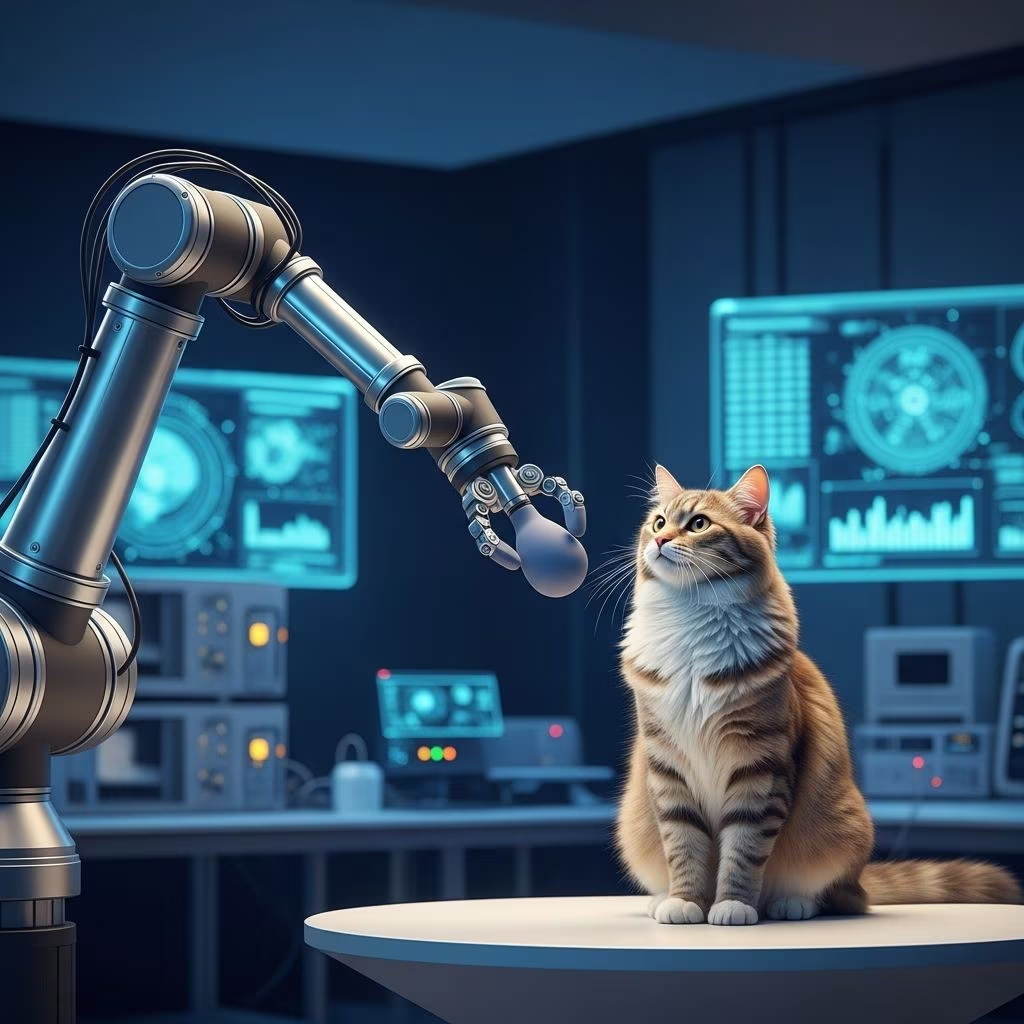
Researchers from the UK designed a groundbreaking experiment they called “Cat Royale” to investigate whether AI and robotic technology could effectively meet the needs of cats. For twelve days, three cats named Ghostbuster, Pumpkin, and Clover lived in a specially designed environment for six hours each day, interacting solely with an AI-backed robotic arm and their automated surroundings. During this period, the cats had all their basic needs met, including food, water, climate control through air conditioning, and various enrichment opportunities such as high ledges and cozy cubbyholes to explore.
The research team created what they called a “cat utopia” — a meticulously designed space that balanced the capabilities of advanced technology with the natural needs and behaviors of cats. At the heart of this environment sat a sophisticated robotic arm connected to an adaptable computer system, capable of performing various interactive activities to engage and entertain the feline residents.
How the AI System Learned Cat Preferences
One of the most fascinating aspects of the Cat Royale experiment was how the artificial intelligence system learned to understand and predict individual cat preferences. Every ten minutes, the robotic arm would present one of several different games and activities determined by its AI algorithm. These interactive options included throwing balls, dangling feathers, offering snacks, ringing bells, dragging toy mice or birds, and even introducing the classic feline favorite — the cardboard box.
However, it’s important to understand that the AI system didn’t operate in complete isolation. As researcher David Benford explained, “Like much AI, it is a combination of software and human input.” The computer system that tracked the cats’ movements was supported by human observers who scored each game and carefully noted how the cats responded to each activity. This crucial human feedback was then fed back into the AI system, allowing it to gradually learn which games and activities each cat preferred most. For example, researchers discovered that one cat named Clover showed a particular affinity for an orange bird toy, and the AI subsequently offered this toy more frequently to match the cat’s demonstrated preferences.
The Importance of Environmental Design
A critical insight from the Cat Royale research was that successful AI pet care extends far beyond simply programming a robot to move toys around. The research team discovered that designing the entire environment in which both robots and cats interact is equally, if not more, important for creating a functional and enriching space. This holistic approach to human-AI-animal interaction yielded what researchers called a “cat utopia.”
According to Benford, “We quickly learned that it’s not just about getting a robot to pick up and move toys but rather you need to design the wider world in which both robot and cats live in order to enable them to interact safely and successfully.” The design of this environment included several thoughtful features:
- Color schemes specifically chosen to relax the cats and help them stand out against other objects for the AI’s visual recognition systems
- High perches and walkways positioned out of the robot’s reach, allowing cats to withdraw from interaction on their own terms
- Multiple spaces for exploration, rest, and play that weren’t controlled or monitored by the robotic systems
- Environmental controls such as air conditioning to maintain comfort
Benford emphasized that “It’s important that the cats can choose to engage with and withdraw from the robot on their own terms, which practically speaking, means providing them with high perches and walkways that were out of its reach.” This design philosophy recognized a fundamental truth about cat behavior — cats value autonomy and the ability to control their own interactions.
The Human Element Remains Irreplaceable
Perhaps the most significant finding from the Cat Royale research was not what AI and robots could accomplish, but rather the critical importance of human involvement in any care scenario. The research team’s paper, presented at the 2024 Computer-Human Interaction Conference in Hawaii where it won the award for best paper, underscored that human participation remains essential in areas such as breakdown recovery, animal welfare monitoring, and even serving as an audience for the animals.
While the technology demonstrated impressive capabilities in learning preferences and providing basic care, the researchers were clear that AI cannot and should not replace human connection. Benford stated that “pet parents can’t be home all of the time and technology like this might help provide comfort for animals while they’re gone. Still, it’s meant to only strengthen the bond between human and animal, not substitute it.”
AI as a Tool, Not a Replacement
The future application of AI and robotic technology in pet care, according to the researchers, should focus on complementing rather than replacing human involvement. Benford suggested that AI-powered systems could help pet parents understand their cats better, potentially revealing insights that improve human-animal interaction. “Could the robot, for example, teach us about how cats like to play that would improve the ways in which we play with them? Could we derive meaning and satisfaction from understanding our animals better?”
This perspective offers an optimistic vision of human-AI collaboration in pet care. Rather than a future where robots fully raise cats independently, the research points toward a partnership model where technology enhances human understanding and strengthens the human-animal bond. Benford emphasized that “the key is to make sure that this human labor is rewarding and that it strengthens not weakens our relationships with our companion animals.”
Broader Implications for Responsible AI and Animal Welfare
The Cat Royale research has implications that extend beyond cat care into broader discussions about responsible AI development and its effects on living creatures. Benford hopes that the findings will inspire creative exploration of relationships between humans and AI while bringing fresh perspective to emerging debates over responsible AI implementation. He advocates for adopting what he calls a “multispecies viewpoint” in AI research and development.
This perspective encourages researchers and developers to consider how AI and robots can potentially benefit not just cats and dogs, but plants, wildlife, and natural ecosystems — or conversely, how they might have unintended negative consequences for non-human life. As AI becomes increasingly integrated into our homes and lives, understanding these broader implications becomes more important.
Current State of AI in Pet Care
Beyond the experimental Cat Royale project, AI and technology are already beginning to influence how pet parents care for their animals in practical ways. Smart feeders with personalized meal plans adjust portions and feeding times based on factors such as breed, age, and health conditions. AI-powered diagnostics are emerging to help detect health issues in dogs and cats earlier, often before symptoms become obvious. These technologies aim to support and strengthen the bond between pets and their humans by providing better information and consistency, though experts emphasize that such tools should complement rather than replace human judgment and care.
Practical Takeaways for Pet Parents
For cat owners wondering about the implications of this research for their own homes, the message is reassuring: there is no need to prepare your home for sentient, self-sufficient AI robots managing your cat’s care anytime soon. The Cat Royale experiment demonstrates both the impressive capabilities and the inherent limitations of current technology.
Instead, cat parents can view emerging AI and robotic technologies as tools that might help when they’re away from home, providing enrichment and monitoring that supplements the irreplaceable human connection. The research validates that investing time in understanding your cat’s individual preferences — through play, observation, and interaction — remains one of the most important aspects of responsible pet parenting.
Frequently Asked Questions
Q: Can an AI robot fully replace human care for cats?
A: No. The Cat Royale research demonstrated that while AI and robots can provide basic care and enrichment, human involvement remains essential for animal welfare, emotional bonding, and decision-making. Technology should complement human care, not replace it.
Q: What did the Cat Royale experiment test?
A: The experiment tested whether an AI-controlled robotic arm could meet the needs of three cats over twelve days, including providing food, water, climate control, and interactive play while learning individual cat preferences through machine learning.
Q: How did the AI learn what games cats preferred?
A: Human observers scored each interactive activity and the cats’ responses. This information was fed to the AI system, allowing it to gradually learn and prioritize activities that specific cats enjoyed most, such as offering Clover’s favorite orange bird toy more frequently.
Q: Is AI-powered pet technology available for home use now?
A: Some AI-powered pet care tools are available, including smart feeders with personalized meal plans and AI-powered health diagnostics for detecting early signs of illness. However, these are designed to support rather than replace human care and decision-making.
Q: What is the importance of environmental design in AI pet care?
A: The Cat Royale research showed that simply having a robot isn’t enough. The entire environment must be designed to allow cats to safely interact with technology while maintaining their autonomy, including high perches, proper lighting, and spaces where they can withdraw from robotic interaction.
Q: Why can’t the AI be fully autonomous in pet care?
A: True autonomy would require AI to handle complex situations like medical emergencies, behavioral changes indicating illness, and ethical decisions about animal welfare. Current AI, as demonstrated by Cat Royale, requires human oversight for breakdown recovery and welfare monitoring.
References
- Can AI Raise a Cat? — Kinship. Accessed January 14, 2026. https://www.kinship.com/cat-lifestyle/can-ai-raise-a-cat
- 5 Ways AI Could Change the Relationship With Your Pet in 2026 — Kinship. Accessed January 14, 2026. https://www.kinship.com/uk/pet-lifestyle/ai-artificial-intelligence-relationship-pet-tech



