

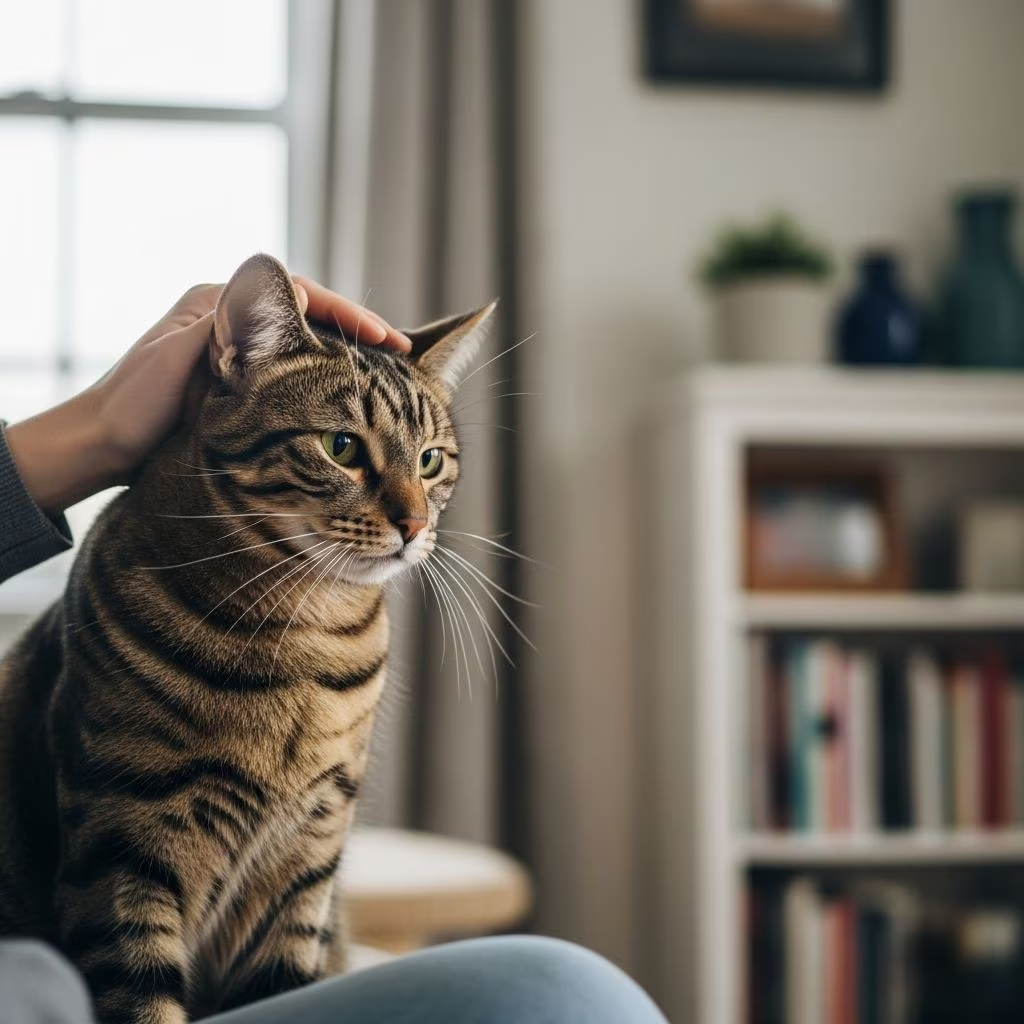
Cats possess extraordinary sensory abilities that may allow them to detect seizures in humans before they occur. Numerous anecdotal reports highlight felines alerting owners to impending epileptic episodes through behavioral changes, though scientific confirmation remains limited.
How Do Cats Sense Seizures?
Cats’ acute sense of smell plays a pivotal role in detecting subtle biochemical changes in the human body preceding a seizure. With approximately 30 receptors in their noses—far more sensitive than humans—cats can pick up on chemical shifts associated with epilepsy.
These olfactory receptors enable cats to notice variations in pheromones or volatile organic compounds released during prodromal phases of seizures. Behavioral shifts, such as hyperactivity followed by close monitoring, often signal the cat’s awareness.
- Cats may become unusually playful or manic hours before a seizure.
- They then switch to ‘monitor mode,’ staying by the owner’s side.
- During the seizure, cats might lie on the affected limb or nuzzle the face to provide comfort.
While dogs are more commonly trained as seizure alert animals, cats demonstrate similar instincts naturally, without formal training.
Real-Life Stories of Seizure-Alerting Cats
Molly Brooke, a 30-year-old woman from the UK living with epilepsy and autism, adopted a Persian kitten named Maggie in September 2023. Suffering up to nine seizures weekly, Molly noticed Maggie’s predictive behaviors within the first week.
Maggie enters a hyperactive phase up to eight hours before a seizure, then calms and shadows Molly relentlessly. During episodes, especially nocturnal ones, Maggie places her head against Molly’s, stabilizes movements by sitting in her lap, or distracts her with affection.
Another case involves 19-year-old Nathan, whose cat Lilly consistently warns his parents of upcoming seizures. In one critical incident, Lilly licked Nathan’s mouth until breathing resumed after he stopped during a severe episode.
These stories underscore cats’ potential as intuitive companions for those with epilepsy, offering emotional support and timely alerts.
The Science Behind Cats’ Abilities
Epileptic seizures involve abnormal, excessive neuronal activity in the brain, often preceded by prodromal signs like auras or chemical imbalances. Cats’ superior olfaction likely detects these precursors, similar to how they sense illness or stress in humans.
Research on feline epilepsy itself reveals parallels: cats experience focal and generalized seizures, often with temporal lobes origins showing orofacial automatisms like lip smacking or salivation. Understanding cat seizures aids in appreciating how they might recognize similar patterns in humans.
| Human Seizure Phase | Cat Detection Behavior | Scientific Basis |
|---|---|---|
| Prodrome (hours before) | Hyperactivity, then clinging | Olfactory detection of chemical changes |
| Ictus (during seizure) | Nuzzling, lying on limb | Instinctive comforting response |
| Postictal (after) | Continued monitoring | Response to post-seizure disorientation |
Experimental studies on cats confirm temporal lobe epilepsy (TLE) with staged progression from focal signs to convulsions, mirroring human patterns. This shared neurology may enhance cats’ empathy for seizure sufferers.
Can Cats Be Trained to Detect Seizures?
Unlike dogs, which undergo rigorous training for seizure alert tasks, cats’ detection relies on innate instincts rather than formal programs. No standardized training exists for cats, but positive reinforcement could encourage alert behaviors.
- Observe natural patterns in your cat’s responses.
- Reward proximity and calming actions during episodes.
- Consult veterinarians or epilepsy specialists for guidance.
While not service animals, cats offer low-maintenance alerting, ideal for home environments. Owners report reduced isolation and faster intervention thanks to their pets.
Cats vs. Dogs: Seizure Detection Comparison
| Aspect | Cats | Dogs |
|---|---|---|
| Detection Method | Olfaction (30+ receptors) | Olfaction + hearing |
| Training | Instinct-based, minimal | Formal programs available |
| Alert Style | Clinging, nuzzling | Barking, pawing |
| Cost/Maintenance | Lower | Higher (training, certification) |
| Evidence Level | Anecdotal | Clinical studies |
Cats provide subtle, affectionate alerts suited to individuals preferring quiet companions. Dogs excel in public settings with overt signals.
Understanding Seizures in Cats
Cats can suffer seizures too, classified as focal (partial) or generalized. Focal seizures from temporal lobes show chewing, facial twitching, and autonomic signs like salivation.
Idiopathic epilepsy (IE) in cats often starts between 1-4 years, with monthly cluster seizures during sleep. Diagnosis relies on history, as EEG is rarely feasible clinically.
- Aura: Behavioral changes pre-seizure.
- Ictus: Convulsions lasting 1-2 minutes.
- Postictal: Disorientation, aggression, or thirst (5-20 minutes).
Owners of epileptic humans should monitor their cats for similar signs, ensuring mutual health.
Benefits and Limitations
Benefits:
- Early warnings reduce injury risk.
- Emotional comfort during episodes.
- Cost-effective companionship for epilepsy management.
Limitations:
- Lack of scientific consensus; mostly anecdotes.
- Cats can’t provide physical assistance like dogs.
- Not reliable in all cases; individual variation.
Combine cat alerts with medical devices like seizure monitors for comprehensive safety.
Frequently Asked Questions (FAQs)
What signs show a cat detects a seizure?
Cats may act hyperactive, then overly attentive, following you closely or lying on you during the event.
How accurate are cats at predicting seizures?
Anecdotes suggest up to 8 hours advance notice, but reliability varies by cat and owner chemistry.
Can any cat learn to detect seizures?
Breeds with strong noses like Persians show promise, but any cat with bonding may develop this instinct.
Should I get a cat if I have epilepsy?
Yes, for companionship and potential alerts, but consult doctors and ensure safe home seizure protocols.
Do cats get epilepsy like humans?
Yes, feline epilepsy features similar focal/generalized types, often temporal lobe-related.
Conclusion: Embracing Feline Intuition
Cats’ potential to detect seizures highlights their role as empathetic health aides. While more research is needed, stories like Molly’s and Nathan’s affirm their value. Consider adopting a cat if you live with epilepsy—they might just save your day with their super senses.
References
- Cat with Super Senses Detects Owner’s Epilepsy Seizures 8 Hours in Advance — StudyFinds.org. 2023-09-01. https://studyfinds.org/cat-super-senses-detects-seizures/
- Epilepsy in Cats: Theory and Practice — PMC – PubMed Central (Berendt et al.). 2016-05-01. https://pmc.ncbi.nlm.nih.gov/articles/PMC4857998/
- Feline Temporal Lobe Epilepsy: Review of the Experimental Literature — Journal of Veterinary Internal Medicine (Wagner et al.). 2018-01-01. https://onlinelibrary.wiley.com/doi/10.1111/jvim.14699
- Can Cats Help Detect Seizures? — Purina US. 2023-01-01. https://www.purina.com/articles/cat/behavior/understanding-cats/can-cats-help-detect-seizures



