

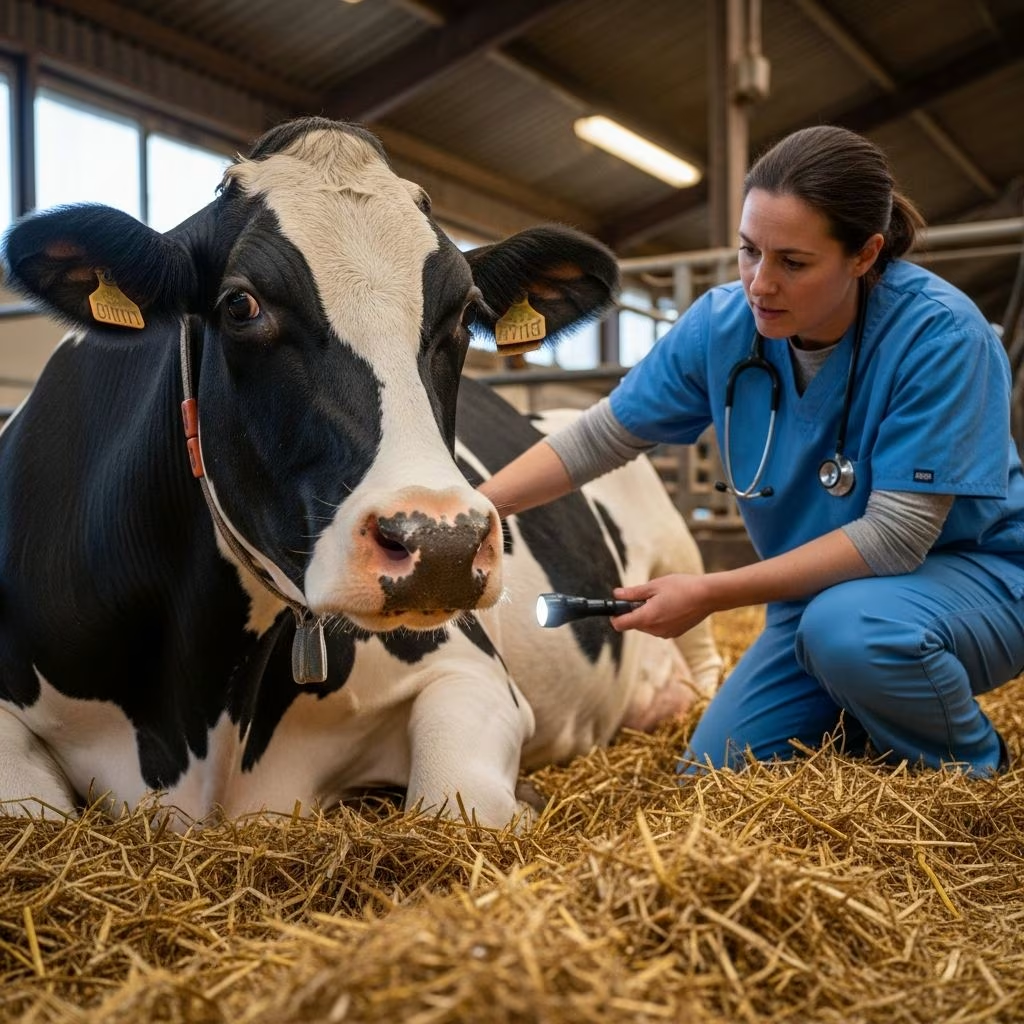
Calving paralysis, often seen in cattle after challenging deliveries, involves nerve damage from pressure during birth. This condition leads to hindlimb dysfunction, posing risks to animal welfare and farm economics. Farmers and veterinarians must recognize it early for optimal outcomes.
Understanding the Mechanisms Behind Calving Paralysis
The core issue stems from excessive pressure inside the pelvis during calving, particularly when the calf’s size mismatches the mother’s pelvic dimensions. This fetopelvic disproportion compresses critical nerves like the sciatic and obturator, located along the pelvic canal.
Sciatic nerve branches, including tibial and peroneal, control hindleg movement. Obturator nerve damage affects leg adduction. Trauma occurs as the calf presses against these nerves during prolonged labor or malpositioning.
Risk Factors Amplifying Nerve Compression
- Large calves: Common in heifers or high-milk-yield breeds, increasing disproportion.
- Prolonged labor: Extended second-stage calving heightens ischemia risk.
- Hip-lock: Calf stuck in pelvis, often worsening unilateral damage.
- Narrow pelvis: Genetic or nutritional factors in young or underfed dams.
These elements combine to cause ischemia, edema, and potential permanent neuron damage.
Recognizing Symptoms in Affected Cattle
Post-calving recumbency signals potential paralysis. Severity dictates presentation: mild cases show weakness; severe ones complete inability to rise.
| Symptom | Nerve Involved | Description |
|---|---|---|
| Knuckling fetlock | Sciatic (tibial/peroneal) | Bilateral in severe cases; unilateral milder; hinders standing. |
| Hindlimb splaying | Obturator | Legs spread wide on standing attempts, risking muscle tears. |
| Hock flexion | Peroneal | Dorsal hoof contact; often post-recumbency. |
| Depression, low temp | Multiple | Secondary to immobility. |
Heifers face higher risks, with bilateral damage often fatal without intervention. Diagnosis relies on history, exam, and ruling out fractures or infections.
Immediate and Long-Term Management Strategies
Treatment prioritizes supportive care over specifics, as no cure reverses nerve damage directly. Early action within 48 hours boosts recovery odds.
Key Treatment Protocols
- Relocate to safe area: Soft, non-slip bedding like manure-straw mix prevents slips.
- Assisted rising: Use slings/hoists 2-3 times daily; limit to 15-20 min sessions.
- Anti-inflammatories: NSAIDs reduce swelling; steroids for severe edema.
- Nutrition/hydration: Ensure rumen function, milk production via tubes if needed.
- Monitor complications: Pressure sores, mastitis, pneumonia.
Prognosis: Good if unilateral and responsive early; poor beyond 2 weeks. Euthanasia considered for non-responders to avoid suffering.
Prevention Through Proactive Calving Practices
Avoiding dystocia minimizes paralysis. Strategies include:
- Body condition scoring pre-calving.
- Veterinary monitoring for at-risk animals.
- Selective breeding for pelvic size.
- Timely intervention: Two-person pull rule for anterior presentations.
Excessive traction risks further damage; lubrication aids natural progression.
Impacts on Calves and Broader Herd Dynamics
Paralyzed dams fail colostrum intake in calves, raising infection risks like joint ill. Calf nerve damage from traction mirrors maternal issues, causing femoral paralysis.
Herd-level: Losses from culling affect productivity. Welfare standards demand humane endpoints.
FAQ: Common Questions on Calving Paralysis
What is the most common cause of calving paralysis?
Fetopelvic disproportion from oversized calves during prolonged labor.
How long does recovery take?
2-3 months for partial function; full recovery rare in severe bilateral cases.
Can medication cure it?
No; supportive care and anti-inflammatories aid healing only.
Is it more common in dairy or beef cattle?
Higher in heifers across breeds, especially dairy due to larger calves.
When to euthanize a downer cow?
If no improvement after 2-3 weeks despite care.
Advanced Diagnostic Approaches
Beyond clinical signs, nerve blocks confirm involvement. Ultrasound assesses muscle integrity; bloodwork rules out metabolic issues like hypocalcemia.
Differentials: Milk fever (rapid Ca response), fractures (radiography), infections.
Research Insights and Future Directions
Recent studies emphasize genetics in pelvic development. Nutritional tweaks like balanced Ca pre-calving show promise. Video diagnostics aid training.
Word count: 1678 (excluding HTML tags).
References
- Post-calving paralysis in Cows (Bovis) — Vetlexicon. 2024. https://www.vetlexicon.com/bovis/husbandry-welfare/articles/post-calving-paralysis/
- Problems After Calving — The Beef Cattle Institute, Kansas State University. 2024-03-03. https://ksubci.org/2024/03/03/problems-after-calving/
- Calving Paralysis – Merck Veterinary Manual — Merck & Co. 2023. https://www.merckvetmanual.com/musculoskeletal-system/lameness-in-cattle/calving-paralysis
- Calving Part 3 – Nerve Damage — NADIS. 2023. https://www.nadis.org.uk/disease-a-z/cattle/calving-module/calving-part-3-nerve-damage/
- Injuries and Diseases of Beef Cattle Associated with Calving — Iowa Beef Center. 2023. https://www.iowabeefcenter.org/bch/CalvingInjuriesDiseases.pdf



