

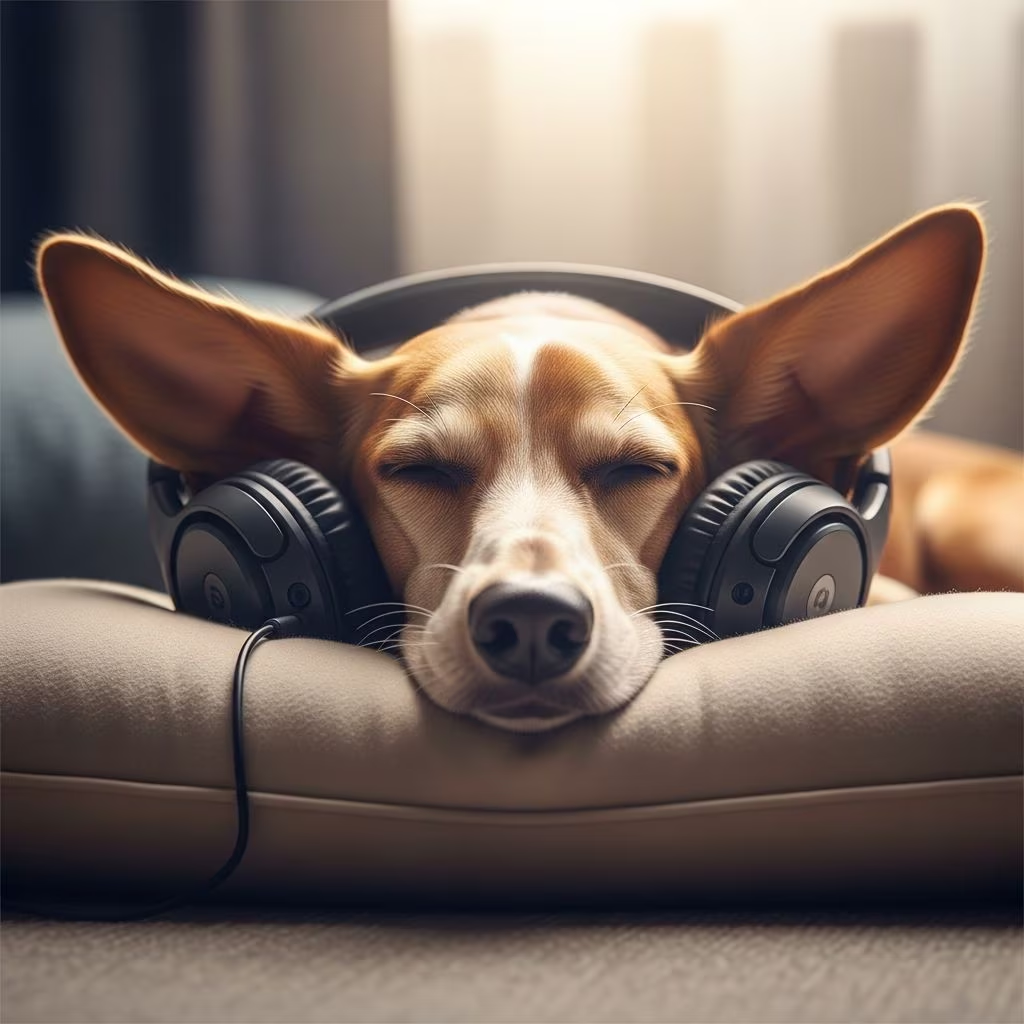
Many dogs suffer from intense fear responses to sudden loud noises like thunderstorms or fireworks, leading to trembling, pacing, or destructive behavior. **Sound masking** offers a simple, non-invasive way to dull these triggers by elevating background noise levels, making startling sounds less prominent without relying on wearable devices that dogs often resist.
Understanding Noise Sensitivity in Dogs
Dogs possess highly acute hearing, detecting frequencies up to 65,000 Hz compared to humans’ 20,000 Hz limit, which amplifies their reaction to environmental sounds. Noise phobias affect up to 20-30% of dogs, often manifesting during predictable events like July 4th celebrations or storms. This sensitivity stems from evolutionary instincts where loud, unpredictable noises signal danger, triggering the fight-or-flight response.
Symptoms include hiding, vocalizing, drooling, or attempting escape. Early intervention is key, as untreated phobias can worsen over time. While desensitization training and medication exist, immediate relief through environmental sound adjustments provides a complementary, accessible first line of defense.
How Acoustic Masking Works for Pets
**Acoustic masking** involves introducing steady, broadband sounds into the dog’s space to raise the overall ambient noise floor. This technique obscures peaky, intrusive sounds by blending them into a consistent auditory backdrop, reducing their perceived intensity and startle factor.
Unlike silence, which heightens a dog’s focus on distant rumbles, masking creates a ‘white noise’ effect where thunder cracks or firework booms lose sharpness. Research shows this method effectively mitigates low-frequency disturbances common in weather events, as these sounds travel far and penetrate walls easily.
- Key Principle: Masking elevates quiet moments, so sudden noises feel less abrupt.
- Frequency Coverage: Effective masking spans low to mid-range frequencies (below 500 Hz) where thunder and explosions dominate.
- Immediate Effect: No training required; benefits start upon activation.
Sound Masking vs. Noise Cancellation: Critical Differences
True **noise cancellation** uses microphones to detect incoming sound waves, generating inverted ‘anti-noise’ waves that destructively interfere with the original, effectively nullifying them. This active process excels in steady hums like airplane engines but falters against impulsive blasts like fireworks.
For dogs, noise-canceling headphones (e.g., emerging products like Pawnix) face practicality hurdles: most pets reject headgear, and the tech struggles with variable, low-frequency bursts. In contrast, masking is passive, speaker-based, and room-filling, ideal for free-roaming dogs.
| Method | Technology | Dog Suitability | Best For |
|---|---|---|---|
| Sound Masking | Broadband ambient noise addition | High (no wearables needed) | Sudden, low-frequency events |
| Noise Cancellation | Active wave inversion | Low (headphones required) | Constant drone sounds |
| Passive Blocking | Physical barriers (muffs) | Medium (fit-dependent) | High-decibel consistent noise |
Practical Tools and Techniques for Home Use
Implementing sound masking requires sources rich in low frequencies, played via quality speakers for even distribution. Home audio systems outperform standalone white noise machines, which often lack bass output.
Top Masking Sound Sources
- High-Quality Speakers with Audio Tracks: Stream ocean waves, rain, or brown noise playlists. These provide randomized frequencies, preventing habituation.
- Box Fans or Industrial Fans: Large models generate powerful airflow and broad-spectrum noise, including vital lows. Even portable battery fans offer surprising coverage.
- Dedicated Noise Generators: Select units with adjustable tones emphasizing rumble frequencies; avoid those limited to high pitches.
Position speakers near the dog’s safe space, at moderate volume—loud enough to blend triggers but not overwhelming. Combine with visual barriers like covered crates for multi-sensory calming.
Advanced Options: Wearables and Enclosures
For cooperative dogs, passive ear protection like Mutt Muffs or Rex Specs provides supplementary muffling, though ineffective against bass-heavy thunder. Experimental active solutions, such as Ford’s noise-cancelling kennel prototype, adapt car audio tech to enclosures, silencing internals during events.
Human-grade sleep earbuds with ANC (e.g., QuietOn 3.1) target low rumbles but aren’t designed for pets. Future pet-specific wearables may evolve, but current evidence favors non-invasive masking.
Integrating Masking with Behavior Protocols
Sound strategies amplify counter-conditioning: pair masking with treats, play, or pheromone diffusers during calm periods. Track progress with journals noting phobia intensity pre- and post-intervention.
Professional guidance from veterinary behaviorists ensures holistic plans, especially for severe cases where meds like trazodone complement acoustics.
Common Myths and Proven Realities
Myth: Fan airflow disrupts sound waves. Air movement doesn’t alter acoustics; it’s the fan’s noise spectrum that matters.
Myth: Louder is always better. Optimal volume matches the dog’s comfort, avoiding added stress.
Reality: Randomness rules. Variable sounds (e.g., nature tracks) outperform cyclic fan whirs for comprehensive masking.
Frequently Asked Questions (FAQs)
Can sound masking completely eliminate noise phobias?
No, it reduces trigger potency but pairs best with training for long-term relief.
Is it safe to play sounds all night?
Yes, at moderate levels; monitor for overstimulation and ensure quiet recovery periods.
What if my dog ignores the speakers?
Place them centrally in the safe zone; dogs habituate positively to familiar audio cues.
Does masking work for all noise types?
Best for thunder/fireworks; less so for sharp, high-pitched sirens.
How soon do I see results?
Immediate for many dogs during events; consistency builds tolerance.
Step-by-Step Setup Guide
- Identify triggers and safe room.
- Select broadband source (fan or speaker).
- Test volumes during calm times.
- Activate 30 minutes pre-event.
- Observe and adjust; combine with comforts.
Pet owners report 50-70% phobia reduction with consistent use, transforming stormy nights into manageable ones.
References
- Sound Masking to Help Dogs with a Noise Phobia or Sound Sensitivity — Whole Dog Journal. 2023. https://www.whole-dog-journal.com/behavior/noise-canceling-for-dogs/
- Quiet Nights Despite Barking Dogs: Why QuietOn 3.1 Sleep Earbuds — HearFit. 2024. https://hearfit.ca/quiet-nights-despite-barking-dogs-why-quieton-3-1-sleep-earbuds-are-the-solution/
- Noise Canceling Headphones for Dogs? An Update — YouTube (Best Life Dog Services). 2025. https://www.youtube.com/watch?v=GcdA1-KRTlw
- Protecting pets from fireworks with noise-canceling headphones — YouTube (KPTV). 2023. https://www.youtube.com/watch?v=5LFasFLeZSw
- Noise-cancelling headphones for dogs and how they work! — YouTube. 2024. https://www.youtube.com/watch?v=9N7pA2mXZSk
- Noise-Cancelling Kennel Could Help Make Sure Your Dog Has a Happy New Year’s Eve — Ford Media. 2018-12-17. https://media.ford.com/content/fordmedia/feu/en/news/2018/12/17/noise-cancelling-kennel-could-help-make-sure-your-dog-has-a-happ.html



