

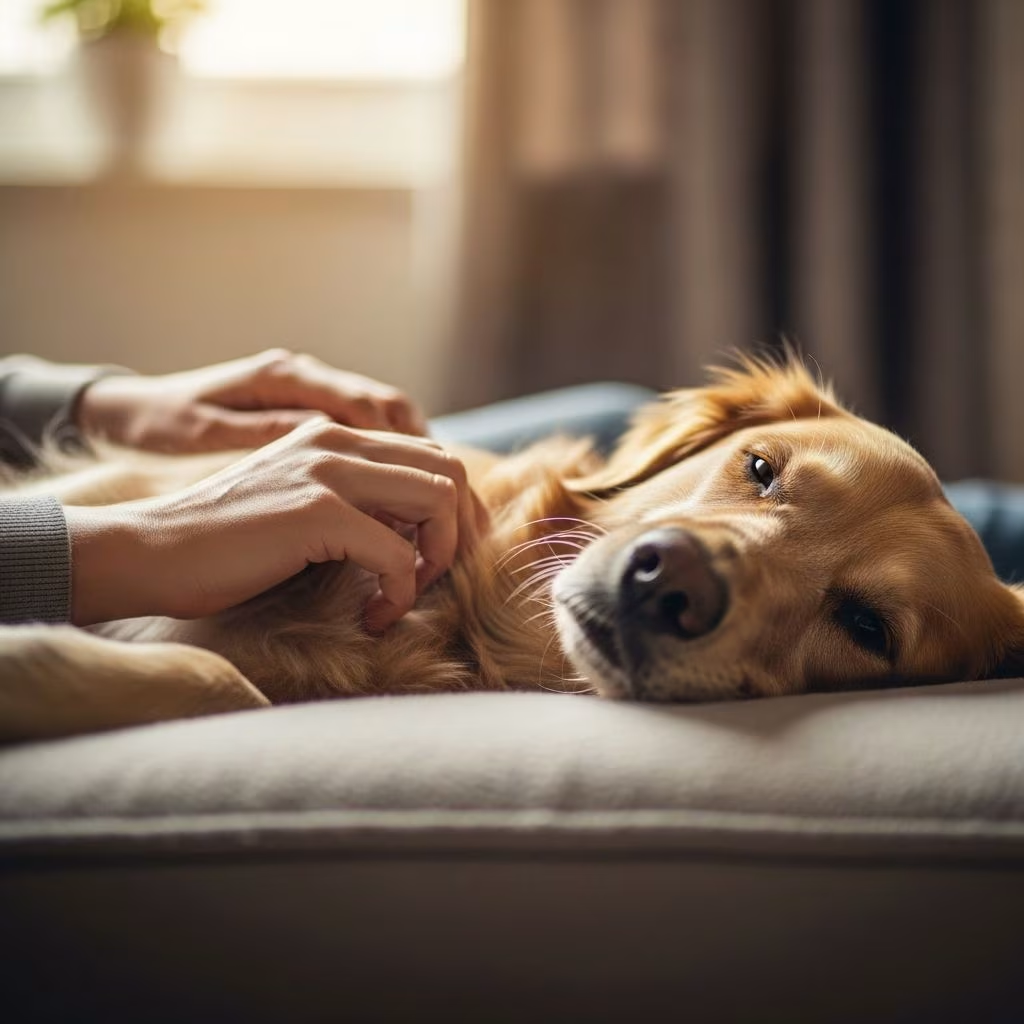
Teaching dogs to breathe slowly and calmly transforms their ability to handle stress, sharpens focus during training, and fosters a stronger human-animal bond. These methods leverage the physiological link between respiration, heart rate, and relaxation, applicable in everyday situations or high-tension environments like vet visits.
Why Breathing Matters for Canine Well-Being
Respiration directly influences a dog’s emotional state. Rapid, shallow breaths signal anxiety or arousal, while deep, steady ones promote tranquility by lowering heart rate and shifting the body from fight-or-flight mode to a learning-ready condition. Veterinary experts note that encouraging nasal breathing over panting achieves deeper inhalations, mimicking human relaxation practices.
Regular practice yields long-term benefits: reduced reactivity to triggers, better attention spans, and fewer stress-related behaviors like excessive barking or pacing. Owners report noticeable improvements in just weeks with consistent sessions.
Foundational Principles of Dog Breathing Training
Success hinges on associating calm states with rewards. Start in low-distraction settings, using high-value treats to reinforce desired responses. Progress gradually to challenging scenarios, always prioritizing the dog’s comfort to avoid building tension.
- Observe baseline: Note your dog’s natural pant rate and body language.
- Reward relaxation: Only treat when mouth closes and nostrils subtly flare, indicating a controlled breath.
- Build duration: Extend hold times as proficiency grows.
Step-by-Step Guide: The Focus-and-Breathe Method
This technique builds attentiveness alongside respiration control, ideal for beginners. It draws from veterinary behavior protocols emphasizing biofeedback.
- Position and engage: Cue a sit, hold a treat near your eyes to prompt upward gaze. Praise softly as the dog focuses.
- Introduce cue: Swiftly lower the treat to nose level without delivering it. Say “breathe” calmly. Watch for mouth closure and nostril movement signaling inhalation.
- Reinforce immediately: Deliver the treat only upon observing the breath, pairing the action with positivity.
- Repeat cycles: Practice 5-10 reps per session, 3-5 times daily. Sessions last 2-5 minutes.
- Add delays: Once reliable, pause 2-3 seconds before treating to encourage sustained breaths.
- Generalize: Transition to walks or new rooms, fading treats over time.
Expect proficiency in 1-2 weeks with daily practice. Troubleshoot agitation by reverting to basics or consulting a certified trainer.
Partnered Breathing: Sync with Your Dog
Joint exercises amplify effects by modeling calm. Humans breathe deeply first, encouraging canine mimicry through proximity and rhythm.
Belly Breathing for Mutual Relaxation
Lie beside your dog, hands on each other’s bellies. Inhale nasally for belly expansion, exhale orally slowly. Repeat 5-10 cycles. Dogs often sync within minutes, entering parasympathetic rest. Daily 5-minute routines combat chronic stress.
4-4-4 Counted Rhythm
Sit together. Inhale (count 4), hold (4), exhale (4). Verbalize “calm” softly. This structured pattern conditions dogs to relax on cue, easing separation anxiety or thunderstorms.
Progression Table:
| Week | Session Length | Key Focus | Expected Outcome |
|---|---|---|---|
| 1 | 3 min | Mimicry | Dog matches 50% of breaths |
| 2 | 5 min | Add hold | Consistent rhythm |
| 3+ | 7 min | Real stressors | Calms in 30 sec |
Advanced Applications in Real-Life Scenarios
Integrate into routines for maximum impact. Before car rides, cue breaths to preempt motion sickness. During grooming, pair with treats for tolerance.
- Vet visits: Practice in waiting rooms; closed-mouth breathing slows heart rate instantly.
- Training sessions: Breathe mindfully to model composure, enhancing learning.
- Reactivity management: On-leash encounters benefit from preemptive deep breaths.
For severe cases, combine with desensitization under professional guidance.
Common Challenges and Solutions
Dogs may lunge for treats or pant excessively initially. Solutions:
- High arousal: Desensitize food proximity separately.
- Short attention: Use softer cues, shorter sessions.
- Plateaus: Vary locations, introduce scents like lavender for enhancement.
Monitor for health issues; labored breathing warrants veterinary check.
Science Behind the Calm
Deep breathing activates the vagus nerve, reducing cortisol and boosting oxytocin. In dogs, slower respiration correlates with attentiveness and hormonal shifts favoring rest. Studies affirm these techniques lower physiological stress markers.
Daily Integration for Lasting Results
Embed into bedtime or morning rituals. Track progress in a journal: note breath depth, duration, context. Consistency trumps intensity; 5 minutes thrice daily outperforms sporadic long sessions.
Owners practicing alongside report personal stress reduction, creating harmonious households.
Frequently Asked Questions
Can all dogs learn breathing exercises?
Yes, adaptable for puppies to seniors. Modify pace for brachycephalic breeds.
How quickly do results appear?
Basic cues in days; full reliability in 2-4 weeks.
What if my dog gets frustrated?
Stop, shorten sessions, build value for cues gradually.
Are treats always necessary?
Phase out post-mastery; use praise/life rewards.
Does this help aggressive dogs?
Supports management; pair with behaviorist for root causes.
References
- Teaching Your Dog Calm, Slow Breathing — Whole Dog Journal. 2023. https://www.whole-dog-journal.com/training/teaching-your-dog-calm-slow-breathing/
- 4 Soothing Breathing Exercises For Dogs And Humans — Central Coast Dog Trainers. 2024. https://centralcoastdogtrainers.com/breathing-exercises-for-dogs-and-humans/
- Breathing for Dog Trainers — Michael’s Dogs Behavior Group. 2017-02-24. https://www.michaelsdogs.com/2017/02/24/breathing-for-dog-trainers/
- Fear-Free Veterinary Visit Tip: Just Breathe — DVM360. 2023. https://www.dvm360.com/view/fear-free-veterinary-visit-tip-just-breathe
- Protocol for Teaching Your Dog to Take Deep Breaths — DogSmith (Dr. Karen Overall). 2014. https://www.dogsmith.com/ds/wp-content/uploads/2014/02/Dr-Karen-O-Protocol-for-Teaching-Your-Dog-To-Take-Deep-Breaths-and-use-Bio-Feedback-as-part-of-Relaxation.pdf



