

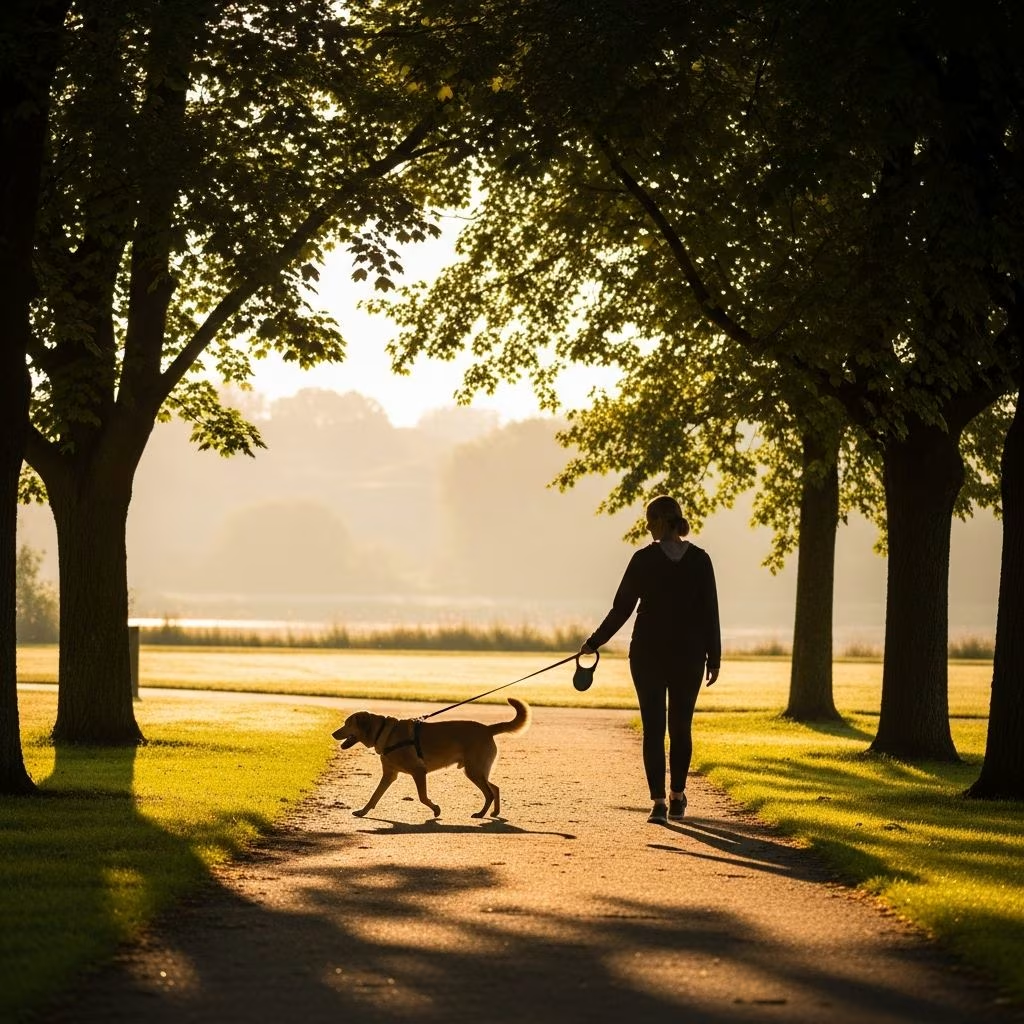
Many dog owners face the daily challenge of a pet that erupts into frenzied barking, jumping, and pulling at the mere sight of a leash. This high-energy response turns what should be a relaxing activity into a stressful battle. By implementing targeted strategies, you can teach your dog to approach walks with composure, fostering a stronger bond and safer outings for both of you.
Understanding the Roots of Canine Overexcitement
Dogs often display extreme excitement before walks due to pent-up energy, lack of clear boundaries, or learned associations where the leash signals immediate freedom to charge ahead. High-drive breeds like Border Collies or Vizslas are particularly prone, as their natural instincts amplify anticipation. Recognizing these triggers is the first step toward change. Physiological factors, such as insufficient daily exercise, compound the issue, leaving dogs in a constant state of arousal.
Behavioral patterns solidify when excitement is inadvertently rewarded—such as rushing out the door despite the frenzy. Over time, this creates a cycle where calm behavior goes unnoticed while chaos leads to the desired walk. Breaking this requires consistent redirection toward relaxation as the pathway to pleasure.
Building a Foundation: Pre-Walk Energy Management
Before attaching the leash, address excess vigor through structured activities. A brief 10-20 minute session of fetch in a confined space or puzzle-based games exhausts both body and mind, dialing down arousal levels. Mental workouts, like scent searches for hidden treats, prove especially effective for intelligent breeds, promoting focus over frenzy.
- Backyard sprints or stair chases with rewards to simulate purposeful exertion.
- Obedience drills indoors, such as ‘sit-stay’ sequences, blending physical and cognitive demands.
- Interactive toys that require problem-solving, ensuring the dog enters walk prep in a fatigued yet attentive state.
This preparatory phase sets a tone of controlled anticipation, making leash attachment a neutral event rather than a trigger.
Instilling Impulse Control with Default Behaviors
Train a ‘default sit’ where sitting becomes the automatic response for accessing rewards. Reinforce this by requiring a sit before meals, pets, play, or door access. Consistency transforms uncertainty into a polite request, often termed ‘say please’.
During leash prep, pick up the lead only when the dog offers a sit calmly. If excitement surges—barking or pawing—issue a neutral ‘too bad’ marker, drop the leash, and disengage. Resume only upon resettling. This teaches that agitation halts progress while poise advances it.
| Scenario | Excited Response | Calm Response | Outcome |
|---|---|---|---|
| Leash Pickup | Jumping/Barking | Sit & Wait | Leash attaches, walk proceeds |
| Door Approach | Rushing Forward | Four-on-Floor | Door opens smoothly |
| Pre-Walk Play | Over-Arousal | Controlled Sit | Play continues calmly |
Mastering the Doorway Exit Ritual
The threshold often amplifies excitement, as it represents the gateway to the exciting outdoors. Practice desensitization by repeatedly approaching the door without opening it, rewarding only calm states. Short sessions, 2-6 times daily, build tolerance.
Counter-condition by pairing door cues (jingle of keys, hand on knob) with treats delivered for relaxation. Gradually increase intensity: touch the door, open slightly, step out partially—always retreating if arousal spikes. Patience ensures the dog learns composure unlocks the world beyond.
On-Leash Techniques for Sustained Calm
Once outside, employ methods to reinforce loose-leash walking. The ‘tree’ method involves freezing motion the instant tension appears on the lead. Remain statue-still until slack returns, then resume. This communicates that forward progress demands cooperation.
Incorporate ‘about-face’ turns: upon pulling, pivot 180 degrees with a cheerful cue like ‘this way!’ The dog learns forging ahead leads away from goals, prompting attentive heel position.
- Check-In Rewards: Praise and treat voluntary glances back, strengthening pack-leader focus.
- Variable Pacing: Alternate speeds and directions unpredictably to captivate attention over distractions.
- No Yanking Rule: Avoid corrections; let natural consequences guide learning.
Equipment Choices for Enhanced Control
Standard collars often fail strong pullers; opt for front-clip harnesses or head halters that redirect without discomfort. These tools amplify training signals, allowing lighter handling while prioritizing positive reinforcement. Ensure proper fit to prevent chafing, introducing gradually with treats.
Tailoring Strategies to Breed and Age
Puppies benefit from play-integrated training, channeling boundless energy into structured fun. Seniors may need gentler mental exercises, like scent trails over physical bursts. Working breeds demand dual physical-mental outlets to prevent frustration-fueled outbursts.
Monitor progress: Track walk durations where calm prevails, gradually extending as reliability grows. Consistency across family members prevents mixed signals.
Common Pitfalls and How to Avoid Them
Rushing progress invites regression; always revert to prior successful levels if excitement reemerges. Overlooking mental fatigue leads to incomplete calming—pair exertion with brain games. Inconsistency undermines trust; align all handlers on protocols.
Long-Term Maintenance for Lasting Results
Embed routines: Daily exercise quotas, impulse drills, and random calm rewards sustain gains. Vary routes to keep engagement high without overwhelming stimuli. Celebrate milestones, like a 10-minute loose-leash stroll, to motivate persistence.
Frequently Asked Questions
How long until I see improvements?
Most dogs show progress in 1-2 weeks with daily 5-10 minute sessions, though full mastery may take 4-6 weeks depending on consistency and starting intensity.
What if my dog is too strong to control?
Begin indoors with energy drains and short leads; tools like head halters aid transition. Professional guidance helps for extreme cases.
Can these methods work for reactive dogs?
Yes, but pair with distance management and counter-conditioning; consult a certified trainer for aggression overlays.
Is physical punishment ever needed?
No—positive techniques yield durable results without fear, preserving your bond.
How much daily exercise is enough?
30-60 minutes varied activity, split into sessions, suits most; adjust for breed and age.
Advanced Tips from Dog Behavior Experts
Incorporate leadership walks: Short, purposeful outings focused on sniffing control rather than play. Use real-world distractions gradually, rewarding disengagement. For pack dynamics, walk multiple dogs sequentially to model calm.
Video sessions for self-review, noting triggers and successes. Join communities for accountability, sharing logs of pre-walk states.
References
- Walking An Excited Dog — Whole Dog Journal. 2023-05-15. https://www.whole-dog-journal.com/behavior/walking-an-excited-dog/
- Leash Training Your Dog When It’s Too Excited to Walk — The Online Dog Trainer. 2024-02-10. https://theonlinedogtrainer.com/leash-training-your-dog-when-its-too-excited-to-walk/
- How to Teach a Dog to Not Get Over Excited Before a Walk — Dog Gone Problems. 2023-08-22. https://www.doggoneproblems.com/rowlfy-teach-a-dog-to-not-get-over-excited-before-a-walk/
- Tips for Walking an Overly Excited Dog — Cesar Millan (YouTube). 2022-11-05. https://www.youtube.com/watch?v=TxWw3dRNpGo



