

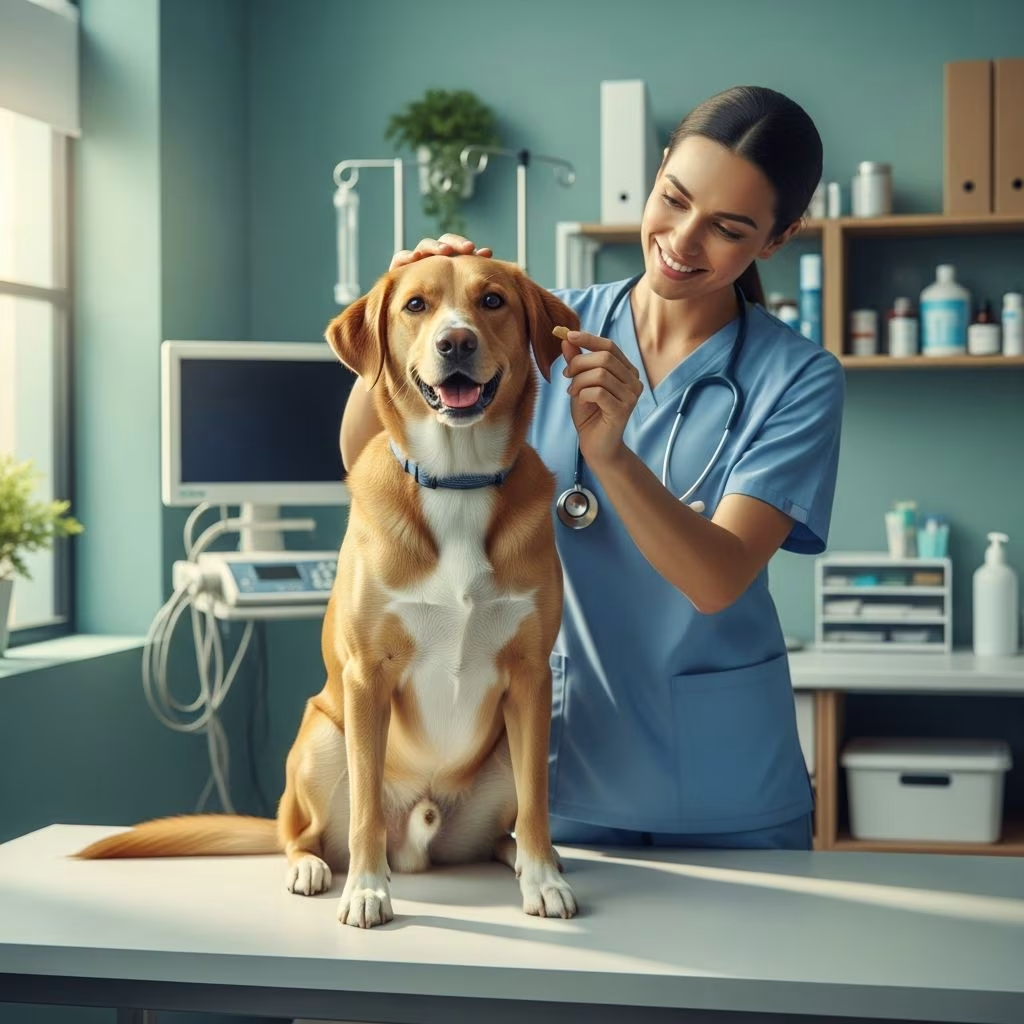
Veterinary appointments can be daunting for dogs, often leading to heightened anxiety that complicates exams and treatments. By implementing targeted training strategies at home, owners can foster confidence and cooperation, making these visits far more manageable for pets, staff, and themselves.
Understanding Your Dog’s Vet Visit Fears
Dogs exhibit stress through subtle cues like lip licking, yawning, avoidance, or stiff body posture during vet encounters. Recognizing these early allows proactive intervention. Common triggers include unfamiliar environments, handling by strangers, loud noises, and restraint on tables. Studies from veterinary behavior programs emphasize that early preparation significantly lowers cortisol levels, improving overall health outcomes.
Start by observing your dog’s baseline reactions at home. Note responses to touch on paws, ears, or tail to gauge sensitivity levels before escalating to clinic simulations.
Building Foundations with Positive Reinforcement
Positive reinforcement forms the cornerstone of effective vet prep. Use high-value treats reserved exclusively for training sessions to create strong associations with handling.
- Pair every gentle touch with immediate rewards to build tolerance.
- Employ clicker training for precise timing, marking desired behaviors instantly.
- Maintain short, frequent sessions to prevent overwhelm—aim for 5 minutes daily.
This approach shifts focus from fear to anticipation, as demonstrated in programs like Fear Free, which prioritize minimal restraint and calm environments.
Essential At-Home Handling Exercises
Replicate vet procedures in a familiar setting to desensitize your dog gradually. Begin with non-invasive touches and progress slowly.
| Exercise | Steps | Purpose |
|---|---|---|
| Ear and Mouth Check | 1. Lightly touch outer ear. 2. Lift lip briefly. 3. Reward heavily. | Prepares for otoscope exams and dental inspections. |
| Paw and Nail Handling | 1. Hold paw gently. 2. Simulate clipper touch. 3. Extend to full trim practice. | Eases blood draws and nail maintenance. |
| Abdomen and Back Touch | 1. Stroke sides softly. 2. Press lightly on belly. 3. Build duration over weeks. | Facilitates palpation during wellness checks. |
Always allow opt-out: if your dog pulls away, respect it and regress to easier steps. Consistency yields results within 2-4 weeks.
Fun Tricks for Cooperative Exams
Incorporate playful tricks to position your dog voluntarily, reducing the need for force. These skills distract from anxiety and position body parts ideally for vets.
- Paws Up: Teach placing front paws on a stable surface like a chair or scale platform. Lure with treats, fading the lure over time.
- Chin Rest: Cue dog to rest chin on your palm, holding still for 10 seconds initially. Ideal for eye, ear, and mouth exams.
- Sit Pretty: From sit, lift front paws skyward, exposing chest and underbelly for auscultation.
- Shake a Paw: Offers paws readily for temperature checks or injections.
- Play Dead: Roll onto side calmly, mimicking exam positions.
Practice these 3-5 times weekly. During visits, cue tricks to engage your dog positively with staff.
Desensitizing to the Vet Environment
Bridge home training to real-world settings with “happy visits.” Schedule short, non-appointment trips to the clinic.
- Park nearby and reward calm car exits.
- Enter lobby for treats from familiar staff—no exam required.
- Progress to scale weigh-ins or brief room entry.
- End every visit on a high note with play or toys.
Frequency matters: 2-3 times weekly builds positive conditioning. For severe fears, consult vets trained in low-stress handling protocols.
Clinic Day Strategies for Success
On appointment day, preparation maximizes smoothness.
- Bring a familiar mat or blanket for a “safe zone” in waiting areas and on scales.
- Use a treat pouch for continuous reinforcement of eye contact and calm sitting.
- Request floor exams if table anxiety persists.
- Employ “magnet hand”: fistful of treats revealed gradually to lure through doorways.
Communicate your dog’s training history upfront. Many clinics now accommodate trained pets with cooperative protocols.
Advanced Techniques for Challenging Cases
For dogs with chronic anxiety or medical needs, layer in specialized methods.
- Muzzle Training: Introduce basket muzzles paired with meals for voluntary wear, ensuring safety without distress.
- Stationing: Teach settling on a mat anywhere, reinforced with clickers for focus amid distractions.
- Anti-Anxiety Aids: Discuss pre-visit medications with your vet for high-fear dogs, administered hours prior.
These elevate baseline comfort, particularly for frequent visits due to conditions like diabetes or allergies.
Choosing a Vet Aligned with Training Goals
Select practices emphasizing fear-free methods, such as those certified in Low Stress Handling. Inquire about:
- Use of calming pheromones or music.
- Staff training in positive reinforcement.
- Policies on sedation alternatives and parental presence.
Switching providers may yield dramatic improvements if current experiences reinforce fears.
Common Pitfalls and Fixes
Avoid these errors to prevent setbacks:
| Pitfall | Why It Fails | Fix |
|---|---|---|
| Rushing Progress | Overwhelms, increasing fear. | Break into micro-steps; celebrate tiny wins. |
| Using Low-Value Rewards | Dog ignores cues under stress. | Reserve top treats (e.g., chicken, cheese) solely for this. |
| Forcing Participation | Damages trust long-term. | Consent-based: stop if dog signals discomfort. | Ignoring Body Language | Misses escalation cues. | Learn via resources like Cornell’s canine stress guides. |
Long-Term Benefits Beyond the Vet
Training extends to grooming, travel, and daily care. Dogs gain resilience, owners build deeper bonds, and health monitoring improves through easier at-home checks. Puppies benefit most from starting at 8 weeks, imprinting positive associations early.
Frequently Asked Questions (FAQs)
How long until I see results?
Basic tolerance emerges in 1-2 weeks with daily practice; full vet readiness takes 4-6 weeks.
What if my dog won’t take treats at the vet?
Use squeezeable soft treats or meat paste; practice in mildly distracting settings first.
Is this suitable for aggressive dogs?
Yes, but pair with professional guidance from a veterinary behaviorist for safety.
Can puppies start this training?
Absolutely—begin with gentle socialization from first vaccines.
What tools do I need?
Clicker, high-value treats, stable platform, optional mat or muzzle.
References
- How to make veterinary visits less stressful for dogs — Cornell University College of Veterinary Medicine. 2023. https://www.vet.cornell.edu/departments-centers-and-institutes/riney-canine-health-center/canine-health-topics/how-make-veterinary-visits-less-stressful-dogs
- Transform Your Dog’s Vet Visits with Cooperative Care — Cobb Veterinary Clinic. 2024. https://cobb.vet/transform-your-dogs-vet-visits-with-cooperative-care-a-professional-guide/
- How Dog Trick Training Can Improve Vet Visits — American Kennel Club. 2023-10-15. https://www.akc.org/expert-advice/training/dog-trick-training-vet-visits/
- Preparing Your Pet for Vet Visits — Karen Pryor Academy. 2022. https://karenpryoracademy.com/preparing-your-pet-for-vet-visits/
- Tips for Veterinary Visits & Exams — Clark Animal Care Center. 2024. https://www.clarkanimalcare.com/services/tips-for-veterinary-visits-exams
- How to prepare your pet for a low-stress vet visit — Colorado State University College of Veterinary Medicine. 2023. https://cvmbs.source.colostate.edu/how-to-prepare-your-pet-for-a-low-stress-vet-visit/



