
Calm Holiday Hounds: Polite Guest Greetings
Master proven techniques to train your hound for relaxed, jump-free greetings during festive gatherings and beyond.
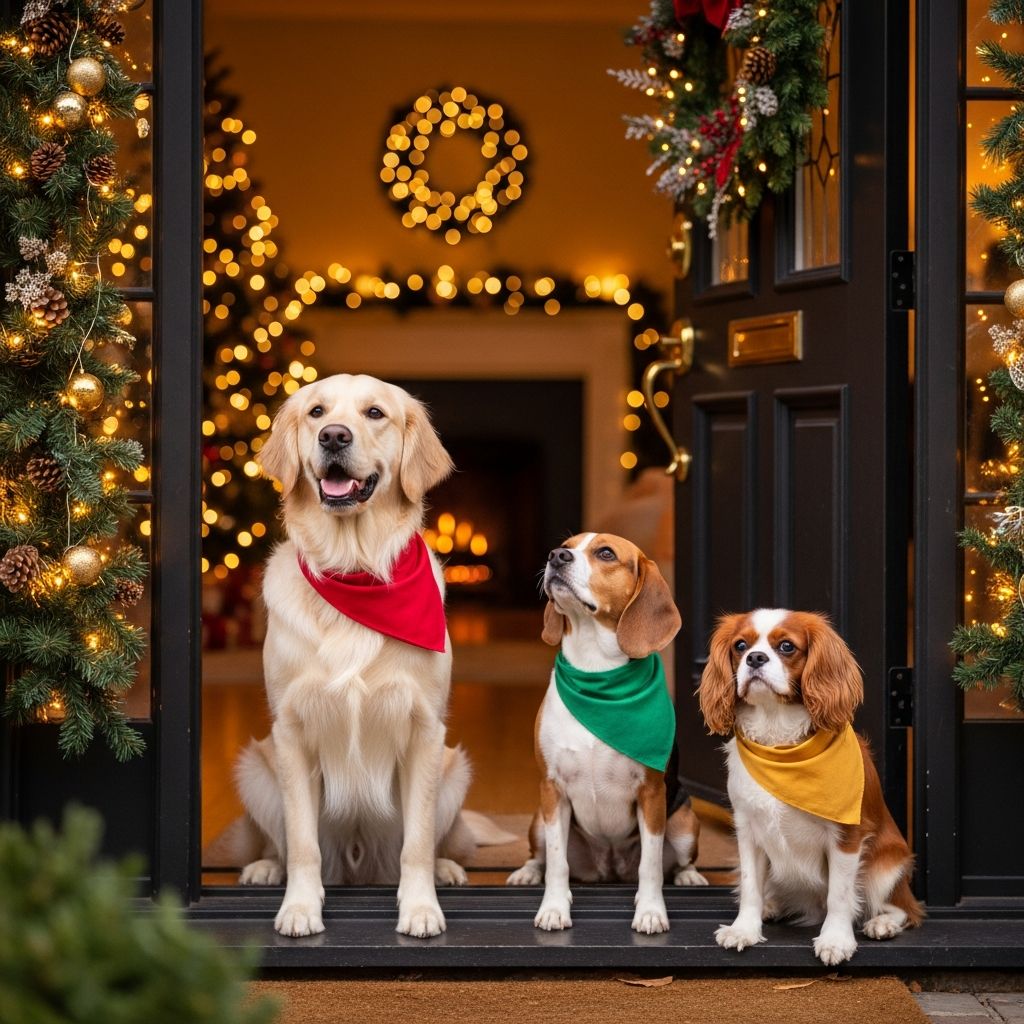
Bringing a hound into a home during the holidays can turn joyful gatherings into chaotic scenes if your dog greets guests with excessive jumping, barking, or lunging. Hounds, known for their scent-driven enthusiasm and high energy, often struggle with impulse control around newcomers. This guide provides original, practical training strategies to foster polite interactions, ensuring everyone enjoys the festivities without stress.
Understanding Hound Greeting Challenges
Hounds possess an innate drive to investigate scents, which intensifies during exciting events like holidays when unfamiliar smells flood the home. This leads to behaviors such as leaping at doors or weaving frantically to reach visitors. Unlike more biddable breeds, hounds may prioritize sniffing over commands, requiring tailored approaches that leverage their curiosity positively.
Common issues include door-dashing, vocal excitement, and poor boundaries. Addressing these starts with prevention: secure doors, use baby gates, and preempt excitement by stationing your dog before arrivals. Consistency transforms these instincts into controlled responses, making your hound a gracious host.
Essential Foundation Skills for Composed Behavior
Before tackling guest greetings, build core skills. A solid “sit” or “down” on cue forms the bedrock, practiced daily in low-distraction settings. Progress to “stay” amid mild interruptions like doorbell rings or tossed toys.
- Focus Exercises: Teach “watch me” by holding a treat near your eyes, rewarding eye contact. Gradually add distance and duration.
- Impulse Control Games: Practice “leave it” with high-value items, building tolerance for ignored temptations.
- Mat Training: Designate a bed or mat as a relaxation zone, rewarding prolonged settles.
These skills create a calm baseline, essential for hounds whose baying heritage amplifies arousal.
Step-by-Step: The “Go Say Hi” Greeting Protocol
This structured cue channels your hound’s enthusiasm into brief, polite sniffs. Begin in a quiet space with a trusted helper.
- Prerequisite Calm: With your dog leashed at your side, feed continuous treats to maintain focus as the helper approaches slowly.
- Introduce Permission: Once relaxed, cue “go say hi” and allow a 2-3 second interaction— a quick sniff or pet—then recall with your name or a touch cue.
- Reward Return: Lavish treats upon return, reinforcing the cycle: approach, greet briefly, retreat calmly.
- Fade Assistance: Reduce treats, extend to off-leash in controlled environments, and generalize to new people.
For reactive hounds, start farther away, using the cue only when interest is voluntary. This method, echoed in professional training, prevents frustration from denied greetings.
Leash Management for Controlled Encounters
A leash provides gentle guidance without tension, which can escalate arousal. Hold it loosely to avoid “leash frustration.”
| Scenario | Leash Technique | Expected Outcome |
|---|---|---|
| Door Arrival | Shorten leash, cue sit before opening | Dog remains positioned, no lunging |
| Guest Entry | Guide in arc away from door, reward calm | Smooth path to greeting spot |
| Ongoing Visit | Allow supervised loose-leash wander | Prevents repeated jumping |
Practice with friends role-playing arrivals. If jumping occurs, calmly redirect to sit without reprimand—positive reinforcement trumps punishment for lasting change.
Visitor Involvement: The “Ignore Until Calm” Rule
Guests unwittingly reinforce jumping by petting excited dogs. Instruct them firmly: no eye contact, talking, or touching until all paws are on the floor.
Enhance with the “feed the floor” variation: Toss treats to the ground near shoes, rewarding four-on-the-floor naturally. This shifts focus downward, curbing vertical leaps. For hounds, pair with scent games post-calm to satisfy sniffing urges.
Advanced Protocols for Multi-Dog Homes and Parties
In homes with multiple hounds or large gatherings, escalate management. Use separate areas initially, releasing one dog at a time for greetings.
- Party Rotation: Station dogs in crates or behind gates with stuffed Kongs during peaks.
- Dog-to-Dog Greetings: Teach parallel walks or side-crossing to avoid direct face-offs.
- High-Energy Events: Pre-exercise with long walks to burn scent-hunting drive.
For ongoing visits, employ “place” cues to rotate rest periods, preventing fatigue-induced regressions.
Tailoring Training to Hound Temperaments
Hounds vary: scent hounds like Beagles fixate on odors, while sighthounds like Greyhounds startle easily. Adapt accordingly.
- Scent-Driven Breeds: Incorporate nose work post-greeting as rewards.
- Sensitive Types: Use softer cues, slower approaches to build confidence.
- Puppies vs. Adults: Pups learn faster; adults need more repetition for habituated independence.
Monitor body language: lip-licking signals stress, so pause and reset.
Common Mistakes and Fixes
Avoid these pitfalls for faster progress:
- Inconsistency: Never allow “just once” jumping— it undoes weeks of work.
- Over-Excitement Starts: Greet your dog calmly upon returning home to set the tone.
- Ignoring Thresholds: If arousal spikes, increase distance or end session.
- No Maintenance: Weekly refreshers keep skills sharp amid holiday chaos.
FAQs: Holiday Hound Greeting Essentials
What if my hound ignores cues during greetings?
Revert to basics: more treats, shorter sessions. Build value for the cue in non-greeting contexts first.
How long until results show?
Most see improvement in 1-2 weeks with daily 10-minute practices, though full reliability takes months.
Can this work for fearful hounds?
Yes, start with familiar, non-threatening people at maximum distance, using counter-conditioning.
What gear helps most?
Front-clip harness for control, high-value treats like meat, and a comfy mat.
Post-holiday maintenance?
Practice monthly simulations to sustain polite habits year-round.
Long-Term Benefits Beyond Holidays
Polite greetings enhance safety, reduce vet visits from injuries, and boost your hound’s confidence. Well-socialized dogs adapt better to life changes, from moves to new family members. Invest now for a lifetime of harmonious interactions.
With patience and these methods, your holiday hound becomes a model of composure, turning gatherings into celebrations of calm companionship.
References
- 7 Easy Ways to Teach Your Dog to Greet Visitors Politely — Wheresithappens.com. 2025-04-11. https://wheresithappens.com/2025/04/11/7-easy-ways-to-teach-your-dog-to-greet-visitors-politely/
- Teaching your dog to “GO SAY HI” or really, greet & retreat! — Dogsdayoutseattle.com. Accessed 2026. https://dogsdayoutseattle.com/teaching-dog-go-say-hi/
- Teach Your Dog to Greet People CALMLY (No More Jumping) — McCann Dog Training (YouTube). Accessed 2026. https://www.youtube.com/watch?v=Xhd_4s_kyaI
- Dog-to-Dog Greetings: Your Dog Doesn’t Need To Say Hi — American Kennel Club (AKC). Accessed 2026. https://www.akc.org/expert-advice/training/dog-to-dog-greetings/
- Master On-Leash Greetings for Dogs with Proper Training — Nitrocanine.com. Accessed 2026. https://nitrocanine.com/how-to-manage-on-leash-dog-greetings/
Similar Articles








Read full bio of medha deb


