
Calm Crate Panic: Proven Training Guide
Transform crate anxiety into confidence with step-by-step methods that build positive associations and lasting comfort for your dog.
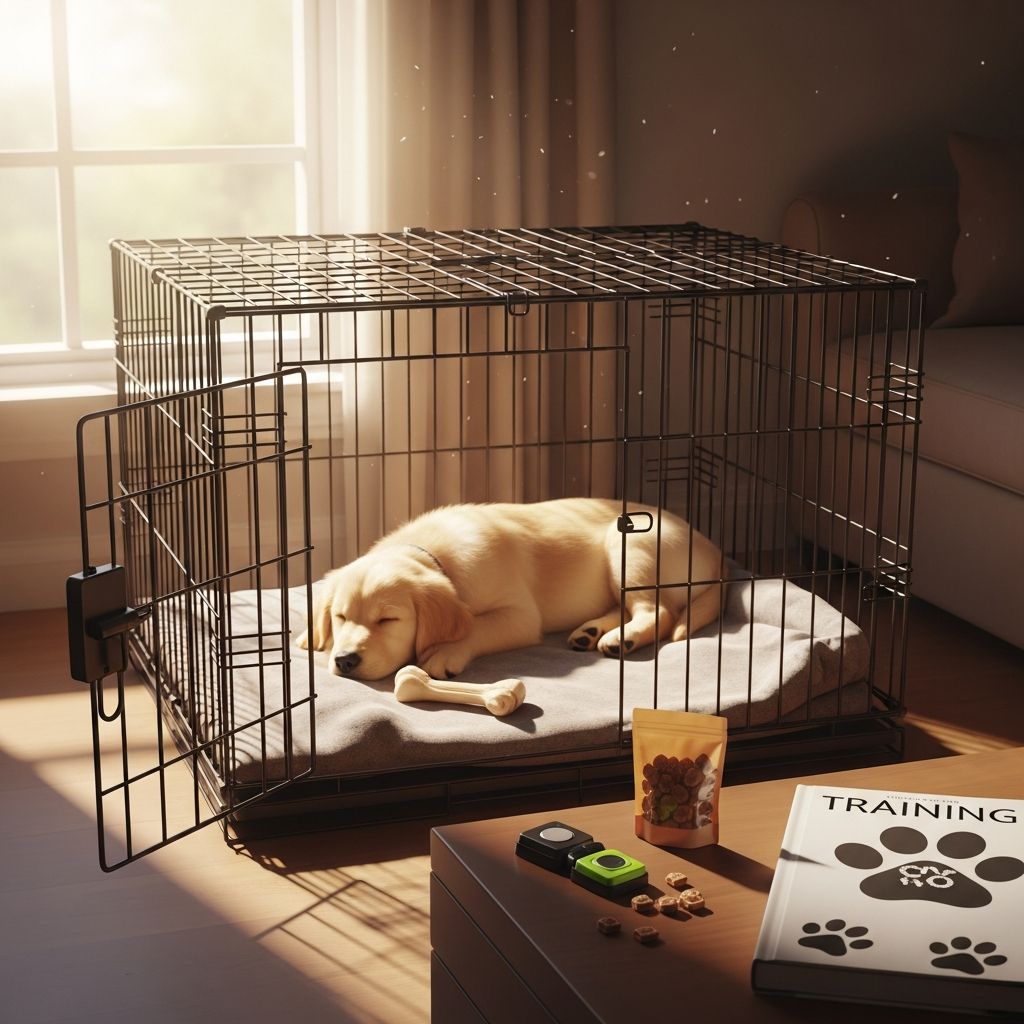
Many dogs experience intense distress when confined to a crate, manifesting as whining, scratching, or attempts to escape. This guide provides a comprehensive approach to resolving crate panic through positive reinforcement, gradual desensitization, and practical exercises that foster security and relaxation.
Understanding Crate-Related Distress in Dogs
Crate panic often stems from a dog’s innate aversion to confinement, which can evoke feelings of isolation or vulnerability. Unlike wild counterparts with dens for safety, domestic dogs may perceive crates as traps rather than retreats unless properly introduced. Signs include excessive vocalization, pawing at the door, salivating, or destructive behavior. Addressing this requires patience, as forcing compliance can intensify fear. Instead, focus on creating voluntary entry and prolonged calm presence.
Selecting the Ideal Crate for Success
Choose a crate that matches your dog’s size—large enough for standing, turning, and lying down comfortably, but not so spacious it feels like an empty room. Wire crates with dividers suit growing puppies, while plastic airline kennels offer security for anxious adults. Cover three sides with a breathable blanket to mimic a den-like enclosure, reducing visual stimuli that heighten arousal. Position the crate in a high-traffic family area initially to maintain a sense of connection.
- Wire crate: Ventilation and visibility; ideal for training phases.
- Plastic kennel: Enclosed feel; best for travel or severe anxiety.
- Soft-sided: Lightweight portability; avoid for chewers.
Building Positive First Impressions
Begin by making the crate an inviting destination without closure. Place it in a central location with the door propped open. Scatter high-value treats or toys nearby to encourage investigation. As your dog approaches, praise softly and drop treats inside sporadically. Repeat sessions of 5-10 minutes multiple times daily, ensuring every interaction ends on a high note with your dog exiting freely. This establishes the crate as a source of good things, countering any preconceived negativity.
Mastering Entry on Command
Once comfortable exploring, introduce a cue like “kennel” or “place.” Stand at the entrance, hold a treat visibly, and lure your dog inside. Say the cue as their front paws cross the threshold, then reward generously from within the crate. Practice until they enter eagerly on verbal prompt alone. Vary rewards—kibble for basics, peanut butter smears for motivation—to keep engagement high. Sessions should remain short to prevent fatigue.
| Step | Action | Duration | Treat Type |
|---|---|---|---|
| 1 | Lure with treat | 5 reps | High-value |
| 2 | Cue + lure | 10 reps | Mixed |
| 3 | Cue only | 15 reps | Variable |
Desensitizing to Door Closure
Progress to brief closures once entry is fluent. Direct your dog inside, dispense a treat, then latch the door for 1-2 seconds before reopening with praise. Gradually extend to 5-10 seconds, staying nearby and speaking reassuringly. If panic emerges, revert to open-door play. Incorporate mealtime: Feed entire meals inside with progressive door times, associating sustenance with containment. This phase demands repetition—aim for dozens of successful trials before advancing.
Incorporating Long-Lasting Chews for Relaxation
To promote settling, introduce durable enrichment like frozen Kongs filled with yogurt, peanut butter, or wet food. Post-entry, provide the toy, close the door, and allow undisturbed enjoyment. Open before fussing begins, preserving the positive cycle. This teaches self-soothing, crucial for alone time. Rotate fillers to maintain novelty: pumpkin puree one day, cheese the next. Supervise initially to monitor comfort levels.
- Frozen Kong recipes: Mix kibble with warm water, freeze in toy.
- Bullas or Benebones: For moderate chewers; inspect regularly.
- Lick mats: Spread soft food for low-effort engagement.
Extending Alone Time Gradually
With door tolerance established, practice short absences. Crate your dog with enrichment, step away for 30 seconds, then return calmly without fanfare. Increment by 1-2 minutes per session, interspersing with open-crate rewards. Move to adjacent rooms, then outings like walks, returning to release only when quiet. Nighttime crating beside your bed eases separation, transitioning outdoors later. Track progress in a journal to identify thresholds.
Addressing Setbacks and Escalations
Regression is common; respond by downsizing expectations rather than punishment. If escape attempts damage the crate, reinforce with zip ties at seams for durability. For extreme cases, consult a veterinary behaviorist to rule out separation anxiety. Never use crate as timeout—preserve its sanctuary status. Consistency across household members prevents confusion.
Advanced Techniques for Lasting Calm
Teach a “settle” down-stay inside the open crate, rewarding relaxation. Wheelchair or chair proximity allows supervised practice while you work nearby. Layer with white noise machines or calming pheromone diffusers for auditory support. For travel, simulate vehicle motion during sessions. Fully trained dogs self-enter for naps, viewing the crate as a personal haven.
Common Mistakes to Avoid
Avoid rushing phases, as overwhelm solidifies fear. Don’t release on crying, which reinforces whining. Skip harsh corrections; positivity drives change. Ensure crate hygiene to prevent aversion. Puppies under 6 months need frequent potty breaks, aligning crate time with bladder capacity (roughly 1 hour per month of age).
| Mistake | Impact | Fix |
|---|---|---|
| Rushing closure | Heightens fear | Slow increments |
| Releasing on whine | Trains vocalization | Wait for quiet |
| Poor location | Increases isolation | Family area first |
Benefits Beyond Panic Resolution
Successful crate training aids housebreaking by leveraging natural den instincts, accelerates travel acclimation, and provides safety during emergencies. It fosters independence, reducing reliance on constant supervision. Long-term, dogs exhibit lower overall stress, improving adaptability to new environments.
Frequently Asked Questions
How long does crate training take?
Typically 2-6 weeks with daily sessions, varying by age and prior experience. Puppies adapt faster than rescues.
What if my adult dog hates the crate?
Revert to basics: open-crate treats and zero pressure. Persistence yields results in most cases.
Is crating safe overnight?
Yes, for healthy adults up to 8 hours; puppies require breaks. Monitor for distress.
Can I crate multiple dogs?
Separate crates prevent resource guarding; feed individually inside.
What toys are crate-safe?
Durable, non-flammable items like Kongs; avoid strings or small parts.
References
- 6 Steps to Crate Train Your Dog – Leash and Learn — Leash and Learn NYC. 2019. https://leashandlearnnyc.com/step-by-step-crate-training/
- Crate Training Your Dog or Puppy – Maddie’s Fund — Maddie’s Fund. Accessed 2026. https://www.maddiesfund.org/crate-training-your-dog-or-puppy.htm
- How to Crate Train Your Dog (and Why You Should!) — Sadie’s Rules K9 Training. 2019-06-29. http://www.sadiesrulesk9training.com/blog-posts/2019/6/29/how-to-crate-train-your-dog-and-why-you-should
- How to Crate Train Your Dog or Puppy | Humane World for Animals — Humane World. Accessed 2026. https://www.humaneworld.org/en/resources/crate-training-101
- How to Crate Train Your Dog in Nine Easy Steps — American Kennel Club (AKC). Accessed 2026. https://www.akc.org/expert-advice/training/how-to-crate-train-your-dog-in-9-easy-steps/
- Crate training your dog or puppy | Animal Humane Society — Animal Humane Society. Accessed 2026. https://www.animalhumanesociety.org/resource/crate-training-your-dog-or-puppy
Similar Articles








Read full bio of medha deb


