

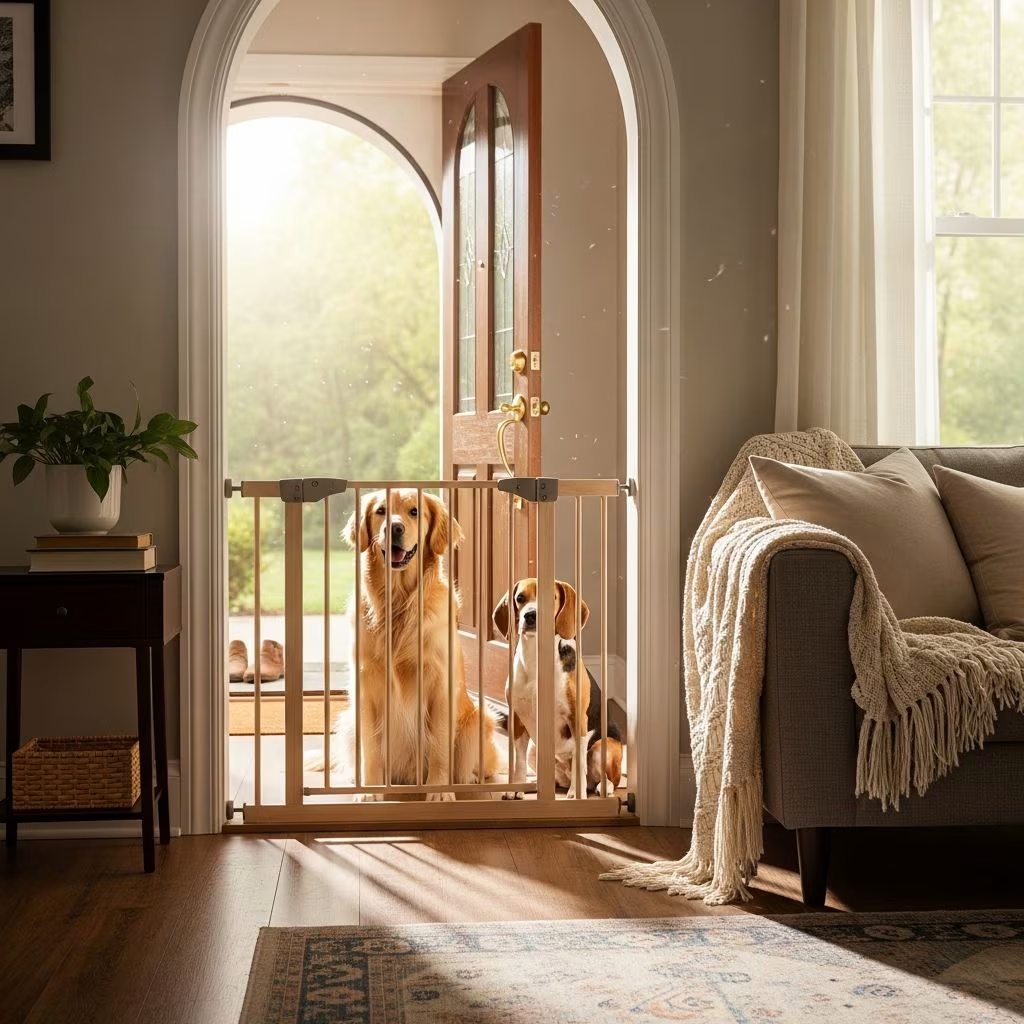
Teaching dogs to remain composed when visitors knock transforms chaotic arrivals into peaceful encounters. Barriers like dog gates provide essential control while positive reinforcement builds lasting calm behaviors.
Why Dogs Lose Control at the Door
Dogs often react intensely to doorbells or knocks due to excitement, territorial instincts, or learned habits where attention follows frenzy. High-energy breeds or under-exercised pets amplify jumping, barking, or nipping as bids for interaction.
Without intervention, these responses reinforce themselves: guests may inadvertently reward bad manners with pets or talk, perpetuating the cycle. Understanding triggers—sound cues, movement, novel scents—allows targeted training to redirect energy positively.
- Excitement overload: Puppies and adolescents view arrivals as play invitations.
- Fear responses: Timid dogs nip or bark from anxiety around strangers.
- Attention-seeking: Any reaction, even scolding, fuels the behavior.
Selecting the Right Dog Gate Setup
Dog gates act as immediate management tools, creating safe zones without confinement stress. Choose pressure-mounted or freestanding models tall enough to deter jumping, with walk-through doors for adult access.
Position the gate in a hallway or entryway, pairing it with a comfy mat or bed. This setup isolates excitement while keeping your dog visible, reducing frustration. For larger breeds, reinforce with heavy bases to withstand enthusiastic pawing.
| Gate Type | Best For | Pros | Cons |
|---|---|---|---|
| Pressure-Mounted | Indoor doorways | Easy install, no drilling | Less stable for big dogs |
| Freestanding | Open spaces | Portable, adjustable | Takes floor space |
| Extra-Tall | Jumpers/High-energy | Secure containment | Higher cost |
Building a Designated Calm Zone
Create a “place”—a specific bed or mat behind the gate—where your dog learns to relax during arrivals. Stock it with durable toys, puzzle feeders, and water to associate the spot with positivity.
Practice daily: Toss treats onto the place, cue “settle,” and reward stillness. Gradually introduce door sounds at low volume, clicking for calm (using a clicker for precise timing) and treating. Progress to tethering lightly if needed, fading it as reliability grows.
- Guide dog to place with treat lure.
- Click and reward four-on-floor position.
- Add duration: Hold 5-10 seconds before release.
- Incorporate doorbell simulations.
Step-by-Step Doorway Training Protocol
Desensitize triggers methodically. Start with simulated knocks from family, using the gate to enforce boundaries. Helpers ignore the dog initially, rewarding only quiet moments.
Phase 1: Solo Practice
Play doorbell recordings softly. Direct to place via gate. Reward heavily for compliance, ignoring fussing.
Phase 2: Controlled Helpers
Enlist friends for knocks. Gate up, dog to place. Helper enters silently; advance only if paws stay down. Back-turn resets excitement.
Phase 3: Real Visitors
Leash for backups, pre-exercise to tire. Brief guests on ignoring until calm. Release for polite greetings post-settle.
Consistency across all entrants prevents regression. Track progress in a journal: note triggers, duration of calm, and rewards used.
Positive Reinforcement Essentials
Clicker training shines here—no yelling, just markers for desired pauses in frenzy. Pair clicks with premium treats, transitioning to praise or play. Voice remains soothing; pet gently to model relaxation.
Avoid pitfalls: Never push away jumpers (it counts as play), yell (escalates arousal), or allow guest pets during poor manners. Pre-visit walks drain energy, priming focus.
Positive methods teach choice: Dogs opt for calm because it yields rewards, fostering confidence over reactivity.
Addressing Specific Challenges
Jumping Enthusiasts: Gate blocks access; reward ground contact. Helpers step back on leaps.
Barkers/Nippers: Muffle sounds initially; counter-condition with treats at visitor sight/smell. Separate fearful dogs until settled.
High-Drive Breeds: Layer mental games—sniff mats, stuffed Kongs—behind gate for sustained calm.
For multi-dog homes, train individually before group sessions to avoid pack amplification.
Daily Routines for Lasting Success
Integrate into lifestyle: Random doorbell drills, guest prep walks, place practice sans visitors. Fade gate over weeks as cues alone suffice.
Monitor body language—relaxed ears, soft gaze signal readiness. If regression hits (illness, changes), restart basics gently.
Common Mistakes and Fixes
- Inconsistent rules: All household members enforce place/gate.
- Rushing phases: Build thresholds slowly for reliability.
- Overlooking exercise: 30-60 min daily output prevents overflow.
- Guest non-compliance: Prep with door signs or instructions.
FAQs
How long until my dog stays calm?
Weeks to months, depending on age, breed, and practice frequency. Daily 10-min sessions accelerate gains.
Can I train without a clicker?
Yes; use a verbal marker like “yes!” but clickers offer superior precision.
What if my dog fears guests?
Counter-condition from distance: Treats for calm views, no forcing interactions. Consult pros for aggression.
Is crating better than gating?
Gates allow supervision; crates suit severe cases or naps. Rotate based on context.
Works for puppies too?
Absolutely—start young for prevention. Short sessions match attention spans.
Advanced Techniques for Perfection
Once basics stick, add distractions: Noisy helpers, multiple entrants. Teach “wait” at thresholds for off-leash freedom. Games like “look at that” redirect outdoor triggers.
Long-term: Rotate place locations, vary rewards to generalize calm across environments.
References
- Training Your Dog to Behave Around Guests — Whole Dog Journal. 2023-05-15. https://www.whole-dog-journal.com/behavior/training-your-dog-to-behave-around-guests/
- From Doorbell Disaster to Gracious Greeter — Pet Dog Trainer. 2024-02-10. https://www.petdogtrainer.com/blog/from-doorbell-disaster-to-gracious-greeter-training-your-dog-to-greet-guests-politely
- Visitors at the Door? Here’s How to Help Your Dog Behave Properly — Positive Pets Boise. 2023-11-20. https://www.positivepetsboise.com/visitors-at-the-door-heres-how-to-help-your-dog-behave-properly-around-guests/
- Dog Training Tips: How to Stop Barking and Nipping at Guests — Dog Gone Problems. 2022-08-05. https://doggoneproblems.com/milo-stop-nipping-guests/
- Teaching Your Dog to Be Calm with Visitors at the Front Door — Four Legged Scholars. 2016-04-01. https://fourleggedscholars.com/blog/2016/04/01/teaching-your-dog-to-be-calm-with-visitors-at-the-front-door/
- Training Tips: Who’s at the Door?! — Bond Dog Training. 2023-07-12. https://www.bonddogtraining.com/blog/training-tips-whos-at-the-door



