

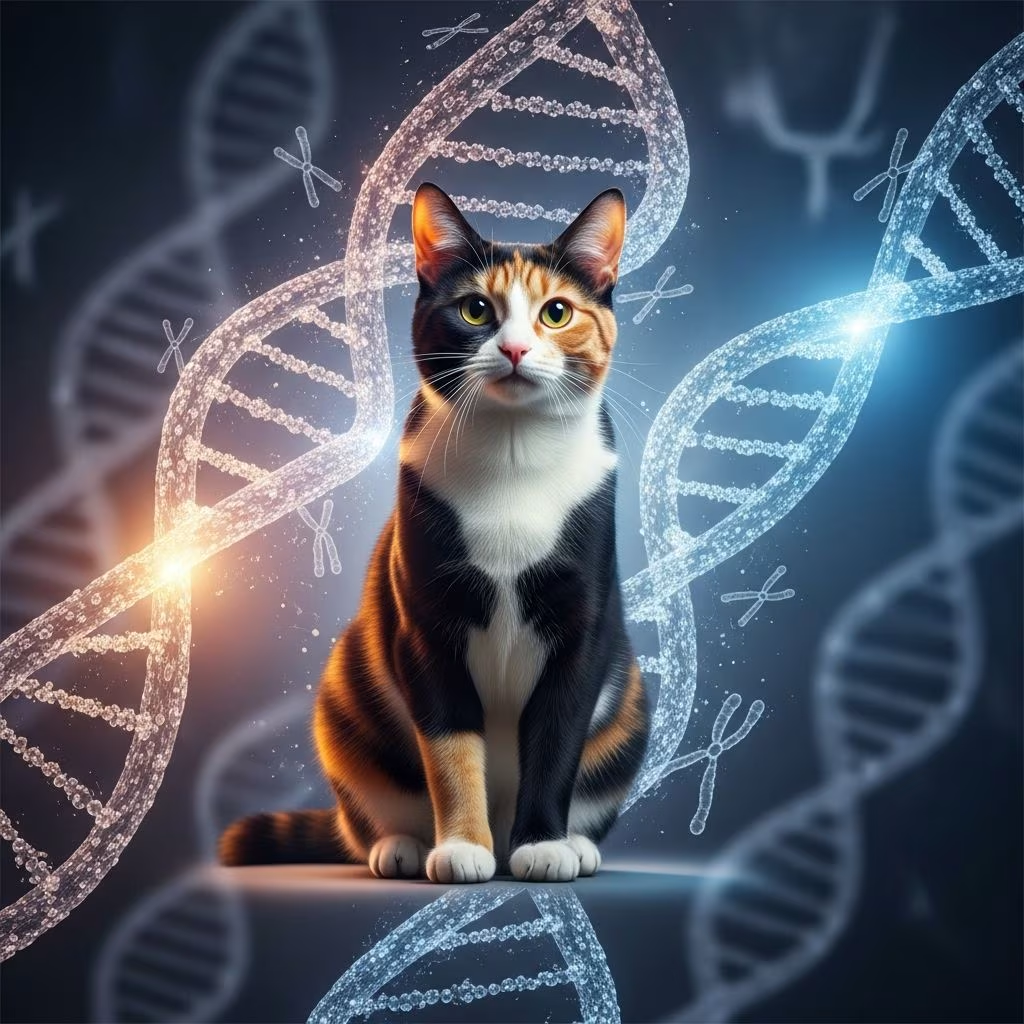
When you picture a calico cat, chances are you’re imagining a beautiful female feline with patches of orange, black, and white fur adorning her coat. This mental image aligns with a remarkable biological reality: nearly all calico cats in the world are female. While this fact might seem like a curious quirk of nature, it actually reveals a fascinating story about how genetics shapes the appearance and characteristics of our feline companions. Understanding why calico cats are predominantly female requires diving into the intricate world of chromosomal inheritance and how traits are expressed in living organisms.
Decoding the Calico Coat Pattern
Before exploring the gender mystery, it’s essential to understand what makes a calico cat visually distinctive. Calico cats display a tricolor coat pattern featuring three primary colors: orange, black, and white. The term “calico” refers specifically to this multi-hued appearance, which can vary significantly from one cat to another. Some calicos display large blocks of solid color, while others showcase smaller patches creating a more intricate mosaic effect. The white coloring typically appears as patches or spots, while the orange and black portions blend across the cat’s body in unique patterns.
Each calico cat’s coat pattern is entirely unique, much like a fingerprint in humans. This individuality makes each cat distinctive and contributes to their popularity among cat enthusiasts. The three-color combination has made calicos cultural icons, featured in Japanese folklore, art, and modern media as symbols of good fortune and charm.
The Chromosomal Foundation of Color Expression
The key to understanding calico cat gender lies in understanding chromosome structure and function. In mammals, sex chromosomes determine biological sex: females possess two X chromosomes (XX), while males have one X chromosome and one Y chromosome (XY). This chromosomal difference becomes critically important when examining coat color genetics in cats.
The gene responsible for orange versus non-orange coloring in cats resides specifically on the X chromosome. This location is crucial because it means that males, with only one X chromosome, can typically express only one color variant—either orange or black, but not both simultaneously. Female cats, however, possess two X chromosomes, meaning they can carry genetic instructions for both color variants on different chromosomes.
A female kitten receives one X chromosome from her mother and one from her father. If her mother carries the orange color gene and her father carries the black color gene (or vice versa), she inherits both genetic instructions. Similarly, if both parents carry different color variants, the female offspring will possess the genetic blueprint for displaying multiple colors.
X Chromosome Inactivation: Nature’s Random Selection
The phenomenon that truly makes calico cats possible is a biological process called X chromosome inactivation. During early fetal development, female mammals undergo a remarkable cellular event: in each cell, one of the two X chromosomes is randomly deactivated or “turned off.” This process is permanent for that cell and all its descendants, creating what scientists call mosaicism.
Imagine this process at work in a developing calico kitten. As her cells multiply and specialize, each cell independently decides which X chromosome to inactivate. In some cells, the maternal X chromosome remains active while the paternal one shuts down. In neighboring cells, the reverse occurs. This random selection creates distinct regions throughout the cat’s body where different genetic instructions are active, resulting in patches of different colors.
The regions expressing the maternal X chromosome might display one color, while regions where the paternal X chromosome remains active display another. The white coloring typically comes from a separate gene unrelated to the X chromosome. This elegant biological mechanism creates the distinctive patchwork appearance that defines calico cats.
Why Male Calicos Are Virtually Non-Existent
Male cats, possessing only a single X chromosome, face a biological barrier to developing calico coloring. Since they inherit only one set of genetic instructions for the orange/non-orange color gene, they can express only one color variant. A male cat with an orange gene will display orange coloring; a male with a non-orange gene will display black or brown coloring. Without a second X chromosome carrying an alternative color instruction, the biological conditions necessary for calico patterning simply cannot occur through normal genetic inheritance.
This chromosomal limitation explains why calico cats are so overwhelmingly female. The genetics of X-linked traits naturally favors female expression of multi-color patterns. A male would require an entirely different genetic scenario to break this pattern—one that operates outside the normal rules of inheritance.
The Rare Exception: Male Calicos and Genetic Anomalies
While calico cats are almost exclusively female, extremely rare exceptions do occur. Male calico cats exist, but they represent less than 0.1% of all calico cats, with estimates suggesting only 1 in 3,000 calico cats are male. These exceptional males owe their calico coloring to genetic abnormalities rather than standard chromosomal inheritance.
The most common genetic condition enabling male calicos is Klinefelter syndrome, where an individual possesses an XXY chromosome configuration instead of the typical XY pattern. This chromosomal abnormality occurs due to faulty cell division during reproductive cell formation. A male cat with XXY possesses two X chromosomes (just like females) plus a Y chromosome, providing the genetic foundation for multi-color expression. With two X chromosomes available, the X inactivation process can occur, creating the mosaic coloring characteristic of calicos.
Another rare scenario enabling male calicos is chimerism, where an individual possesses two genetically distinct cell populations. A male chimeric cat might have some cells with XX chromosomes and others with XY chromosomes, creating regions of the body where each population expresses its own genetic instructions.
Health Implications for Male Calicos
Male calico cats with XXY chromosome configurations typically face significant health challenges. The chromosomal abnormality associated with their calico coloring frequently results in sterility, meaning these males cannot produce offspring. Beyond reproductive limitations, male calicos often experience various health complications stemming from the genetic imbalance.
Even in the exceptionally rare cases where a male calico is fertile, the genetic abnormality typically produces offspring with poor physical quality and reduced overall viability. For these reasons, cat breeders and registries typically reject fertile male calicos for breeding purposes. Most cat show registries will not accept male calicos as show animals, further limiting their role in the feline world.
Common Health Concerns in Male Calicos
- Sterility or reduced fertility
- Developmental abnormalities
- Immune system complications
- Behavioral or neurological issues in some cases
- Reduced lifespan compared to typical male cats
Distinguishing Calicos from Tortoiseshells
A related pattern that follows the same genetic rules is the tortoiseshell cat, often abbreviated as “tortie.” While calicos and tortoiseshells both result from the same genetic mechanisms involving X chromosome inheritance and inactivation, they differ in one key aspect: the presence or absence of white coloring.
Tortoiseshell cats display orange and black or brown coloring without significant white patches, while calicos include white as a prominent color component. The genetic principles governing their gender distribution remain identical—both are almost exclusively female for the same chromosomal reasons. Male tortoiseshells are equally rare as male calicos, occurring only in cases of chromosomal abnormalities like XXY configuration.
Practical Implications for Cat Owners
Understanding the genetics of calico cats has practical implications for cat ownership and breeding. If you encounter a male calico, you’re witnessing an exceptionally rare event in feline biology. The odds of finding a male calico are so slim that many people may never encounter one in their lifetime, even among lifelong cat enthusiasts.
For breeders, recognizing that calicos are naturally almost always female helps set appropriate expectations. If breeding produces calico kittens, breeders can confidently predict that nearly all will be female, allowing for better planning and resource allocation. Additionally, understanding that any male calicos will likely face health challenges emphasizes the importance of genetic counseling in breeding programs.
For prospective cat adopters, understanding calico genetics adds another layer of appreciation for these beautiful felines. Knowing that their striking coloring is the result of precise genetic mechanisms and random cellular decisions during development enriches the connection between owner and pet.
The Broader Context of Sex-Linked Traits
The prevalence of female calico cats represents just one example of how sex-linked genetic traits operate in animals. Many traits encoded on sex chromosomes show gender-specific patterns of expression. In humans, conditions like colorblindness appear more frequently in males because the recessive gene is located on the X chromosome; males need only one copy to express the trait, while females need two.
The calico cat phenomenon demonstrates nature’s elegant solutions to genetic expression. Rather than a limitation, the X chromosome inheritance system creates opportunities for biological diversity and variation. Female cats with their two X chromosomes can express greater color variation than males, contributing to the remarkable diversity observed in cat populations.
Frequently Asked Questions
Are all calico cats female?
Nearly all calico cats—approximately 99.9%—are female. However, extremely rare male calicos do exist, typically possessing an XXY chromosome configuration.
Can a male cat be calico?
Male calicos are exceptionally rare, representing less than 0.1% of all calico cats. When they do occur, they typically result from genetic abnormalities such as Klinefelter syndrome (XXY chromosomes).
Why are male calicos sterile?
The chromosomal abnormality (XXY) that enables male calicos to express calico coloring typically results in sterility due to improper reproductive cell development.
What causes calico coloring?
Calico coloring results from X chromosome inactivation, where female cats randomly deactivate one X chromosome in each cell during development. This creates patches of different colors based on which X chromosome remains active in different body regions.
Is a tortoiseshell cat the same as a calico?
Tortoiseshells and calicos result from the same genetic mechanisms but differ in appearance. Calicos have white patches, while tortoiseshells typically display only orange and black or brown coloring without prominent white areas.
The Enduring Mystery and Beauty of Calico Cats
The prevalence of female calico cats stands as a testament to the intricate interplay between chromosomes, cellular biology, and visible traits. What might initially appear as a simple color pattern actually reflects sophisticated genetic mechanisms operating at the cellular level. The rarity of male calicos only amplifies the fascination surrounding these genetically extraordinary individuals.
Whether you encounter a typical female calico or the exceptionally rare male variant, understanding the genetic foundations of their appearance deepens appreciation for feline diversity. These beautiful cats represent nature’s capacity for creating stunning visual variation through elegant biological mechanisms. Their tri-color coats, no matter how they came to be, continue to captivate cat lovers worldwide and serve as living reminders of genetics in action.
References
- Why 99.9% of Calico or Tortoiseshell Cats Are Female — The International Cat Association (TICA). https://tica.org/blogs/why-99-9-of-calico-or-tortoiseshell-cats-are-female/
- Are All Calico Cats Female? Vet-Verified Info & Fun Facts — Catster. https://www.catster.com/lifestyle/are-all-calico-cats-female/
- Calico Cats: Genetics, Personality, Lifespan And Intelligence — Cats.com. https://cats.com/calico-cats
- Calico Cat — Wikipedia. https://en.wikipedia.org/wiki/Calico_cat
- Calico Cat Male to Female Ratio — Oreate AI Blog. https://www.oreateai.com/blog/calico-cat-male-to-female-ratio/b434880f362e2724d654da9fcbfb90da



