

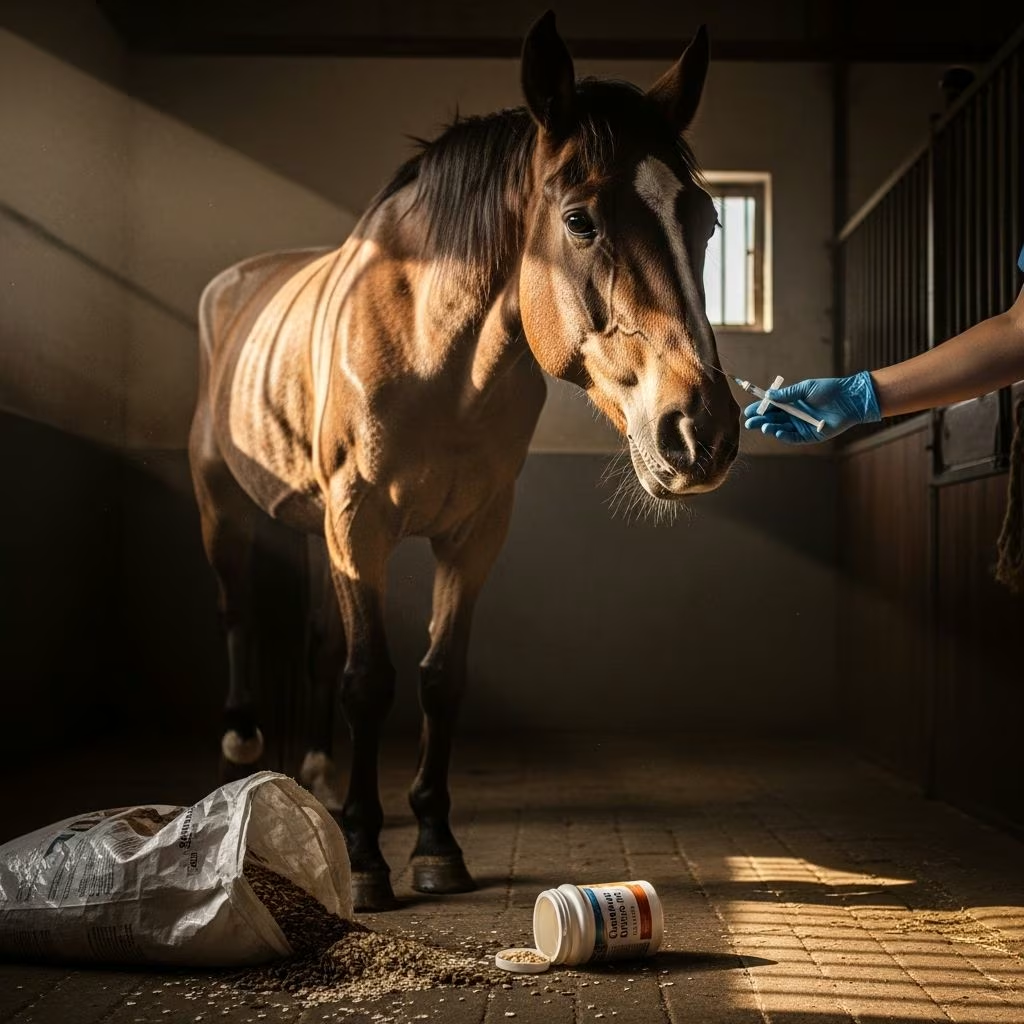
Nutritional imbalances involving calcium, phosphorus, magnesium, and vitamin D play a critical role in equine health, particularly affecting the musculoskeletal system. Deficiencies or excesses can lead to lameness, weakened bones, and other disorders, impacting performance and welfare.
Essential Roles of Key Minerals and Vitamins in Equine Physiology
Calcium serves as the primary mineral for bone structure and muscle function in horses. It supports nerve signaling and blood clotting, with horses requiring a steady supply for optimal health. Phosphorus works alongside calcium to form hydroxyapatite, the mineral complex strengthening bones and teeth. The ideal dietary ratio is approximately 2:1 (calcium to phosphorus) to prevent skeletal issues.
Magnesium aids in enzyme activation, energy production, and muscle relaxation. Vitamin D, particularly its active forms like 25(OH)D3 and 1,25(OH)2D3, regulates calcium and phosphorus absorption in the intestines, maintaining serum levels through interactions with parathyroid hormone (PTH). Horses naturally have lower vitamin D levels than other mammals, yet they rarely develop classic rickets due to efficient alternative mechanisms.
Common Musculoskeletal Problems Linked to Mineral Imbalances
Lameness in horses often stems from disorders like navicular syndrome, back pain, splints, ringbone, sidebone, non-infectious arthritis, and bucked shins. These conditions are frequently associated with low calcium, phosphorus, or magnesium levels, which compromise bone integrity and joint stability.
- Navicular syndrome: Involves heel pain and altered gait, exacerbated by mineral shortages affecting hoof bone density.
- Back pain: Linked to weakened vertebral support from calcium deficits.
- Splints and bucked shins: Inflammation in cannon bones due to imbalanced mineralization during growth.
- Ringbone and sidebone: Ossification of ligaments from chronic phosphorus excess relative to calcium.
Studies show lame horses exhibit significantly lower serum calcium and magnesium compared to healthy ones across seasons, highlighting their preventive importance.
Nutritional Secondary Hyperparathyroidism: The Big Head Disease
Also known as big head disease, this condition arises from chronic calcium deficiency or phosphorus excess, often from high-oxalate pastures binding calcium and reducing absorption. Horses develop fibrous swelling of the facial bones, brittle long bones, and shifting lameness as calcium is pulled from the skeleton to maintain blood levels, elevating PTH.
Symptoms progress from mild stiffness to severe fractures. High-oxalate forages like certain tropical grasses form insoluble calcium oxalates, fermentable only in the hindgut where absorption is poor. Treatment focuses on dietary correction with calcium-rich supplements like dicalcium phosphate, which balances both minerals.
| Condition Stage | Symptoms | Dietary Cause |
|---|---|---|
| Early | Shifting lameness, stiffness | Ca:P ratio <1:1 |
| Moderate | Joint stiffness, bone pain | High oxalate intake |
| Advanced | Facial swelling, fractures | Chronic deficiency |
Vitamin D Dynamics in Horses
Unlike other species, horses maintain bone health with low serum vitamin D metabolites, possibly due to robust dietary sources and sunlight exposure on skin. However, deficiencies can still impair calcium uptake, especially in neonates or stalled horses with limited sun. Research indicates vitamin D influences perinatal diseases via inflammation modulation.
Horses deprived of vitamin D or sunlight rarely show rickets experimentally, suggesting species-specific adaptations in calcium-phosphorus metabolism. Seasonal variations occur, with lower levels in winter, yet clinical deficiencies are uncommon unless compounded by poor diet.
Diagnostic Approaches for Mineral-Related Disorders
Veterinarians assess serum levels of calcium, phosphorus, magnesium, vitamin D, and PTH using analyzers, spectroscopy, and kits. Lame horses consistently show reduced calcium (p<0.001) and magnesium (p<0.01) versus healthy peers. Phosphorus may elevate in healthy horses seasonally (p<0.001).
Blood tests guide therapy; elevated PTH signals secondary hyperparathyroidism. Forage analysis for oxalates and mineral content is crucial, alongside clinical exams for lameness scoring.
Dietary Management and Prevention Strategies
Maintain a Ca:P ratio of 1.5-2:1. Legume hays provide calcium; grains are phosphorus-rich, so balance feeds accordingly. Avoid excessive bran or oxalate-heavy pastures. Supplements like dicalcium phosphate correct deficits without overload.
- Provide free-choice mineral mixes with 2:1 Ca:P.
- Ensure 1-1.5% calcium in growing horse diets.
- Monitor magnesium in high-stress or grass-fed horses.
- Maximize sunlight or UVB lighting for stalled equines.
Treatment success is high; supplementing calcium, phosphorus, and magnesium resolves lameness quickly, especially back pain.
Seasonal and Age-Specific Vulnerabilities
Young, growing horses need higher minerals for skeletal development. Neonates risk hypocalcemia and hyperphosphatemia, correlating with illness severity. Autumn shows greater phosphorus and magnesium gaps in lame horses. Performance breeds on grain-heavy diets face phosphorus overload risks.
Advanced Therapies and Monitoring
Beyond diet, bisphosphonates manage hyperparathyroidism in severe cases. Regular bloodwork tracks homeostasis. PTH-vitamin D interplay is key; low vitamin D elevates PTH, draining bones.
Frequently Asked Questions (FAQs)
What causes big head disease in horses?
Chronic calcium deficiency from high-phosphorus or oxalate diets triggers PTH overproduction, leading to bone resorption and facial swelling.
Can vitamin D deficiency cause lameness?
Indirectly, yes—by impairing calcium absorption, though horses tolerate low levels better than other species.
How do I balance Ca:P in my horse’s diet?
Aim for 2:1 ratio using alfalfa hay for calcium and limiting grains; test forages and consult a nutritionist.
Is magnesium deficiency common in horses?
Yes, linked to behavioral and muscular issues; lame horses show lower levels.
When should I test for mineral imbalances?
At signs of lameness, poor growth, or dietary changes; annual checks for at-risk horses.
Long-Term Outlook and Best Practices
Proactive nutrition prevents most disorders. Balanced diets, regular vet checks, and environmental sunlight ensure robust health. Early intervention yields rapid recovery, preserving equine athletic potential.
References
- Assessment of calcium, phosphorus, magnesium, vitamin D … – PMC — PMC. 2023-09-15. https://pmc.ncbi.nlm.nih.gov/articles/PMC10508493/
- Assessment of calcium, phosphorus, magnesium, vitamin D and … — Wiley Online Library. 2023-07-26. https://onlinelibrary.wiley.com/doi/abs/10.1002/vms3.1198
- The Importance of Calcium and Phosphorus in your horses diet — Ranvet. 2023. https://www.ranvet.com.au/the-importance-of-calcium-and-phosphorus-in-your-horses-diet/
- Big Head Disease: Nutritional Secondary Hyperparathyroidism — Mad Barn. 2023. https://madbarn.com/big-head-disease-in-horses/
- Calcium, Phosphorus, Magnesium, Vitamin D, PTH – Lame Horses — PubMed. 2023-07-19. https://pubmed.ncbi.nlm.nih.gov/37466035/
- Vitamin D Metabolites and Their Association with Calcium … — PLOS ONE. 2015-05-27. https://journals.plos.org/plosone/article?id=10.1371/journal.pone.0127684
- Is Your Horse Getting Enough Vitamin D? — Kentucky Equine Research. 2023. https://ker.com/equinews/horse-getting-enough-vitamin-d/
- Minerals for Horses: Calcium and Phosphorus — Oklahoma State University Extension. 2023. https://extension.okstate.edu/fact-sheets/minerals-for-horses-calcium-and-phosphorus.html



