

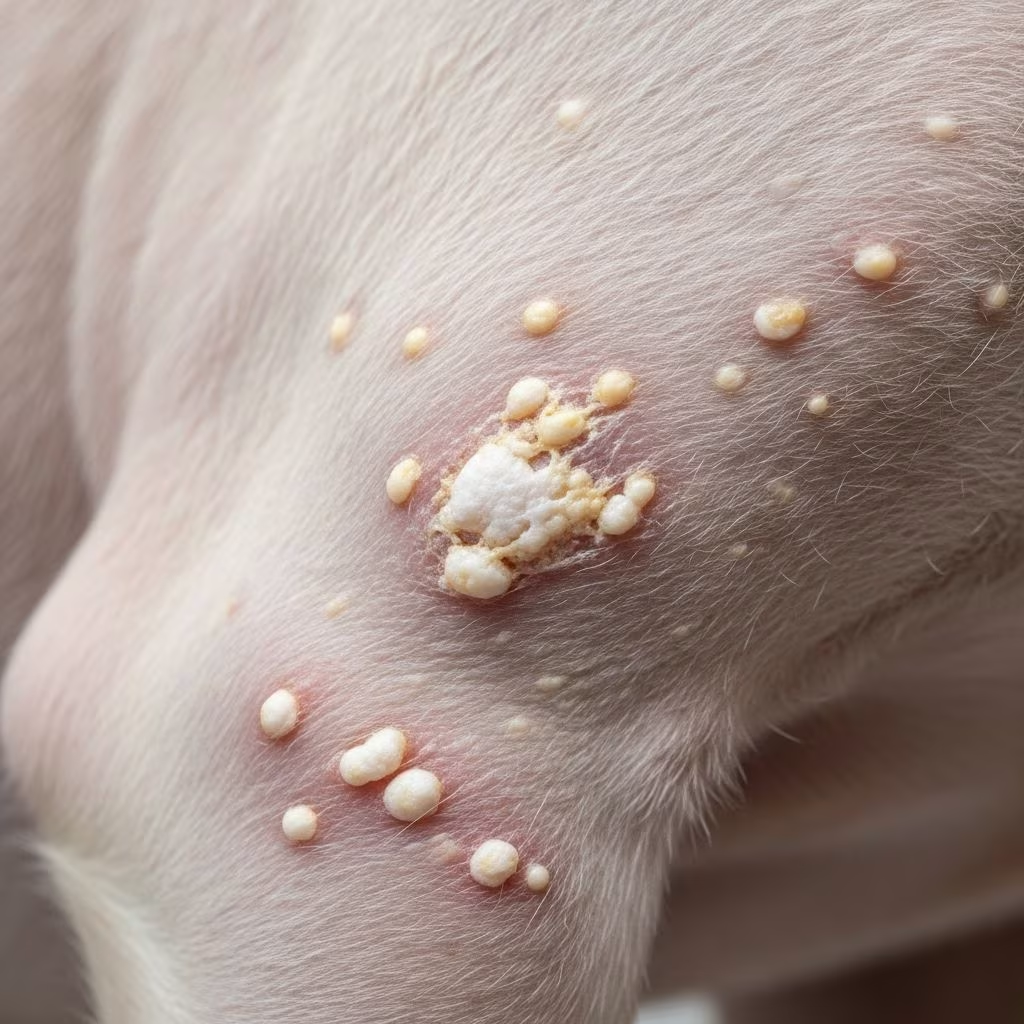
What Is Calcinosis Circumscripta and Cutis?
Calcinosis circumscripta and calcinosis cutis are two distinct but related skin disorders in dogs characterized by the abnormal deposition of calcium salts in the skin and underlying tissues. While both conditions involve calcium accumulation, their causes, locations, and clinical presentations differ significantly.
Calcinosis Circumscripta
Calcinosis circumscripta is a condition where calcium salts are deposited in the subcutaneous tissue, typically forming firm, nodular masses. These lesions are most commonly found over pressure points or sites of previous trauma, such as the elbows, knees, or footpads. The exact cause is not fully understood, but chronic trauma or irritation is thought to play a significant role. Young, large-breed dogs are particularly predisposed, possibly due to their active calcium and phosphorus metabolism during growth.
Symptoms of Calcinosis Circumscripta
- Firm, nodular masses in the skin
- Lesions often located over pressure points or sites of previous trauma
- White, gritty, chalky, or pasty material when aspirated
- Usually only one small spot is affected, but multiple lesions can occur
Diagnosis of Calcinosis Circumscripta
Diagnosis is typically made through physical examination, cytology, and histopathology. The aspirated material from the lesion is characteristically white and gritty, and histopathology reveals basophilic-stained calcium deposits surrounded by inflammatory cells.
Treatment of Calcinosis Circumscripta
Complete surgical excision is the treatment of choice for calcinosis circumscripta. In most cases, surgical removal of the lesion is curative, and recurrence is rare. For larger or multiple lesions, surgical removal may not be feasible, and management focuses on preventing further trauma and monitoring for complications.
Calcinosis Cutis
Calcinosis cutis is a more widespread condition involving the deposition of calcium in the dermis, often resulting in multiple papules or plaques. The most common underlying cause is hyperadrenocorticism (Cushing’s disease), either endogenous or iatrogenic (due to steroid administration). Other causes include chronic renal failure, cancer, and ingestion of toxins containing high levels of vitamin D.
Symptoms of Calcinosis Cutis
- Multiple papules or plaques on the skin
- Lesions often appear as bumps or flat raised areas with gritty yellow, white, or grey granules
- Surrounding skin may be reddened due to inflammation
- Lesions commonly affect the back, underarms, and groin area
- Itching and discomfort are common
- Secondary infections may develop, leading to red-tinged or white-green discharge
Diagnosis of Calcinosis Cutis
Diagnosis involves physical examination, cytology, and histopathology. Additional diagnostic tests may include blood work to assess for underlying conditions such as hyperadrenocorticism or renal disease. The aspirated material from the lesion is typically gritty and may contain calcium granules.
Treatment of Calcinosis Cutis
Treatment of calcinosis cutis focuses on addressing the underlying cause. For dogs with hyperadrenocorticism, management of the endocrine disorder is essential. In cases of iatrogenic calcinosis cutis, discontinuation of steroid therapy may be necessary. For lesions caused by chronic renal failure, supportive care and management of kidney disease are crucial. Surgical excision may be considered for large or problematic lesions, but it is not always curative.
Causes and Risk Factors
The causes and risk factors for calcinosis circumscripta and cutis include:
- Chronic trauma or irritation
- Active calcium and phosphorus metabolism in young, large-breed dogs
- Hyperadrenocorticism (Cushing’s disease)
- Chronic renal failure
- Cancer
- Ingestion of toxins containing high levels of vitamin D
- Administration of exogenous corticosteroids
Diagnosis and Differential Diagnosis
Diagnosis of both conditions involves a combination of physical examination, cytology, and histopathology. Differential diagnosis includes other causes of skin nodules and plaques, such as neoplasia, infection, and other forms of cutaneous mineralization.
Treatment and Management
Management of calcinosis circumscripta and cutis focuses on addressing the underlying cause and preventing further trauma. Surgical excision is the treatment of choice for calcinosis circumscripta, while management of the underlying condition is essential for calcinosis cutis. Supportive care, including wound management and prevention of secondary infections, is also important.
Prognosis
The prognosis for calcinosis circumscripta is generally good, with surgical excision often being curative. For calcinosis cutis, the prognosis depends on the underlying cause and the ability to manage the condition effectively. Early diagnosis and treatment improve outcomes.
Frequently Asked Questions (FAQs)
Q: What is the difference between calcinosis circumscripta and calcinosis cutis?
A: Calcinosis circumscripta involves localized calcium deposits in the subcutaneous tissue, often over pressure points or sites of previous trauma. Calcinosis cutis is a more widespread condition involving calcium deposition in the dermis, often due to underlying systemic diseases.
Q: Can calcinosis circumscripta and cutis be prevented?
A: Preventing chronic trauma and managing underlying systemic diseases can help reduce the risk of both conditions. Regular veterinary check-ups and prompt treatment of skin injuries are also important.
Q: Are there any over-the-counter treatments for calcinosis cutis?
A: No, calcinosis cutis requires veterinary treatment. Over-the-counter skin remedies are not effective for this condition.
Q: What are the signs of secondary infection in calcinosis cutis?
A: Signs of secondary infection include red-tinged or white-green discharge, increased swelling, and itching.
Q: Is surgical excision always necessary for calcinosis circumscripta?
A: Surgical excision is the treatment of choice for calcinosis circumscripta, but for larger or multiple lesions, management may focus on preventing further trauma and monitoring for complications.
References
- Calcinosis circumscripta – Texas A&M Veterinary Medical Diagnostic Laboratory — Texas A&M Veterinary Medical Diagnostic Laboratory. 2023. https://tvmdl.tamu.edu/case-studies/calcinosis-circumscripta/
- Calcinosis Cutis in Dogs – Preventive Vet — Preventive Vet. 2023. https://www.preventivevet.com/dogs/calcinosis-cutis
- 2023 Case #1 | Page 2 of 2 – eClinpath — eClinpath. 2023. https://eclinpath.com/2023-case-1/2/
- Pathomorphological features of calcinosis circumscripta in a dog – NIH — National Institutes of Health. 2023. https://pmc.ncbi.nlm.nih.gov/articles/PMC4817000/
- I-M13, Calcinosis circumscripta, haired skin, dog – a.askjpc.org — American Society for Veterinary Pathology. 2023. https://www.askjpc.org/vspo/show_page.php?id=ZmUrdDlwTGJzV2xEbndkVG9BbDNwdz09
- Dermatologic Markers of Internal Disease in Dogs & Cats — Today’s Veterinary Practice. 2023. https://todaysveterinarypractice.com/dermatology/dermatology-details-dermatologic-markers-of-internal-disease-in-dogs-cats/
- Calcinosis Cutis – Veterinary Dermatology Specialists in Lacey WA — Veterinary Dermatology Specialists. 2023. https://www.dcfawa.com/calcinosis-cutis
- Calcinosis Circumscripta in Dogs – Symptoms, Causes, Diagnosis … — WagWalking. 2023. https://wagwalking.com/condition/calcinosis-circumscripta
- Calcinosis Circumscripta in the Dog: A Retrospective Pathological … — Wiley Online Library. 2023. https://onlinelibrary.wiley.com/doi/10.1111/j.1439-0442.2004.00675.x



