

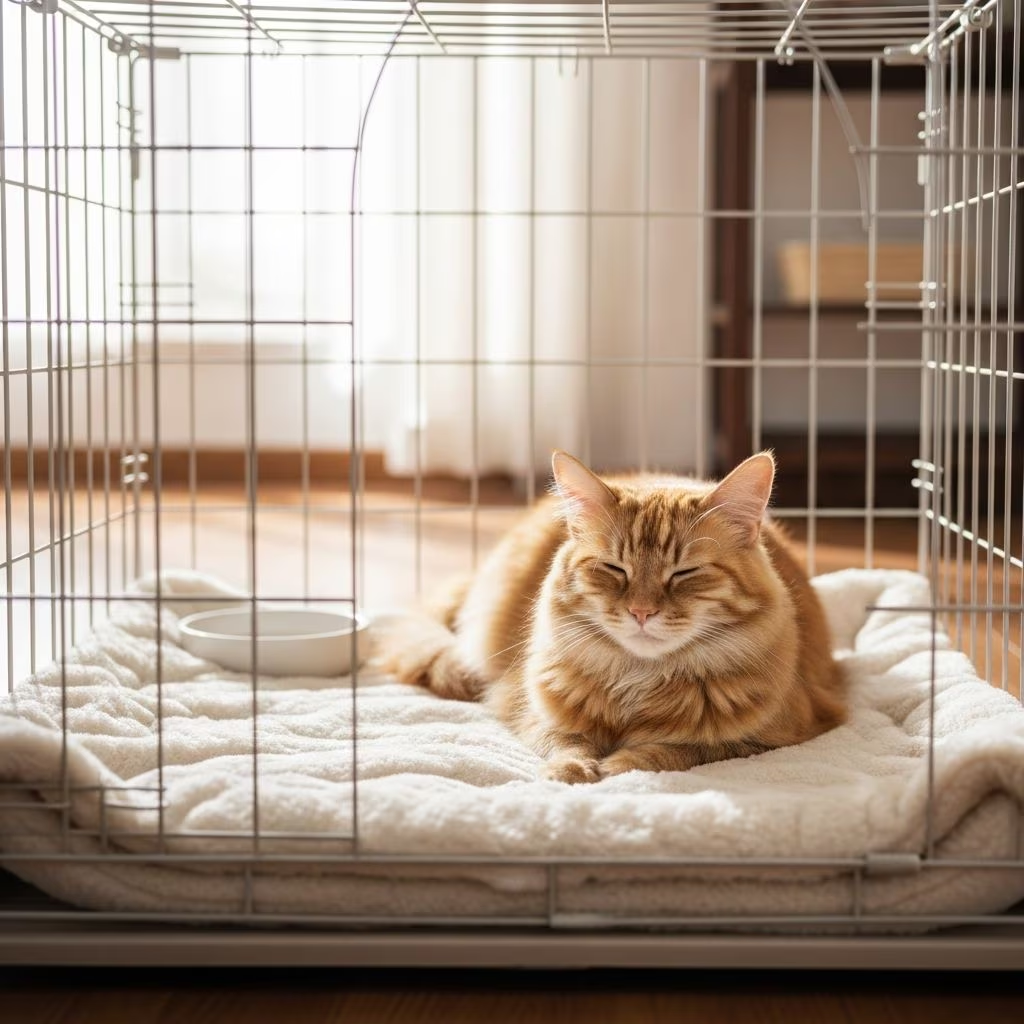
Cage rest is a vital veterinary recommendation for cats recovering from surgery, fractures, or trauma to prevent re-injury and promote healing. Typically lasting 6-8 weeks, it involves confining the cat to a secure enclosure to limit movement.
Why Is Cage Rest Necessary for Cats?
Cats often require cage rest following orthopedic surgeries, soft tissue procedures, or incidents like road traffic accidents (RTAs). Running or jumping can strain sutures, dislodge implants like plates or screws, or cause wound breakdown, leading to swelling, displacement, or fractures that demand additional surgery.
For spinal injuries, restricted space minimizes further damage by limiting agility-driven movements. Strict adherence to vet instructions ensures proper healing, avoiding prolonged recovery or complications.
How Long Does Cage Rest Last?
Cage rest duration varies by injury severity but commonly spans 6-8 weeks post-surgery or trauma. Full-time confinement is usual, with gradual transitions like room rest afterward to rebuild strength in bones, ligaments, and muscles. Always consult your vet for personalized timelines.
Choosing the Right Cage Size and Setup
The cage must be appropriately sized: large enough for the cat to stand, turn around, lie down comfortably, and accommodate food/water bowls plus a litter tray, but not so spacious as to allow jumping or excessive activity.
- Include soft, nonslip bedding like bathmats or blankets for comfort.
- Ensure a secure roof to prevent escape attempts; avoid roofless pens as cats will jump out.
- For cats with external fixators, pad edges to avoid snags.
- Separate food/water from litter; cats dislike proximity.
Best Location for the Cage
Placement impacts stress levels. Quiet, low-traffic rooms suit shy cats, while sociable ones may prefer family areas. Rotate locations daily for variety, avoiding stressors like vacuums, dogs, loud noises, or smoke.
Position near a window for bird-watching entertainment, but shield from direct sun to prevent sunburn on shaved areas. Monitor temperature closely—cats can’t self-regulate; use safe heat pads like SnuggleSafe, never unsupervised with sedated cats.
Full-Time vs. Part-Time Cage Rest
Vets typically prescribe full-time cage rest, including toileting inside. Clean litter trays immediately—cats are fastidious and may refuse soiled ones, risking accidents.
Part-time may apply later, but only per vet advice. Limited supervised outings for gentle play can combat boredom if approved.
Tips to Keep Your Cat Comfortable During Cage Rest
Comfort enhances compliance and reduces stress.
- Bedding and Scent: Soft blankets or your worn clothing for familiar smells.
- Temperature Control: Avoid drafts or heat; monitor shaved fur areas.
- Cleaning Routine: Spot-clean spills instantly; full daily scoops.
- Quiet Environment: Soft music or white noise to soothe.
Preventing Boredom: Enrichment Ideas
Boredom leads to stress and escape attempts. Mental stimulation is key without physical exertion.
- Safe toys: Soft balls, dangling strings (supervised), or puzzle feeders.
- Window views for natural entertainment.
- Rotate items daily; add paper bags or boxes if space allows (securely).
- Short interaction sessions: Gentle petting, talking to avoid overexcitement.
Cats sleep 16 hours daily, aiding tolerance, but enrichment prevents welfare issues like anxiety.
Cleaning and Maintenance Schedule
| Task | Frequency | Tips |
|---|---|---|
| Litter Tray Scoop | Multiple times daily | Immediate removal of waste to maintain cleanliness. |
| Full Tray Change | Daily | Use clumping litter for ease. |
| Food/Water Refresh | Twice daily | Fresh water always; separate from litter. |
| Bedding Wash | Every 2-3 days | Check for urine/soiling. |
| Cage Wipe-Down | Weekly | Pet-safe disinfectant. |
Consistent hygiene prevents infections and keeps cats using facilities.
Monitoring Your Cat’s Health and Progress
Observe daily for issues: appetite loss, lethargy beyond normal, swelling, discharge, or refusal to eat/drink. Weigh weekly if possible; track medication adherence.
Regular vet check-ins ensure progress. Note behavioral changes signaling pain or stress. Recovery cages aid monitoring by stabilizing environments.
Common Challenges and How to Overcome Them
Cats resist confinement due to independence.
- Escape Attempts: Reinforce cage; distract with toys.
- Vocalizing: Ignore attention-seeking; provide enrichment.
- Refusal to Eat: Vet-approved appetite stimulants; warm food.
- Stress/Anxiety: Pheromone diffusers, routine.
Overuse risks isolation or behavioral issues, so balance with positives.
When Can Your Cat Come Out of Cage Rest?
Transition per vet approval, often after 6-8 weeks with X-rays confirming healing. Start with short supervised room time, progressing to house access. Gradual active rest rebuilds strength.
Rush risks re-injury; patience ensures long-term mobility.
Alternatives to Traditional Cages
For home use: Sturdy playpens with roofs, bathroom confinement, or baby gates for small rooms if vet-okayed. Prioritize security over space.
Caring for Yourself During This Time
Cage rest exhausts owners emotionally/physically. Share duties, take breaks—your stress affects your cat. Join support groups for tips.
Frequently Asked Questions (FAQs)
What if my cat hates the cage?
Make it positive with treats/toys; start gradual if pre-trained. Consult vet for anti-anxiety aids.
Can I let my cat out for bathroom breaks?
Only if vet specifies part-time; full rest usually means in-cage.
How do I know if the cage is big enough?
Cat should stand/turn/lie comfortably with essentials fitting.
Will cage rest cause muscle loss?
Possible, but gradual post-rest exercise mitigates; vet-monitored.
Is cage rest cruel for cats?
No, when medically needed—better than re-injury. Enrichment minimizes stress.
References
- Cats on Cage Rest Advice — Cats Matter. 2023. https://www.catsmatter.org/cage-rest-help
- Why is Cage Rest so Important? — Welgelegen Dierkliniek. 2024-08-12. https://www.welgelegendierekliniek.co.za/2024/08/12/why-is-cage-rest-important/
- Are Cages Good for Pets or Not? — Express Vets. 2023. https://www.expressvets.com/blog/are-cages-good-for-pets-or-not
- Resting Your Cat After Surgery — Rata Vets. 2024-08. https://pet.ratavetsurgery.co.uk/wp-content/uploads/sites/2/2024/08/RataVets_Info-Sheet_Resting-your-cat-after-surgery.pdf
- Crate Rest vs. Active Rest: Which Is Better? — The K9 PT. 2018-05-09. https://www.thek9pt.com/2018/05/09/crate-rest-vs-active-rest/
- Benefits of Using Veterinary Recovery Cages — Shpujiavet. N/A. https://www.shpujiavet.com/benefits-of-using-veterinary-recovery-cages.html



