

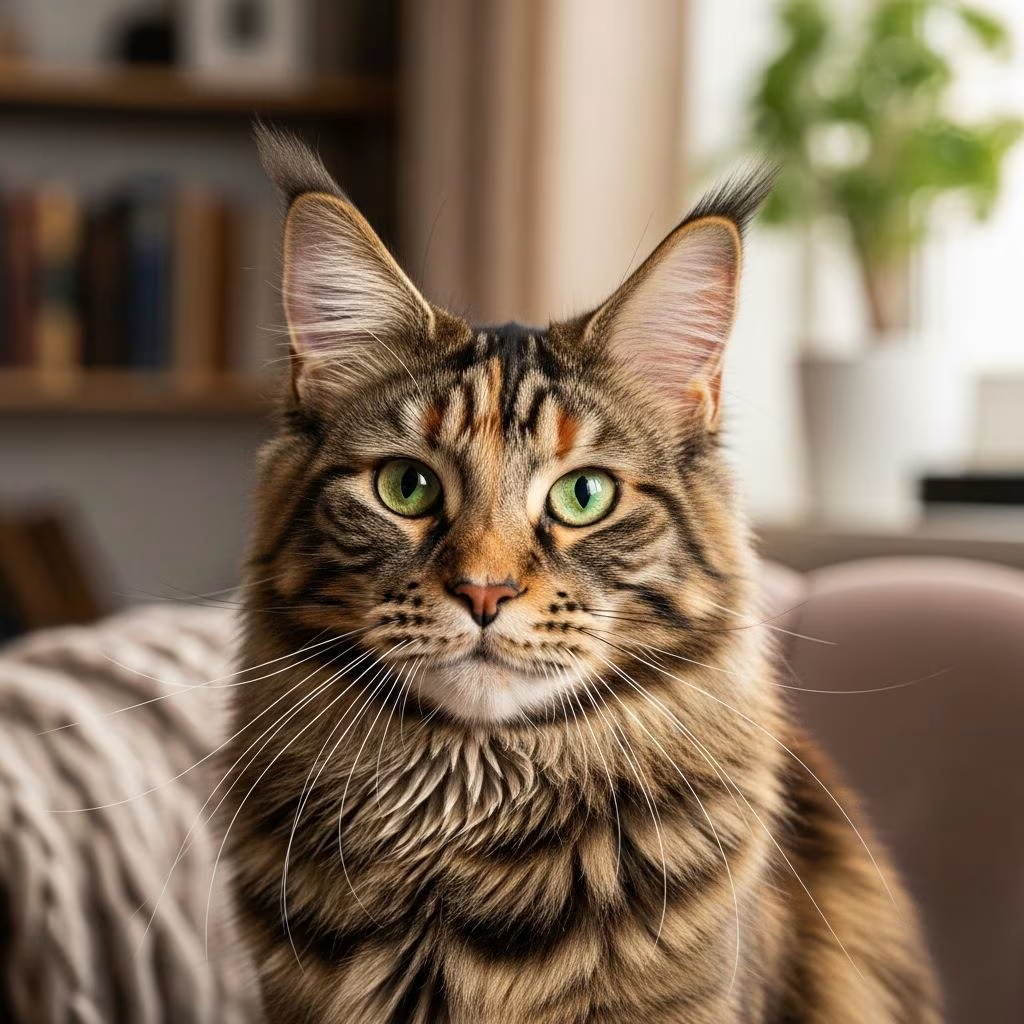
Purchasing a purebred cat can bring a predictable personality, appearance, and traits tailored to your lifestyle, but it requires careful research to ensure ethical sourcing and health. With around 45 breeds recognized by the Cat Fanciers’ Association (CFA), purebreds offer variety from affectionate lap cats to low-shedding companions. This guide covers every step, from selecting a breed to verifying breeders and preparing your home, helping you avoid common pitfalls like unethical sellers.
Why Choose a Purebred Cat?
Purebred cats stand out for their **predictability** in temperament, looks, and care needs compared to mixed breeds. Selectively bred from consistent lineages, they allow you to match a breed to your family—such as hypoallergenic Sphynx for allergy sufferers or playful Bengals for active homes. Unlike mixed breeds with endless variations, purebred pedigrees provide family history, revealing traits like affection levels or energy.
However, purebreds may carry breed-specific health risks due to limited gene pools, such as hypertrophic cardiomyopathy in Maine Coons or polycystic kidney disease in Persians. Reputable breeders mitigate this through genetic testing, making purebreds viable long-term companions with lifespans often matching mixed breeds when properly vetted.
Popular Purebred Cat Breeds to Consider
There are 42 to 71 recognized breeds depending on the registry, with experimental ones pushing totals near 100. Here are standout choices based on personality, grooming, and adaptability:
- Maine Coon: Largest domestic breed, gentle giants known for dog-like loyalty, water fascination, and chirping vocalizations. Ideal for families; moderate shedding requires weekly brushing.
- Siamese: Vocal, social, and sleek; they demand attention and bond deeply. Low-maintenance coat but high energy suits interactive owners.
- Persian: Luxurious long fur, calm demeanor; perfect lap cats but need daily grooming to prevent matting.
- Bengal: Wild-looking, athletic, and intelligent; great for active lifestyles but can be mischievous.
- Ragdoll: Floppy when held, affectionate, and docile; minimal grooming with semi-long coat.
- Sphynx: Hairless, warm, and extroverted; weekly baths prevent oil buildup.
- British Shorthair: Stocky, easygoing ‘Teddy Bear’ cats with low-maintenance plush coats.
Explore full lists including Abyssinian, Scottish Fold, and Savannah for unique traits like curly fur or bobbed tails. Match breeds to your home size, activity level, and allergies.
Finding Reputable Breeders
Avoid pet stores, online marketplaces like Craigslist, or ‘backyard’ breeders advertising ‘cheap purebreds’—these often involve poor conditions, no health tests, and misrepresented lineage. Seek **CFA-registered catteries** or The International Cat Association (TICA) affiliates for ethical standards.
Key steps to locate breeders:
- Visit cfa.org or tica.org breeder directories filtered by breed and location.
- Attend cat shows to meet breeders in person and observe cats’ environments.
- Join breed-specific clubs (e.g., Maine Coon Breeders & Fanciers) for referrals.
- Search Facebook groups or forums cautiously, verifying credentials.
Expect waitlists for popular breeds; ethical breeders prioritize kitten welfare over quick sales.
Questions to Ask Potential Breeders
Interview breeders rigorously to gauge ethics. Red flags: refusal to show facilities, pressure to buy immediately, or no health documentation.
| Category | Questions to Ask | Green Flags |
|---|---|---|
| Health Testing | Which genetic tests were performed on parents? Any breed-specific issues? | Proof of HCM, PKD, FIV/FeLV tests; vet records provided. |
| Living Conditions | Can I visit the cattery? How are queens raised? | Clean, spacious home environment; no cages; socialization emphasized. |
| Pedigree & Registration | Is the kitten CFA/TICA registrable? Pedigree papers? | Full 4-5 generation pedigree; contracts guaranteeing purity. |
| Socialization & Temperament | Daily human interaction; temperament matching breed standards. | |
| Guarantees | What health/lifelong guarantees? Return policy? | 30-60 day congenital defect guarantee; lifetime return option. |
Request references from prior buyers and vet checks on recent litters.
Health Testing and Screening Essentials
Purebreds face genetic predispositions, so demand proof of parental screening. Core tests include:
- HCM (Hypertrophic Cardiomyopathy): Ultrasound/echo for Maine Coons, Ragdolls, Sphynx.
- PKD (Polycystic Kidney Disease): Ultrasound for Persians, Exotics.
- PRA (Progressive Retinal Atrophy): DNA for Abyssinians, Bengals.
- FIV/FeLV: Blood tests for all.
- Breed-specific: SMA for Maine Coons, ADOA for Sphynx.
Breeders should provide OFA, UC Davis, or vet-certified results. Post-purchase, schedule a vet exam within 72 hours.
Understanding Contracts and Guarantees
Reputable sales include binding contracts outlining:
- Health guarantees (1-3 years for congenital issues).
- Spay/neuter requirements (often at 8-12 weeks).
- No-breeding clauses for pet quality kittens.
- Return rights if unfit.
Review with a lawyer if needed; avoid verbal promises. Pay via check or credit for recourse.
Costs Involved in Buying a Purebred Kitten
Purebred kittens range $800-$5,000+, depending on breed rarity, lineage, and region. Rare imports like Savannahs exceed $10,000. Breakdown:
- Kitten price: $1,200-$2,500 average.
- Extras: Shipping ($300-$800), initial vetting ($200+), supplies ($300+).
- Compare to shelters ($50-$200 for mixed breeds), but purebreds justify cost via health predictability.
Budget annually: $1,000+ for food, litter, grooming, vets.
Red Flags: Scams and Unethical Breeders
Beware:
- Prices too low (<$800 for pedigreed).
- Shipping-only, no visits.
- Vague pedigrees or ‘rare color’ hype.
- Poor photos/videos; sob stories.
Report to CFA/TICA; opt for in-person pickups.
Preparing Your Home for a New Purebred Kitten
Before bringing kitty home:
- Kitty-proof: Secure cords, hide toxins, provide tall scratchers.
- Supplies: Food/water bowls, litter box (1 per cat +1), bed, toys, carrier.
- Set up quiet room for decompression.
Transition gradually; match diet to prevent upset.
Frequently Asked Questions (FAQs)
What is the best way to buy a purebred cat?
Use CFA/TICA directories, visit catteries, verify health tests, and get a contract.
Are purebred cats healthier than mixed breeds?
Not always; they risk genetic issues but ethical breeding minimizes them.
How much does a purebred kitten cost?
$800-$5,000, varying by breed and quality.
Can I find purebred cats in shelters?
Rarely, but purebred rescue groups exist.
What health tests should breeders provide?
HCM, PKD, FIV/FeLV, breed-specific DNA panels.
Is buying from a breeder better than adopting?
For specific traits, yes; both can yield great pets with responsibility.
References
- Purebred vs Mixed Breed Cats: Pros, Cons & Which To Choose — Catster. 2023. https://www.catster.com/lifestyle/purebred-vs-mixed-breed-cats/
- Cat Breeds | Cat Types — Catster. 2024. https://www.catster.com/cat-breeds/
- Articles by Codee Chessher — Muck Rack. 2023-01-15. https://muckrack.com/codee-chessher/articles
- How Many Cat Breeds Are There in the World? (2026 Update) — Catster. 2026-01-01. https://www.catster.com/lifestyle/how-many-cat-breeds-are-there/



