Understanding Button Battery Dangers in Young Children
Learn how button batteries pose life-threatening risks to children and what parents should know.
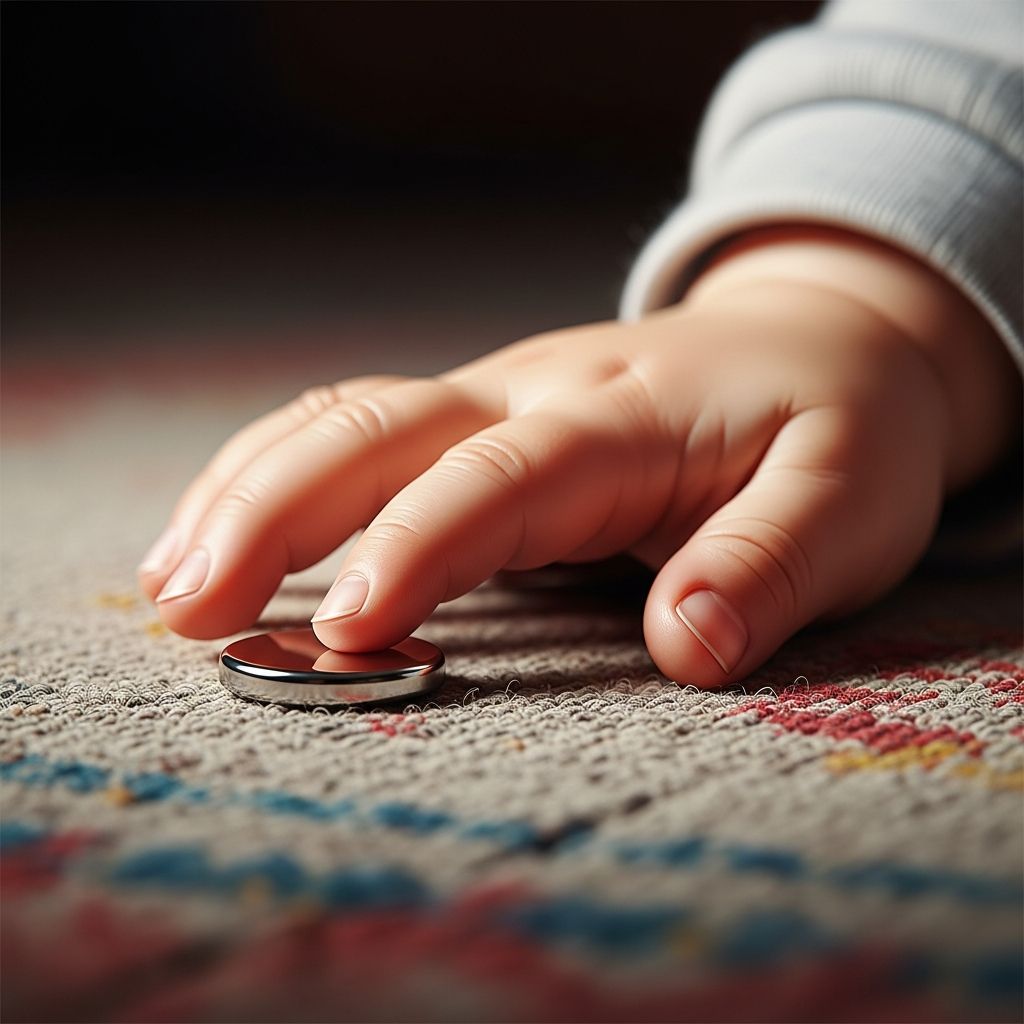
Button batteries represent one of the most serious hidden hazards in modern households. These small, coin-shaped power sources found in watches, hearing aids, calculators, toys, and remote controls can cause catastrophic internal injuries when swallowed by children. Unlike many childhood poisoning scenarios, battery ingestion does not follow predictable patterns, and outcomes can range from harmless passage through the digestive system to fatal complications. The rising frequency of severe cases and increasing awareness among medical professionals underscore the urgent need for parents and caregivers to understand these dangers.
The Scale of the Problem
Each year, more than 3,500 cases of button battery ingestion are reported to poison control centers across the United States. This alarming frequency has prompted public health agencies and medical institutions to elevate button battery safety as a critical child protection priority. The data reveals troubling trends: an estimated 40,400 children under age 13 were treated in emergency departments for battery-related injuries between 1997 and 2010, and approximately 56,535 button battery ingestions were reported to the National Poison Data System from 1985 to 2009.
What makes these statistics even more concerning is the trajectory of severe outcomes. The number of cases where children experienced serious injury or death quadrupled in the five-year period from 2006 to 2010 compared to 2001 to 2005. Additionally, a nearly seven-fold increase in severe morbidity and fatalities has been documented over the past decade. This escalation may reflect the increased use of larger, more powerful batteries rather than a simple rise in total ingestions.
Who Is Most Vulnerable?
Children between the ages of one and three years experience the peak frequency of button battery ingestion. Overall, nearly three-quarters of battery-related injuries involve children aged four years or younger, making toddlers and preschoolers the most at-risk population. The vulnerability of this age group relates to their developmental stage: young children naturally explore their environment by putting objects in their mouths, and they cannot yet understand the dangers of small household items.
While children under age six account for the vast majority of ingestions, a secondary peak occurs in elderly patients, with 10 percent of cases involving individuals aged 60 to 89 years. In elderly cases, batteries are more likely to lodge in the small or large bowels rather than the esophagus. A slight male predominance is observed in overall battery ingestion statistics.
How Button Batteries Cause Injury
The mechanism of battery-induced injury is complex and involves multiple physiological processes. Medical experts have identified three primary mechanisms through which batteries cause tissue damage:
- Caustic electrolyte leakage: Batteries contain alkaline electrolyte material that can leak when the battery casing is compromised.
- Direct pressure damage: The physical presence of the battery creates ischemic necrosis—tissue death caused by pressure restricting blood flow to affected areas.
- Electrolytic current production: When a battery contacts body tissues, it generates an external electrical current that hydrolyzes tissue fluids. This process creates hydroxide, a highly caustic alkaline chemical, at the negative pole of the battery.
The third mechanism—electrolytic current production—is considered the most dangerous, particularly when button batteries lodge in the esophagus rather than passing through the gastrointestinal tract. A battery trapped in the esophagus can cause severe internal burns in as little as two hours. The damage occurs because the tissues of the esophagus are delicate and have limited blood supply in some regions, making them particularly vulnerable to rapid, deep burns.
Critical Risk Factors and Timing
The severity of injury depends on several critical factors. More than half of battery ingestions occur within 30 minutes after removal from a device, indicating that children often swallow freshly removed batteries. The type and size of battery matter significantly: serious complications and death are associated most frequently with 3-volt lithium coin-size batteries measuring 20 millimeters or larger in diameter. The CR2032 battery, a common 3-volt lithium button battery, has been specifically linked to multiple fatal cases.
Delay in diagnosis and treatment dramatically increases the risk of severe complications. In at least nine of 14 documented fatal cases, diagnosis or treatment was delayed. In one tragic case, a two-year-old boy was initially treated and released from an emergency department for coughing and abdominal pain. Eight days later, he returned unconscious and in respiratory distress. He subsequently died from bleeding caused by a perforated esophagus and aorta—injuries caused by a battery from a remote control that had been lodged in his esophagus for over a week.
Recognizing Symptoms and Complications
One of the most dangerous aspects of battery ingestion is that symptoms are often nonspecific, making diagnosis difficult, especially when the ingestion goes unwitnessed. Typical symptoms associated with battery ingestion include:
- Vomiting
- Abdominal pain
- Fever
- Diarrhea
- Respiratory distress
- Difficulty swallowing (dysphagia)
- Bloody nasal discharge (if batteries are in the nasopharyngeal cavity)
These symptoms overlap with many common childhood illnesses, which can lead to misdiagnosis. In some cases, children may show no immediate symptoms, creating a false sense of security for parents and medical professionals.
When batteries lodge in the esophagus, serious complications can develop rapidly. Potential complications include:
- Esophageal perforation with internal bleeding
- Esophageal-aortic fistula formation
- Mediastinitis (inflammation of the mediastinum)
- Pneumonia
- Pneumothorax (collapsed lung)
- Intestinal perforation
- Peritonitis
- Vertebral osteomyelitis
- Recurrent laryngeal nerve injury
- Vocal cord paralysis
Critically, fatal hemorrhage has occurred more than two weeks after endoscopic removal of the battery, meaning that danger persists even after medical intervention.
Severity Trends in Battery-Related Injuries
Recent data demonstrates that battery ingestion injuries are becoming more severe. In studies comparing the period from 1990 to 2009 with more recent data, the percentage of battery-related emergency department visits due to ingestion increased from 77 percent to 90 percent. More alarming, the percentage of cases requiring immediate hospitalization rose from 7 percent to 12 percent, indicating that modern cases are more likely to result in serious complications requiring acute care.
Why Multiple Batteries Pose Additional Danger
An often-overlooked risk factor involves the ingestion of multiple button batteries. When two or more batteries are swallowed together or in close proximity, they can create a complete electrical circuit within the body. This dramatically increases the current flow and intensity of tissue damage, accelerating the burn process and creating a medical emergency of heightened severity.
Immediate Response and Emergency Actions
If battery ingestion is suspected or witnessed, immediate action is critical. The following steps should be taken:
- Contact Poison Control immediately: Call the National Poison Control Center at 1-800-222-1222. This hotline provides specialized guidance for battery ingestion cases and can coordinate with emergency departments.
- Seek emergency care: Do not wait for symptoms to appear. Take the child to the nearest emergency department immediately.
- Provide battery information: Tell emergency personnel the type, size, and model of battery if known. Information about the timing of ingestion (how long ago) is critical for treatment decisions.
- Avoid inducing vomiting: Do not attempt to induce vomiting, as this can cause additional injury.
- Restrict food and drink: In preparation for possible endoscopic procedures, avoid giving the child food or drinks.
Medical Management and Treatment
Modern medical protocols for suspected button battery ingestion are aggressive and time-sensitive. Doctors may use endoscopy to locate and remove batteries from the esophagus within the first two hours of ingestion, before severe burns develop. For batteries that have passed into the stomach, observation may be appropriate, though frequent imaging is necessary to ensure progress through the digestive tract. Batteries that become lodged require immediate removal.
Even after successful removal, children require close monitoring for complications. Hospital stays may extend for weeks in severe cases, and long-term consequences such as esophageal strictures (narrowing) or nerve damage may require ongoing treatment and rehabilitation.
Prevention Strategies for Households
Effective prevention requires vigilance and environmental control:
- Store battery-operated devices in secure locations away from children’s reach
- Ensure that battery compartment doors on toys and devices are secure and difficult for young children to open
- Supervise children during play with battery-operated devices
- Dispose of used batteries promptly and securely in a location inaccessible to children
- Educate children and caregivers about the dangers of batteries
- Consider devices with child-resistant battery compartments
The Fatality Record
Between 1995 and 2010, 14 fatal battery ingestion cases were documented in children, all in those under age four. Button batteries were confirmed to be involved in 12 of these 14 cases. The ages of fatal victims ranged from 7 months to 3 years. Additional deaths have been reported since then, with cases in 2011 and 2012 further highlighting the lethal potential of these devices.
These fatal cases share common features: most involved 20-millimeter, 3-volt lithium batteries; in several instances the ingestion went unwitnessed; and in at least four cases, patients were initially misdiagnosed and released, delaying critical treatment.
Frequently Asked Questions
- What should I do if I suspect my child swallowed a button battery?
- Call Poison Control immediately at 1-800-222-1222 and go to the emergency department. Do not wait for symptoms to develop. Speed is critical.
- Will a swallowed button battery definitely cause injury?
- No. More than 97 percent of battery ingestion cases result in mild effects or no effects at all. However, you cannot predict which cases will be the dangerous ones without medical evaluation, so all suspected ingestions require emergency assessment.
- How long does it take for a battery to cause serious injury?
- A battery lodged in the esophagus can cause serious burns in just two hours. This is why immediate medical attention is essential.
- Are all button batteries equally dangerous?
- No. Larger lithium batteries (20 mm or greater, 3-volt) are significantly more dangerous than smaller batteries. However, all button batteries should be treated as potential hazards.
- Can a swallowed battery be retrieved?
- Yes, endoscopic removal is possible and often necessary, particularly for batteries in the esophagus. However, this procedure requires hospital facilities and must be performed quickly.
Conclusion
Button battery ingestion represents a serious, preventable threat to young children. The rising frequency of severe cases and the potential for rapid, life-threatening complications demand that parents, caregivers, and medical professionals maintain high vigilance. Understanding the mechanisms of injury, recognizing that symptoms may be subtle or nonspecific, and knowing how to respond immediately can mean the difference between a child passing the battery safely and a tragic outcome. By combining household prevention strategies with rapid emergency response, we can significantly reduce the impact of these dangerous devices on child safety.
References
- Jatana KR, Baker EJ, et al. New Study Finds Battery-Related Injuries in Children More than Doubled — Nationwide Children’s Hospital. 2022-08-09. https://www.nationwidechildrens.org/newsroom/news-releases/2022/08/jatana_battery_study
- Injuries from Batteries Among Children Aged <13 Years — Centers for Disease Control and Prevention (CDC). 2012. https://www.cdc.gov/mmwr/preview/mmwrhtml/mm6134a1.htm
- Disk Battery Ingestion — National Center for Biotechnology Information (NCBI) StatPearls. https://www.ncbi.nlm.nih.gov/books/NBK470298/
- Button Battery Ingestion Statistics — American Association of Poison Control Centers (Poison Control). https://www.poison.org/battery/stats
- The Dangers of Children Swallowing Button Batteries — UCSF Benioff Children’s Hospital. https://www.ucsfbenioffchildrens.org/education/the-dangers-of-children-swallowing-button-batteries
Similar Articles








Read full bio of medha deb