
Burr Removal Guide for Dogs
Master safe techniques to extract burrs from your dog's fur and prevent skin issues during outdoor adventures.
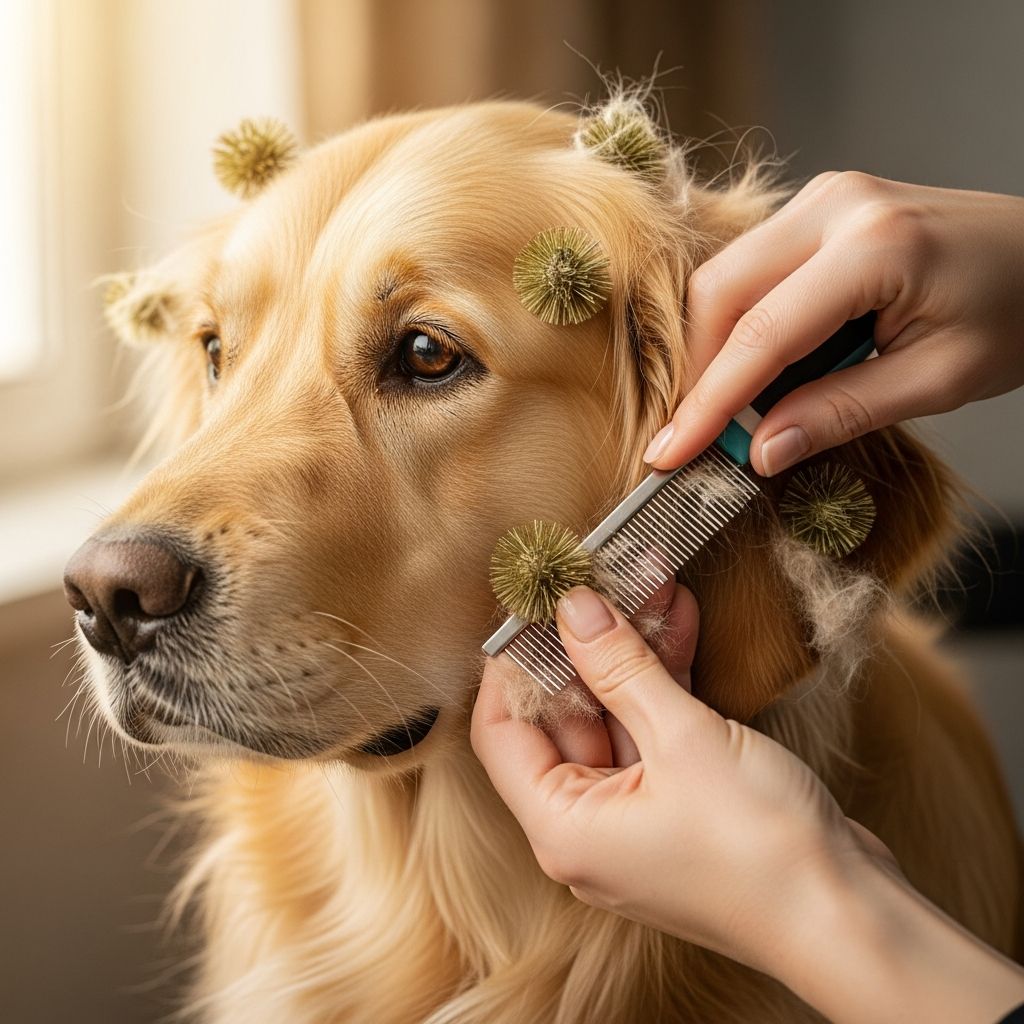
Burrs, those prickly seed pods from plants, cling tenaciously to dog fur during walks in fields, woods, or parks, especially in autumn when seeds disperse. Prompt removal prevents discomfort, skin irritation, and potential infections, keeping your pet comfortable and healthy.
Understanding Burrs and Their Impact on Dogs
Burrs are nature’s hitchhikers, designed to attach to fur or clothing for seed dispersal. Their hooked structures make them far stickier than Velcro, embedding deeply into long or dense coats. Common in grassy areas, they target legs, underbelly, tail, and paws, where fur is thickest or spaces tight.
Left unchecked, burrs cause problems:
- Physical irritation: Hooks prick skin, leading to soreness and limping, particularly between toes.
- Matting: Fur tangles around burrs, forming painful knots that pull on skin.
- Infection risk: Embedded burrs create wounds prone to bacterial entry, especially if licked.
- Allergic reactions: Some dogs or owners develop rashes from pollen or dust on burrs.
Dogs with long, fluffy, or curly fur—like Samoyeds, Poodles, or Golden Retrievers—are most vulnerable. Short-haired breeds fare better but still need checks after outdoor play.
Essential Tools for Burr Extraction
Prepare a dedicated kit before hikes in burr-heavy zones. Stock these items for quick, safe removal:
| Tool | Purpose | Why It Works |
|---|---|---|
| Gloves | Hand protection | Prevents pricks and rashes on skin. |
| Wide-tooth metal comb | Detangling fur | Gently separates hair without pulling skin. |
| Pliers or tweezers | Crushing burrs | Breaks apart tough seed clusters. |
| Coconut or cooking oil | Lubricant | Loosens hooks; safe if licked. |
| Dog clippers | Shaving mats | Safer than scissors near skin. |
| Treats | Positive reinforcement | Keeps dog calm during process. |
Keep clippers charged and introduce their sound gradually to sensitive dogs.
Step-by-Step Burr Removal Process
Act immediately upon returning home. Work in a calm, well-lit area with your dog secured or leashed.
- Inspect thoroughly: Part fur systematically, checking paws, armpits, groin, tail base, and ears. Soak swollen paws in warm water to reveal hidden burrs.
- Wear protection: Don gloves to shield hands.
- Start easy: Target loosely attached burrs first. Crush large ones with pliers, then tease fur away, keeping hand between skin and burr.
- Lubricate: Apply coconut oil or cooking spray to entangled areas. Rub gently; let it soften hooks for 1-2 minutes. Pull burr pieces one by one.
- Comb gently: Use wide-tooth comb from ends toward skin, removing debris. Reward with treats frequently.
- Clip if needed: For skin-close mats, accustom dog to clipper vibrations first. Shave minimally, leaving guard fur if possible. Never use scissors unless clear skin gap visible.
- Clean up: Bathe with mild shampoo to remove oil residue. Dry fully to avoid matting.
For paw burrs, professional help may be best due to pain and tiny spaces.
Safe Lubricants and Alternatives
Oils are game-changers for stubborn burrs. Coconut oil moisturizes skin, reduces inflammation, and is non-toxic—ideal for lick-happy dogs.
- Coconut oil: Solid form melts in hands; apply generously, comb through.
- Cooking spray (canola/vegetable): Quick lubricant; less messy for short sessions.
- Avoid: Chemical detanglers; ingestion risks outweigh benefits.
Post-removal, oil soothes owner rashes too.
Handling Sensitive Areas and Painful Cases
Paws demand caution—burrs hide between toes, causing limping or chewing. Soak in Epsom salt water (vet-approved), then probe gently. Severe cases need vet sedation for extraction.
For dense undercoats, section fur with clips. Acclimate noise-sensitive dogs: Run clippers away from body first, pair with praise and treats.
Signs warranting vet visit:
- Deep embeds with bleeding.
- Swelling, pus, or fever.
- Dog’s extreme distress or aggression.
- Multiple burrs in eyes/ears.
Prevention Strategies for Burr Seasons
Minimize encounters:
- Dog jacket/leggings: Covers torso, legs during hikes.
- Short trims: Regular grooming reduces snag points.
- Path choices: Stick to trails; avoid tall grass, seed-heavy fields.
- Post-walk ritual: Brush immediately; use lint roller for shorts.
- Breed considerations: Long-haired pups need boots in high-risk zones.
Autumn vigilance peaks as plants shed.
Common Mistakes to Avoid
Steer clear of these pitfalls:
| Mistake | Risk | Better Approach |
|---|---|---|
| Pulling hard | Skin tears, pain | Lubricate and tease slowly. |
| Scissors near skin | Cuts, infection | Clippers only. |
| Ignoring paws | Abscesses | Daily checks, soaking. |
| No rewards | Stress buildup | Treats every step. |
FAQs
What if my dog won’t stay still for burr removal?
Enlist a helper, use high-value treats, or work in short bursts. Consider sedation from a groomer for tough cases.
Is coconut oil safe for all dogs?
Yes, in moderation; it’s digestible but rinse excess to prevent oily fur or tummy upset.
How often should I check for burrs?
After every outdoor adventure, especially in weedy areas.
Can burrs cause long-term damage?
Rarely, if removed promptly; chronic neglect risks scarring or chronic infections.
Best comb for burrs?
Wide-tooth metal; avoids static and breakage unlike plastic.
Mastering burr removal ensures worry-free adventures. With patience and tools, your dog stays itch-free and happy.
References
- How to Safely Remove Burrs From Your Dog’s Fur — American Kennel Club (AKC). 2023. https://www.akc.org/expert-advice/health/how-to-get-burrs-out-of-dog-fur/
- Attack of the Burrs! How to safely remove burrs from your dogs fur — Mad Jessie. 2022. https://www.madjessie.com/blogs/mad-jessies-blog/attack-of-the-burrs-how-to-safely-remove-burrs-from-your-dogs-fur
- Easily Remove Burrs from Dog Fur (Shown on Samoyeds!) — YouTube (Kait). 2020. https://www.youtube.com/watch?v=dtI6L2xhGEs
Similar Articles








Read full bio of medha deb




