

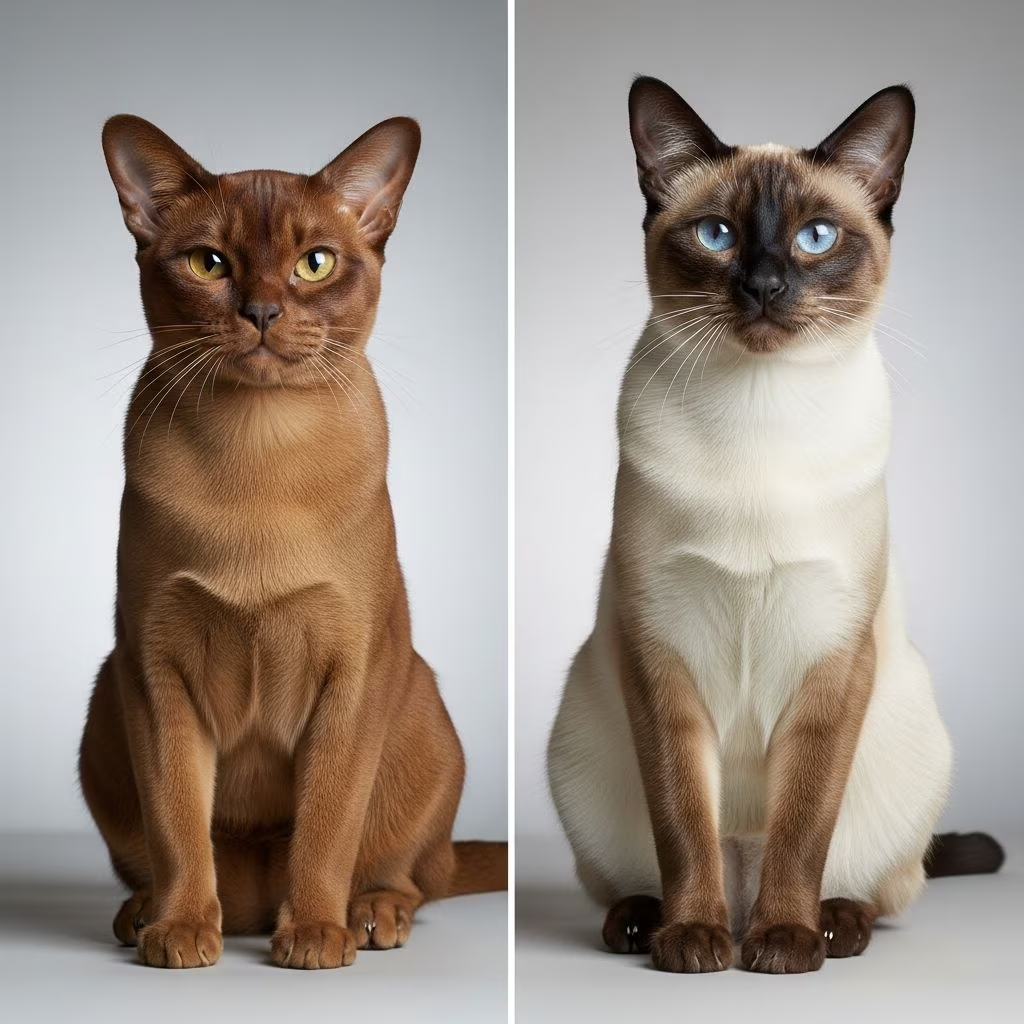
Burmese and Siamese cats share ancestral ties, with the Burmese breed originating from a cross between a Burmese female named Wong Mau and a Siamese in the 1930s, yet they exhibit distinct traits in appearance, personality, and care needs. While both are social, intelligent, and affectionate, the Siamese often amplifies these qualities with more vocal energy and a sleeker build, making your choice hinge on preferences for noise levels, body type, and attention demands.
At a Glance
| Feature | Burmese Cat | Siamese Cat |
|---|---|---|
| Average Height | 10–12 inches | 11–14 inches |
| Average Weight | 8–15 pounds | 5–12 pounds |
| Lifespan | 12–17 years | 11–15 years |
| Grooming Needs | Moderate | Moderate |
| Family-friendly | Yes | Yes |
| Other pet-friendly | Yes | Yes |
| Trainability | Intelligent | Intelligent |
This comparison table highlights the subtle differences at a glance, showing Burmese cats as stockier with a longer lifespan, while Siamese are taller and leaner.
Burmese Cat Appearance
The Burmese cat comes in two main varieties: American and European, both descending from the same original stock but diverging in build over decades. Most cat registries treat them as one breed due to genetic similarity.
The European Burmese features a slender, elegant frame with a wedge-shaped head, almond-shaped eyes, and small, pointed ears, giving it a refined look. In contrast, the American Burmese is stockier, with a broader head, rounder and more expressive eyes, and slightly wider-set ears.
Both share short, silky coats that lie close to the body. Originally, Burmese cats were sable-colored, a rich warm brown, but selective breeding introduced shades like champagne (warm honey), blue, platinum, and fawn. Kittens often lighten initially before darkening to their adult hue, with matching nose leather and paw pads.
- Solid colors only—no patterns
- Short, satiny coat requiring minimal care
- Medium to stocky build depending on type
Burmese Cat Temperament
Burmese cats are renowned for their dog-like devotion, forming intense bonds with owners that demand constant companionship. Highly social and playful, they thrive in busy households but suffer isolation, potentially leading to stress-induced aggression or depression.
These felines love interactive games like fetch, hide-and-seek, and tag, showcasing their intelligence and trainability. They excel in cat shows, basking in attention, and get along well with children, other cats, and even dogs when properly socialized.
Moderately vocal with a soft, sweet voice—far quieter than Siamese—they’re sensitive to owners’ moods, offering comfort when needed. Burmese strike a balance: affectionate yet not overwhelmingly demanding.
- Extremely loyal and people-oriented
- Playful and energetic
- Highly trainable for tricks
- Tolerant of families and pets
Burmese Cat Health
Burmese cats are generally robust, boasting a lifespan of 12–17 years, but certain predispositions warrant attention.
European Burmese face a higher diabetes risk than Americans. All are prone to hypokalemia (low blood potassium), causing muscle weakness, walking issues, and head-holding problems. Genetic testing of parents prevents this inherited condition.
Contemporary Burmese may carry an ALX1 gene mutation leading to brachicephaly or fatal head defects in homozygotes, emphasizing responsible breeding. Regular vet check-ups, balanced diet, and potassium supplements if needed mitigate risks.
Pros:
- Attentive and loyal
- Long lifespan
- Gets along with others
- Active and highly trainable
Cons:
- Susceptible to hypokalemia
- Can be too demanding of attention
- Gets depressed when left alone
Siamese Cat Appearance
Siamese cats embody elegance with long, lean, muscular bodies, elongated limbs, and thin tails. Their signature colorpoint pattern features a lighter body contrasting darker extremities (face, ears, paws, tail), intensified by the Himalayan gene.
All Siamese have vivid blue eyes, enhancing their striking allure. The wedge-shaped head tapers finely, with large pointed ears, a tubular body on slim legs (hind higher than front), dainty oval paws, and a whip-like tail. Traditional points include seal, chocolate, blue, and lilac.
- Short, fine-textured coat
- Always blue-eyed
- Svelte, athletic build
Siamese Cat Temperament
Siamese are extroverted socialites—affectionate, fun-loving, and exceptionally intelligent. They crave interaction, bonding deeply but vocally, earning their reputation as the chattiest breed with loud, persistent meows.
Extremely active, they demand play, enrichment, and attention; neglect leads to depression or mischief. They mesh well with families, kids, and pets but prefer undivided human focus over multi-pet homes. Their charm and determination shine in conversations and games.
- Bonds strongly with humans
- Exotic, elegant appearance
- Energetic and smart
- Compatible with pets and family
Siamese Cat Health
Siamese live 11–15 years but are prone to hereditary issues like eye problems (crossed eyes, glaucoma) and a sensitive respiratory system.
They may suffer amyloidosis (liver protein buildup), hydrocephalus, and vestibular disease affecting balance. Indoor-only living protects against external threats like traffic or disease. Dental care and weight management are crucial due to their slender frames.
Pros:
- Strong human bonds
- Stunning looks
- Sociable with others
- Highly energetic
- Super intelligent
Cons:
- Eye and respiratory vulnerabilities
- Needs constant attention
- Depressed if isolated
Burmese vs. Siamese: Which Breed Is Right for You?
Both breeds overlap in sociability, intelligence, and playfulness, but Siamese dial up the volume and slimness while Burmese offer a cuddlier, quieter vibe. Choose Burmese for a stocky, less vocal lap cat tolerant of some independence; opt for Siamese if you adore sleek beauty and lively chatter.
Consider your home: busy families suit either, but solo dwellers should avoid both due to separation anxiety risks. Both need moderate grooming—weekly brushing—and thrive indoors. Neither is low-maintenance emotionally, demanding engagement over aloof independence.
| Aspect | Burmese Wins If… | Siamese Wins If… |
|---|---|---|
| Body Type | You prefer stocky, cuddly builds | You love sleek, elegant lines |
| Voice | Quiet companionship appeals | Chatty interactions excite |
| Health | Longevity and fewer eye issues | Aware of breed-specific care |
| Energy | Balanced playfulness | High-octane activity |
Ultimately, both make wonderful pets; visit breeders or rescues to meet them.
Frequently Asked Questions (FAQs)
Are Burmese cats hypoallergenic?
No, neither Burmese nor Siamese are truly hypoallergenic, though their short coats produce less dander than longhaired breeds.
Which is better with children: Burmese or Siamese?
Both excel with kids when socialized, but Burmese are gentler and more tolerant, while Siamese demand supervision due to energy.
Do Siamese cats get along with dogs?
Yes, both breeds are dog-friendly with proper introductions, thanks to their social natures.
How much exercise do these cats need?
Daily play sessions of 20–30 minutes suffice; interactive toys prevent boredom.
What’s the origin story of Burmese cats?
From Wong Mau, imported from Burma in 1930, crossed with Siamese.
References
- Burmese vs. Siamese Cat: What’s the Difference? (With Pictures) — Catster. 2023. https://www.catster.com/cat-breeds/burmese-vs-siamese-cat/
- Is the Tonkinese Cat More Affectionate Than the Siamese and the Burmese? — Pets4Homes. 2023. https://www.pets4homes.co.uk/pet-advice/is-the-tonkinese-cat-more-affectionate-than-the-siamese-and-the-burmese.html
- Burmese Cat VS. Siamese Cat — YouTube (Video Transcript). 2023. https://www.youtube.com/watch?v=IDT1gVtq8DE
- Burmese cat — Wikipedia (Genetic info verified via primary breed standards). 2024-01-14. https://en.wikipedia.org/wiki/Burmese_cat



