

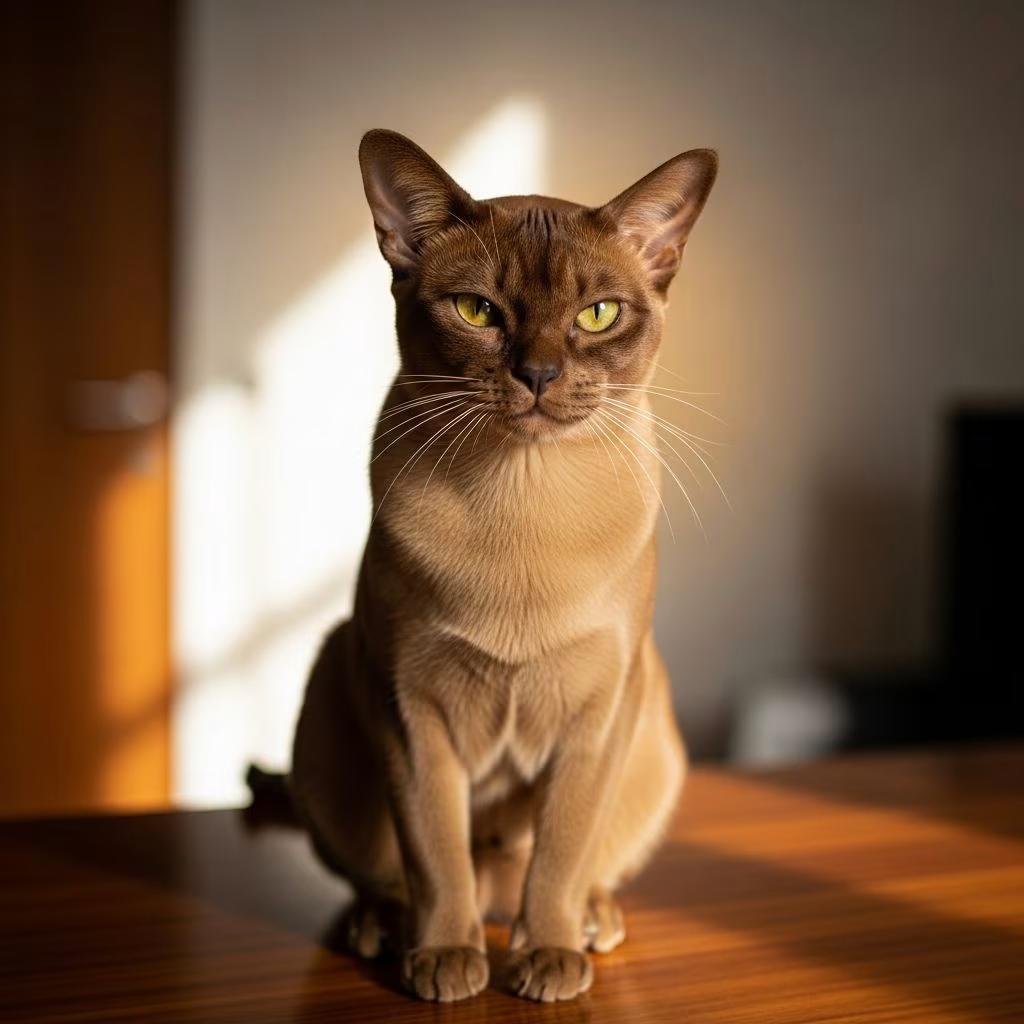
The Burmese cat is a medium-sized breed renowned for its affectionate, people-oriented nature and striking appearance. Often called “bricks wrapped in silk” due to their muscular build and glossy coat, these cats exhibit dog-like loyalty, playfulness, and vocal tendencies, making them excellent companions for families, singles, and first-time owners.
Burmese Cat Overview
Burmese cats originated from a cross between a Siamese and a small black cat named Wong Mau in the 1930s, leading to two main types: the sleeker British (traditional) and stockier American (contemporary) varieties. They are highly social, retaining kitten-like energy into adulthood, with a persistent vocalization reminiscent of Siamese ancestors but in softer, sweeter tones.
These cats thrive on human interaction, often following owners room-to-room, greeting visitors, and enjoying games like fetch. Their adaptability suits apartments or busy homes, provided they receive attention to prevent loneliness.
Burmese Cat History
The breed traces back to 1930 when Dr. Joseph Thompson in the U.S. bred Wong Mau, a chocolate-colored cat imported from Burma, with a Siamese. This produced the sable Burmese, officially recognized by the Cat Fanciers’ Association (CFA) in 1936. Post-World War II, the breed nearly vanished but was revived through outcrossing with Siamese, expanding colors to sable, champagne, blue, and platinum.
In the UK, the Traditional Burmese emerged separately, favoring a longer, more elegant body. Today, both types are popular worldwide, with the American version noted for its rounder features.
Burmese Cat Personality & Temperament
Burmese cats are extroverted, affectionate, and intelligent, often displaying puppy-like traits such as loyalty, trainability, and a love for play. They form deep bonds, crave companionship, and are not ideal for long periods alone.
- Affectionate: Lap cats that snuggle and follow owners everywhere.
- Playful: Kittenish energy persists into adulthood; enjoy toys, climbing, and puzzles.
- Social: Great with children, other pets, and strangers; often greet guests.
- Vocal: Chatty with raspy rumbles or soft meows to demand attention.
- Intelligent: Learn tricks like fetch and adapt quickly to changes.
While generally placid as seniors, they remain curious observers, favoring windows for people-watching.
Burmese Cat Characteristics & Appearance
Burmese cats are compact, muscular, and surprisingly heavy for their size, typically weighing 3.5-5.5 kg (females lighter) and standing 25-30 cm at the shoulder. Their short, velvety coat is glossy and low-shedding.
Key features differ by type:
| Feature | American (Contemporary) | British (Traditional) |
|---|---|---|
| Head | Round, broad with short muzzle | Wedge-shaped, longer muzzle |
| Eyes | Large, round, golden/amber | Almond-shaped, yellow |
| Body | Stocky, muscular, short legs | Slender, longer body/legs |
| Ears | Wide-set, rounded tips | Large, pointed |
| Tail | Medium, straight | Long, tapering |
Coat colors (CFA-recognized): Sable (deep brown), Champagne (beige), Blue (gray), Platinum (pale gray). Kittens show point shading that fades.
Burmese Cat Size
Males average 4.5-6 kg, females 3-5 kg, with a solid, brick-like feel despite medium stature. Their sturdy build requires monitoring diet to avoid obesity, especially in less active cats.
Burmese Cat Grooming
Low-maintenance, their short coat needs weekly brushing to distribute oils and reduce shedding. Bathe rarely; trim nails biweekly, clean ears monthly, and brush teeth regularly.
- Use rubber brush for shine.
- Shedding minimal but seasonal.
- No extensive grooming required.
Burmese Cat Care & Training
Provide interactive toys, cat trees for climbing, and perches for observation. Feed high-quality diet portion-controlled to prevent weight gain; ensure fresh water.
Training: Highly responsive; teach fetch, leash walking, and litter use early. Socialize kittens for best temperament.
Burmese Cat Health & Wellness
Generally healthy (lifespan 12-16 years), but prone to:
- Hypokalemic Polymyopathy: Low blood potassium; genetic test carriers.
- Feline Orofacial Pain Syndrome: Facial pain, most affected breed.
- Gangliosidosis GM2: Neurological disorder.
- Congenital Hypotrichosis: Hairlessness.
- Obesity: Monitor due to stocky build.
Annual vet checks, balanced diet, and exercise mitigate risks. Choose breeders screening for genetics.
Burmese Cat Diet & Nutrition
Sturdy build demands calorie control. Feed age-appropriate, high-protein wet/dry food; divide into 2-3 meals. Avoid obesity with measured portions and activity.
- Kittens: Frequent, nutrient-dense meals.
- Adults: 200-300 kcal/day.
- Seniors: Lower calorie, joint support.
Burmese Cat Pros & Cons
| Pros | Cons |
|---|---|
| Affectionate & loyal | Not independent; hates alone time |
| Great with kids/pets | Genetic health issues |
| Low grooming | Prone to obesity |
| Playful & trainable | Vocal/demanding attention |
| Adaptable to homes | Needs stimulation or bores easily |
Burmese Cat Variations & Colors
Traditional sable dominates, but U.S. recognizes four solids: Sable, Champagne, Blue, Platinum. Variations like Tortie excluded from purebred shows. Eye color: Yellow/gold standard.
Burmese Cat For Sale / Adoption
Reputable breeders screen health; expect $800-$1500. Adopt from rescues; many purebreds available. Verify pedigrees.
Burmese Cat Speed & Lifespan
Not speed-focused but agile climbers/jumpers. Lifespan 12-16 years with care.
Burmese Cat Videos
Videos showcase their playful antics, cuddly nature, and vocal charm, highlighting why owners call them family members.
Frequently Asked Questions (FAQs)
Are Burmese cats good family pets?
Yes, their sociable, gentle nature makes them ideal for families with children and other pets.
Do Burmese cats shed a lot?
No, minimal shedding; weekly brushing suffices.
Are Burmese cats vocal?
Yes, they meow and rumble for attention, softer than Siamese.
Can Burmese cats be left alone?
No, they crave company and may develop issues if isolated.
What health problems do Burmese cats have?
Prone to hypokalemia, orofacial pain, gangliosidosis; vet screening essential.
How much do Burmese cats weigh?
3.5-5.5 kg, heavier than appearance suggests.
Do Burmese cats like to cuddle?
Absolutely, they are ultimate lap cats.
References
- The Vet’s Guide to Burmese Cats: Facts, Care, and Training Tips — Vets Love Pets. 2023. https://vetslovepets.com.au/blogs/cat/burmese-cat-breed-guide
- Burmese Cat Breed — Hill’s Pet Nutrition. 2024-10-15. https://www.hillspet.com/cat-care/cat-breeds/burmese
- Burmese Cat Breed Information — Purina UK. 2024. https://www.purina.co.uk/find-a-pet/cat-breeds/burmese
- Burmese cat — Wikipedia (citing primary genetic studies). 2025-01-10. https://en.wikipedia.org/wiki/Burmese_cat
- 11 Facts You Probably Didn’t Know About the Burmese Cat — Rover. 2023. https://www.rover.com/blog/burmese-cat/
- Facts About Burmese Cats – The Perfect Breed? — YouTube (personal breeder experience). 2022. https://www.youtube.com/watch?v=Sit1s0PXFgU



