

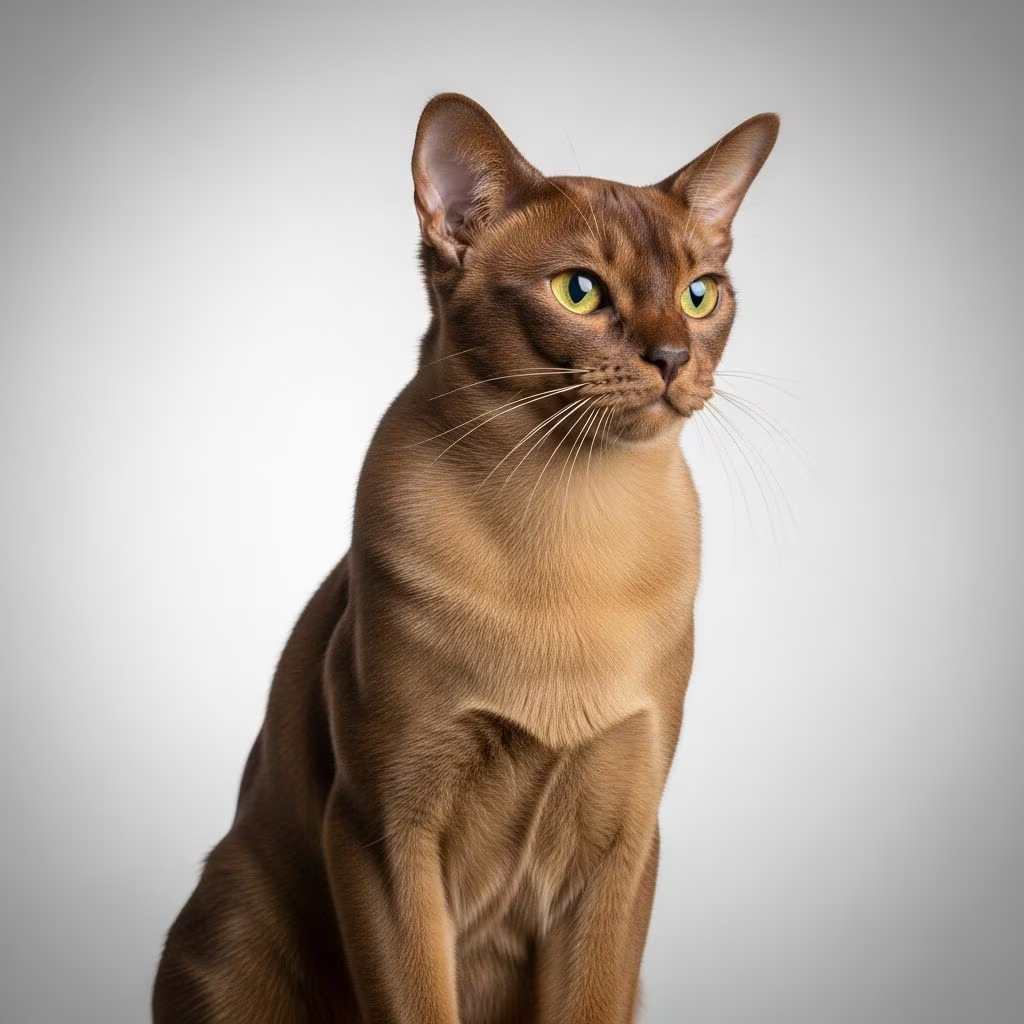
The Burmese cat is a medium-sized breed renowned for its affectionate, social nature and striking appearance. Originating from Burma (now Myanmar), these cats combine elegance with playfulness, making them beloved family companions.
Burmese Cat Overview
Burmese cats are known for their muscular, compact build and glossy short coat. They exhibit a rounded head, expressive eyes, and a sweet expression that captivates owners. Available in colors like sable (deep brown), champagne, blue, and platinum, they weigh surprisingly heavy for their size—often described as ‘bricks wrapped in silk.’
These felines thrive on human interaction, displaying puppy-like traits such as playing fetch and forming strong bonds. They are vocal, curious, and adaptable, suiting active households.
History of the Burmese Cat
The Burmese breed traces back to a single chocolate-colored female cat named Wong Mau, imported from Burma to the United States in the 1930s by Dr. Joseph Thompson. Wong Mau was bred with a Siamese cat, producing offspring that established the foundation for the American Burmese line.
In Europe, a separate Traditional or British Burmese line developed, featuring a more slender build. The Cat Fanciers’ Association (CFA) recognized the breed in 1936, and it gained popularity for its unique sable coat, resulting from the Burmese gene (c^b), which lightens black pigment to brown.
Over decades, breeders expanded color variations while preserving the breed’s sociable temperament. Today, Burmese cats are celebrated worldwide for their history and charm.
Burmese Cat Physical Characteristics
Burmese cats present a solid, rounded appearance throughout. Key traits include:
- Size and Build: Medium to large, with males larger than females. Muscular and compact, they feel heavy and dense.
- Head: Pleasingly rounded with breadth between eyes, short muzzle, and well-defined cheekbones. No flat planes.
- Eyes: Large, expressive, ranging from yellow to gold; set wide apart for an inquisitive look.
- Ears: Medium-sized with rounded tips.
- Coat: Short, glossy, satin-like; lies close to the body. Minimal shedding.
- Colors: Sable (rich dark brown), champagne (warm beige), blue (soft gray), platinum (pale gray with lavender hue).
- Tail and Legs: Straight medium tail; proportionate legs with round paws (five toes front, four hind).
Two body types exist: the stockier American (contemporary) with a broad head and the slimmer British (traditional) with a wedge-shaped head.
Burmese Cat Personality & Temperament
Burmese cats are extroverted, people-oriented felines with kitten-like energy into adulthood. They crave attention, often following owners and vocalizing with raspy meows to communicate.
- Affectionate: Extremely loving; lap cats that bond deeply but share affection widely.
- Playful: Learn fetch, tag; spirited kittens mellow to active adults.
- Social: Good with children, dogs, and other cats (especially fellow Burmese); tolerant and loyal.
- Vocal: Inherited from Siamese ancestry; not shy about needs.
- Curious: Inquisitive explorers who enjoy windows and high perches.
Males are often relaxed, females more vocal. They dislike solitude and may become sad if ignored.
Burmese Cat Grooming & Care
Grooming is simple due to the short coat. Weekly brushing removes loose hair and distributes oils; baths are rare.
- Brushing: Use a rubber brush or soft cloth for shine.
- Nails: Trim bi-weekly; provide scratching posts.
- Ears and Teeth: Clean ears monthly; brush teeth 2-3 times weekly.
- Exercise: Cat trees, toys, and play sessions prevent obesity; they are climbers and jumpers.
Low shedding makes them suitable for allergy sufferers, though not hypoallergenic.
Burmese Cat Health & Wellness
Burmese are generally healthy but prone to:
- Hypokalemic Polymyopathy: Low blood potassium causing muscle weakness; managed with supplements.
- Facial Folds Dermatitis: Skin issues in skin folds.
- Obesity: Monitor diet; sturdy build risks weight gain.
- Diabetes Mellitus: More common; maintain ideal weight.
- Other: Congenital deafness in blue-eyed variants, calcium/phosphorus issues.
Lifespan: 10-16 years with proper care. Regular vet check-ups essential.
Burmese Cat Nutrition & Feeding
Feed high-quality, age-appropriate food to support muscle tone and prevent obesity. Portion control is key for this stocky breed.
| Life Stage | Daily Calories (Approx.) | Feeding Tips |
|---|---|---|
| Kitten | 200-250 kcal | 3-4 meals; high-protein for growth. |
| Adult | 250-300 kcal | 2 meals; measure portions. |
| Senior | 200-250 kcal | Senior formula; joint support. |
Provide fresh water; wet food aids hydration. Avoid free-feeding.
Burmese Cat Training Tips
Intelligent and eager, Burmese respond to positive reinforcement.
- Litter Training: Natural; use unscented litter.
- Tricks: Teach fetch, sit; use treats and clicks.
- Scratching: Redirect to posts with toys.
- Socialization: Early exposure to people/animals.
They adapt quickly but need mental stimulation.
Are Burmese Cats Good with Kids & Other Pets?
Yes, their gentle, playful nature makes them excellent family pets. Patient with children and tolerant of dogs/cats, but supervise young kids due to size. Socialize early for best results.
Frequently Asked Questions (FAQs)
Q: How long do Burmese cats live?
A: Typically 10-16 years with good care, genetics, and vet attention.
Q: Are Burmese cats hypoallergenic?
A: Not fully, but low-shedding coats produce fewer allergens.
Q: Do Burmese cats like to be alone?
A: No, they are social and may develop depression if isolated.
Q: What colors do Burmese cats come in?
A: Sable, champagne, blue, platinum; sable is most common.
Q: Are Burmese cats vocal?
A: Yes, they meow frequently to communicate.
Q: How much do Burmese cats weigh?
A: Males 6-14 lbs; females 4-10 lbs; heavier than appearance suggests.
References
- Burmese Cat 101 – Everything You Need to Know — YouTube. 2023. https://www.youtube.com/watch?v=BTqlvCtjduo
- What to Know About Burmese Cats — WebMD. 2024-01-15. https://www.webmd.com/pets/cats/what-to-know-about-burmese-cats
- Burmese Cat Breed — Hill’s Pet Nutrition. 2024. https://www.hillspet.com/cat-care/cat-breeds/burmese
- Burmese — The Cat Fanciers’ Association. 2025. https://cfa.org/breed/burmese/
- Burmese cat — Wikipedia. 2025-12-01. https://en.wikipedia.org/wiki/Burmese_cat
- 11 Facts You Probably Didn’t Know About the Burmese Cat — Rover.com. 2023. https://www.rover.com/blog/burmese-cat/



