

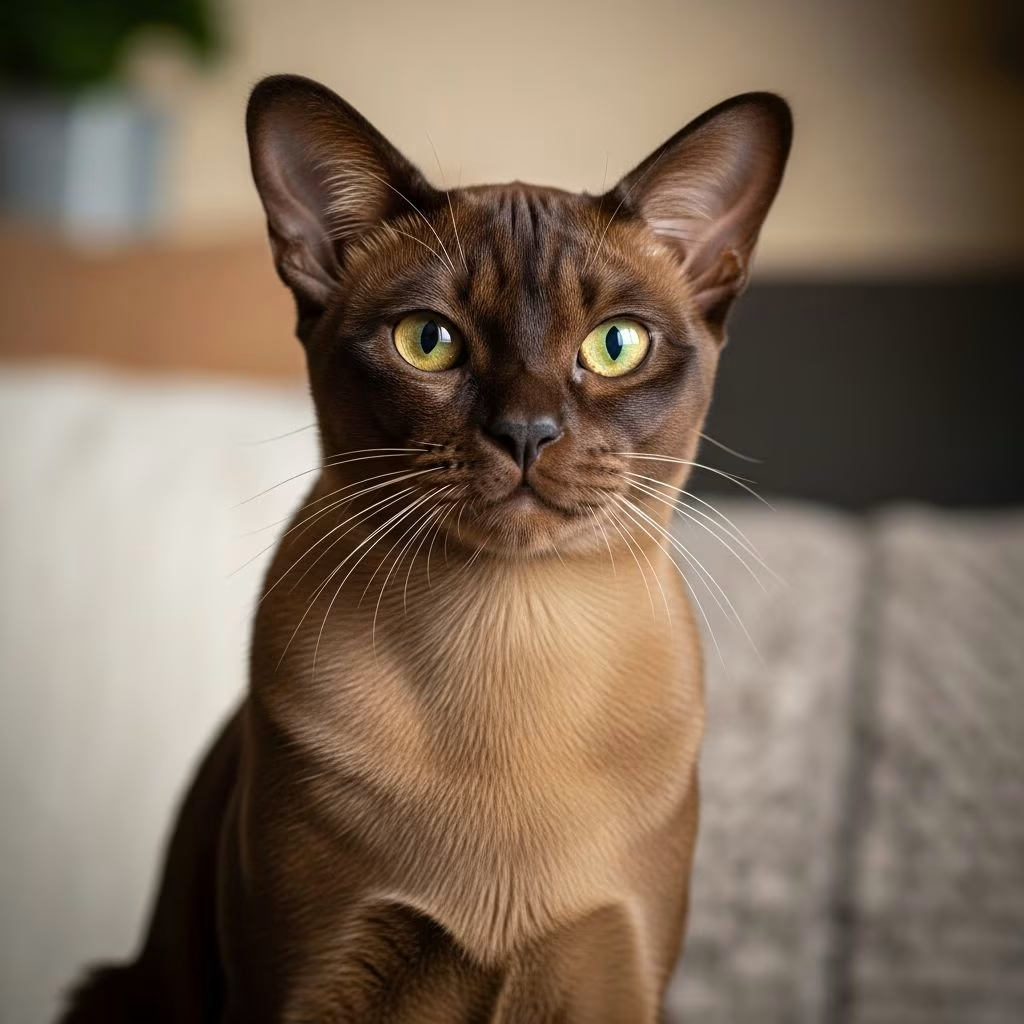
The Burmese cat stands out as a medium-sized feline renowned for its silky, solid-colored coat, rounded head, and exceptionally sociable demeanor. Originating from ancient Southeast Asian lineages and refined in the West during the 20th century, this breed combines elegance with unwavering loyalty, making it a favorite among cat enthusiasts worldwide.
Ancient Roots and Modern Development
Burmese cats trace their ancestry to Southeast Asia, particularly regions like present-day Myanmar (formerly Burma) and Thailand. Historical accounts from the Ayutthaya period in Thailand describe cats matching the Burmese profile, termed “Thong Daeng” or copper-colored felines, revered in temples and among nobility for their beauty and supposed spiritual qualities. These cats were believed to safeguard souls in the afterlife and attract prosperity, elevating their status in local folklore.
The breed’s Western journey began in earnest in 1930 when Dr. Joseph Thompson imported Wong Mau, a walnut-brown female from Burma to San Francisco. Unlike the sleek Siamese, Wong Mau exhibited a compact body, shorter tail, and rounded head with wider-set eyes. Lacking a suitable mate, she was bred to a seal-point Siamese named Tai Mau, producing both pointed Siamese-like kittens and solid brown offspring resembling her. Subsequent matings with her brown son yielded even darker solid-coated kittens, establishing the foundation for the Burmese lineage.
Initial recognition came swiftly but faced setbacks. The Cat Fanciers’ Association (CFA) provisionally approved the breed in 1936, only to suspend it in 1947 due to ongoing Siamese crossbreeding that produced hybrid litters sold as purebreds. Dedicated breeders persisted, achieving three generations of pure pedigrees by 1953-1956, leading to full CFA reinstatement and a standardized “round” type emphasizing muscular build and balanced proportions.
In Britain, post-World War II imports from Burma and America revitalized the breed. By 1952, the Governing Council of the Cat Fancy granted official status (breed number 27), initially mirroring American standards but evolving a more oriental, triangular-faced variant. Divergent programs created two distinct lines: the stockier American Burmese and the slimmer British European type, each with unique standards.
Distinctive Physical Characteristics
Burmese cats embody a harmonious blend of power and grace. Adults typically weigh 6-12 pounds, with males larger, supported by substantial bone and muscle for a deceptively hefty feel. Their heads are rounded with full cheeks, short noses, and large, expressive round-to-oval eyes in vivid yellow, gold, or green shades that convey perpetual curiosity.
The coat is the breed’s hallmark: short, fine, and glossy like satin, lying flat to accentuate a sleek silhouette. Traditional sable (brown) dominates, but dilutions yield blue, platinum (lilac), and champagne (chocolate). Other colors like red, cream, and tortoiseshell emerged later, with the first blue in 1955 England and lilac in 1971 America. British standards often favor these expanded palettes, while Americans prioritize sable.
| Feature | American Burmese | British Burmese |
|---|---|---|
| Body Type | Stocky, rounded | Oriental, elegant |
| Head Shape | Round, broad | Triangular |
| Common Colors | Sable primary | Multi-color variants |
| Eye Color | Gold/yellow | Yellow to green |
This table highlights key divergences, reflecting separate breeding goals. Both types shed minimally, requiring little grooming beyond weekly brushing to maintain sheen.
Vibrant Personality and Temperament
Burmese cats are often dubbed “velcro cats” for their profound attachment to people. Far from aloof, they crave interaction, following owners room-to-room and offering gentle head-butts or “love bites” as affection. Playful into adulthood, they excel at fetch, puzzle toys, and interactive wands, blending dog-like traits with feline independence.
Highly adaptable, Burmese thrive in households with children, dogs, or other cats, provided introductions are gradual. Their vocalizations—soft trills and chirps rather than loud meows—communicate needs effectively. Intelligent and trainable, they respond to clicker training for tricks like high-fives. However, their people-oriented nature means separation anxiety can arise if left alone excessively; companions or stimulation mitigate this.
- Affectionate: Seeks laps and cuddles daily.
- Playful: Energetic hunter, loves toys mimicking prey.
- Social: Bonds deeply with family, strangers less so initially.
- Gentle: Patient with kids, non-destructive if enriched.
Essential Care and Grooming Needs
Caring for a Burmese is straightforward due to their low-maintenance coat. Weekly combing with a rubber brush distributes oils and reduces rare shedding. Bathe only if soiled, as they self-groom meticulously. Dental health merits attention—provide brushing or dental treats thrice weekly to prevent common feline tartar buildup.
Nutrition should feature high-quality, protein-rich kibble or wet food tailored to age and activity. Portion control prevents obesity, given their hearty appetites; aim for 200-300 calories daily for adults, split into meals. Fresh water and elevated bowls support hydration and posture.
Exercise comes naturally through play, but vertical spaces like cat trees and window perches fulfill climbing instincts. Litter training succeeds with clumping, unscented boxes—Burmese are fastidious and prefer privacy.
Health Considerations and Lifespan
Burmese enjoy robust health, averaging 12-16 years, with some reaching 18+. Genetic diversity from foundational crosses reduced inbreeding risks, but screen for:
- Hypokalemic Polymyopathy: Low blood potassium causing weakness; manageable with supplements.
- Facial Fold Dermatitis: Rare skin issues in brachy-like faces; clean folds regularly.
- Congenital Deafness: Minimal incidence, but check blue-eyed variants.
- Diabetes Mellitus: Monitor weight and diet.
<
Veterinary-endorsed vaccines, flea preventives, and annual checkups ensure longevity. Early spaying/neutering curbs roaming and cancers.
Bringing Home a Burmese Kitten
Select reputable breeders adhering to CFA or GCCF standards, prioritizing health testing. Kittens should display socialized behavior—bold yet gentle. Budget $800-$2000 for pedigreed stock; rescues offer adults. Prepare with scratching posts, toys, and a quiet acclimation space.
Burmese integrate swiftly, but patience fosters trust. Their legacy from temple guardians to modern companions underscores enduring appeal.
Frequently Asked Questions (FAQs)
Are Burmese cats good for first-time owners?
Yes, their forgiving nature and low grooming needs suit novices, though they demand companionship.
How do American and British Burmese differ?
American types are rounder and sable-focused; British are slimmer with more colors.
Do Burmese cats shed a lot?
No, their short coats shed minimally year-round.
Are they vocal?
Moderately, using sweet chirps rather than yowls.
What’s the origin of the breed?
Southeast Asia, formalized via Wong Mau in 1930 USA.
References
- BURMESE BREED HISTORY — Burma Charm. Accessed 2026. https://www.burmacharm.com/history.htm
- The History of the Burmese Breed — Burmese Cat Org. Accessed 2026. https://burmesecat.org/burmese-history/
- Sleek, Social and Unusually Loyal: The Burmese Cat Breed — Los Angeles Times. 2023. https://www.latimes.com/companion-animals/cats/breeds/story/burmese-cat-breed-guide
- History of the Burmese Cat — Purebred Burmese Cats Alliance. Accessed 2026. http://www.burmese-cats-alliance.com/history.htm
- Burmese Cats: An Overview – History of the Burmese Breed — Burmese Cattery. Accessed 2026. https://burmesecattery.com/burmese-cats-an-overview/
- History of Burmese — Burmese Cat Club. Accessed 2026. https://burmesecatclub.com/history-of-burmese/
- Burmese — Cat Fanciers’ Association (CFA). Accessed 2026. https://cfa.org/breed/burmese/



