

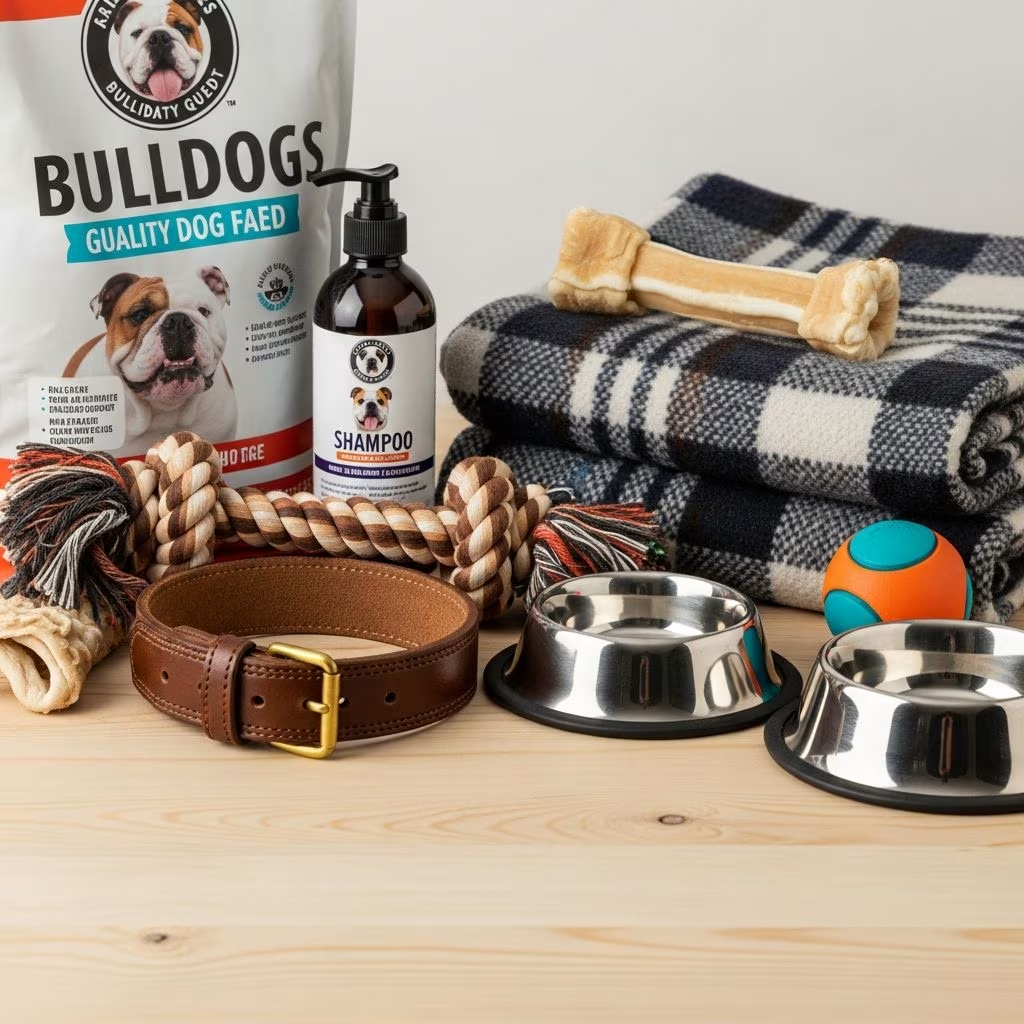
The Bulldog stands out as one of the most recognizable dog breeds worldwide, celebrated for its distinctive wrinkled face, sturdy build, and affectionate personality. Once developed for demanding physical tasks, today’s Bulldogs have transformed into cherished family companions known for their loyalty and laid-back demeanor. This guide delves into their background, characteristics, care requirements, and more to help prospective and current owners thrive with these unique dogs.
Origins and Evolution of the Bulldog
The Bulldog’s story begins in medieval England, where it was selectively bred for strength and tenacity. Historians trace its roots to around 1210, coinciding with the emergence of bull-baiting, a brutal sport where dogs confronted tethered bulls. These early dogs descended from mastiff-like stock, engineered to grip a bull’s nose tenaciously without releasing, even under immense pressure. Their compact yet powerful frames, wide jaws, and unyielding courage made them ideal for this role, which also served practical purposes like assisting butchers in controlling livestock or catching unruly farm animals.
Bull-baiting, popular through the 18th and 19th centuries, demanded agility and ferocity from Bulldogs, who were leaner and more athletic than modern versions, often weighing around 80 pounds to topple massive bulls. The practice was outlawed in 1835 amid growing public outcry against animal cruelty, leaving the breed without purpose and nearly facing extinction. At this juncture, Bulldogs were viewed as savage, associated with lower social classes, and lacked a defined standard.
Dedicated breeders intervened by shifting focus to companionship. The advent of dog shows in 1859 provided a new platform, preserving the breed through selective breeding for gentler temperaments and exhibition qualities. By the 1860s, enthusiasts formed the first Bulldog Club in 1864, adopting the motto ‘hold fast’ to maintain type purity, followed by a formal standard in 1875. This era saw deliberate efforts to eradicate aggression, emphasizing docile traits suitable for family life.
In the United States, Bulldogs arrived around 1880, gaining American Kennel Club (AKC) recognition in 1886. The Bulldog Club of America formed in 1890, adopting standards mirroring England’s. Over time, breeders refined the dog’s personality, turning its gladiatorial prowess into endearing loyalty. By the early 1900s, Bulldogs had become the affable family pets we know, with personalities that meshed seamlessly with households.
Physical Characteristics and Breed Standards
Modern Bulldogs embody a thick-set, smooth-coated physique: low-slung, broad, and muscular, conveying power and determination akin to a compact bull. Males typically weigh 50 pounds, females 40 pounds, standing 12-15 inches at the shoulder. Their heads are massively proportioned, with extremely short faces, broad blunt muzzles turned upward, and deep wrinkles enhancing their signature scowl.
The body is short and well-knit, with stout forelimbs and stronger hindquarters set high. Stifles turn slightly outward, hocks close together, producing a distinctive rolling gait—short, quick steps on tiptoes, skimming the ground with a shoulder-forward canter like a horse. Coats are short, glossy in colors like white, red, fawn, or brindle; undesirable shades were early culled to refine the type.
| Feature | Description |
|---|---|
| Height | 12-15 inches |
| Weight (Male) | 50 lbs |
| Weight (Female) | 40 lbs |
| Coat | Smooth, short |
| Colors | Fawn, white, brindle, red |
| Gait | Rocking, low-driven |
These traits, while endearing, stem from centuries of purposeful breeding, evolving from agile fighters to stocky show dogs.
Temperament and Personality Traits
Beneath the Bulldog’s tough exterior lies a heart of gold. They are gentle, courageous, and remarkably patient, making them excellent with children and tolerant of other pets. Their stubborn streak, a holdover from working heritage, requires consistent handling, but they respond to calm, firm leadership.
- Loyal Companions: Bulldogs form deep bonds, preferring family laps over solo adventures.
- Laid-Back: Low-energy adults content with short walks and couch time.
- Protective: Alert barkers without excessive aggression.
- Social: Enjoy human company; may suffer separation anxiety if left alone too long.
Early socialization curbs any inherited tenacity, fostering the docile pets breeders envisioned post-1835.
Health Considerations for Bulldogs
Bulldogs face breed-specific vulnerabilities due to extreme conformation from selective breeding. Brachycephalic (short-nosed) structure causes brachycephalic obstructive airway syndrome (BOAS), leading to labored breathing, snoring, overheating, and exercise intolerance. A Royal Veterinary College study highlights how modern Bulldogs suffer more from these issues than ancestors.
Other concerns include hip dysplasia, skin fold infections, cherry eye, entropion, and allergies. Overweight exacerbates joint strain and respiratory woes; obesity is rampant given their sedentary nature. Lifespan averages 8-10 years, shorter than many breeds, underscoring proactive vet care.
- Respiratory Issues: Avoid heat, stress; consider surgery for severe BOAS.
- Skin Health: Clean wrinkles daily to prevent dermatitis.
- Joints: Maintain ideal weight; low-impact exercise.
- Eyes/Ears: Monitor for infections; regular checks.
Reputable breeders screen for genetic issues, per AKC and Bulldog Club standards.
Grooming and Daily Maintenance
Low-maintenance coats require weekly brushing with a soft tool to distribute oils and reduce shedding. Focus on wrinkle hygiene: gently clean folds with damp cloth and pet-safe wipe, drying thoroughly to avert moisture-trapped bacteria.
Bathe monthly or as needed, using mild shampoo. Nails trim biweekly; ears inspect weekly, cleaning with vet-approved solution. Dental care is crucial—brush 2-3 times weekly, offer chews to combat tartar from soft diets.
Nutrition and Feeding Guidelines
Feed high-quality, large-breed puppy food until 12-18 months, transitioning to adult formulas emphasizing joint support (glucosamine) and controlled calories. Daily intake: 1-2 cups split into 2-3 meals to prevent bloat.
| Life Stage | Daily Calories | Key Nutrients |
|---|---|---|
| Puppy | 800-1200 | Protein 22-32%, DHA for brain |
| Adult | 900-1100 | Joint supplements, antioxidants |
| Senior | 700-900 | Lower fat, fiber for digestion |
Monitor weight quarterly; fresh water always available. Avoid table scraps to curb obesity.
Exercise and Activity Needs
Despite muscular builds, Bulldogs aren’t high-energy. Puppies need 20-30 minute walks twice daily plus play; adults suffice with 20-30 minutes total, preferring cool times to dodge heatstroke. Mental stimulation via puzzle toys or training prevents boredom-induced mischief.
- Morning stroll: 15 minutes.
- Evening play: Fetch or tug in yard.
- Indoor games: Hide-and-seek with treats.
Training Essentials and Socialization
Positive reinforcement shines with food-motivated Bulldogs. Start early: housebreaking by 8 weeks, basic cues by 12. Stubbornness demands patience—short, fun sessions (5-10 minutes) multiple times daily.
Socialize via puppy classes, exposing to noises, people, dogs. Their amiable nature blooms with exposure, reducing wariness.
Ideal Living Environment and Family Fit
Bulldogs adapt to apartments or houses sans yards, valuing human proximity over space. They drool, snore, and shed moderately—prepare for personality over perfection. Families, singles, or seniors all suit, provided activity matches their chill vibe. Not ideal for very hot climates or active runners.
Frequently Asked Questions (FAQs)
Are Bulldogs good with kids?
Yes, their patient, gentle nature makes them superb with children, though supervise due to low center of gravity.
How often should I clean Bulldog wrinkles?
Daily inspection and cleaning prevent infections; use vet-recommended products.
Do Bulldogs need a lot of exercise?
No, moderate daily walks suffice; overexertion risks overheating.
What’s the average lifespan of a Bulldog?
8-10 years with diligent care; genetics and weight management key.
Are Bulldogs easy to train?
Moderately; consistency and treats overcome stubbornness effectively.
References
- Bulldog History: Where the Breed Originated — American Kennel Club. 1938 (historical reference, uniquely authoritative). https://www.akc.org/expert-advice/dog-breeds/bulldog-history/
- English Bulldog Breed Guide: Characteristics, History & Care — Pawlicy Advisor. N/A. https://www.pawlicy.com/blog/english-bulldog-breed/
- BULLDOGS THROUGH TIME — Bulldog Breed Council. N/A. https://www.bulldogbreedcouncil.co.uk/i/bulldogs-through-time
- The History of Bulldogs — Bark! Voice of the Bulldogs. N/A. https://barkvoiceofthebulldogs.org/946/features/the-history-of-bulldogs/
- History of the Bulldog (PDF) — Bulldog Club of America. 1980s (historical standard). https://bulldogclubofamerica.org/wp-content/uploads/2019/05/1980s.pdf
- The Selective Breeding of English Bulldogs Has Led to a Lot of Health Problems — Smithsonian Magazine (citing Royal Veterinary College study). 2023-11-14. https://www.smithsonianmag.com/smart-news/the-selective-breeding-of-english-bulldogs-has-led-to-a-lot-of-health-problems-180980271/



