
Evaluating Bull Fertility: Complete BSE Assessment Guide
Comprehensive guide to assessing bull reproductive health through systematic BSE procedures
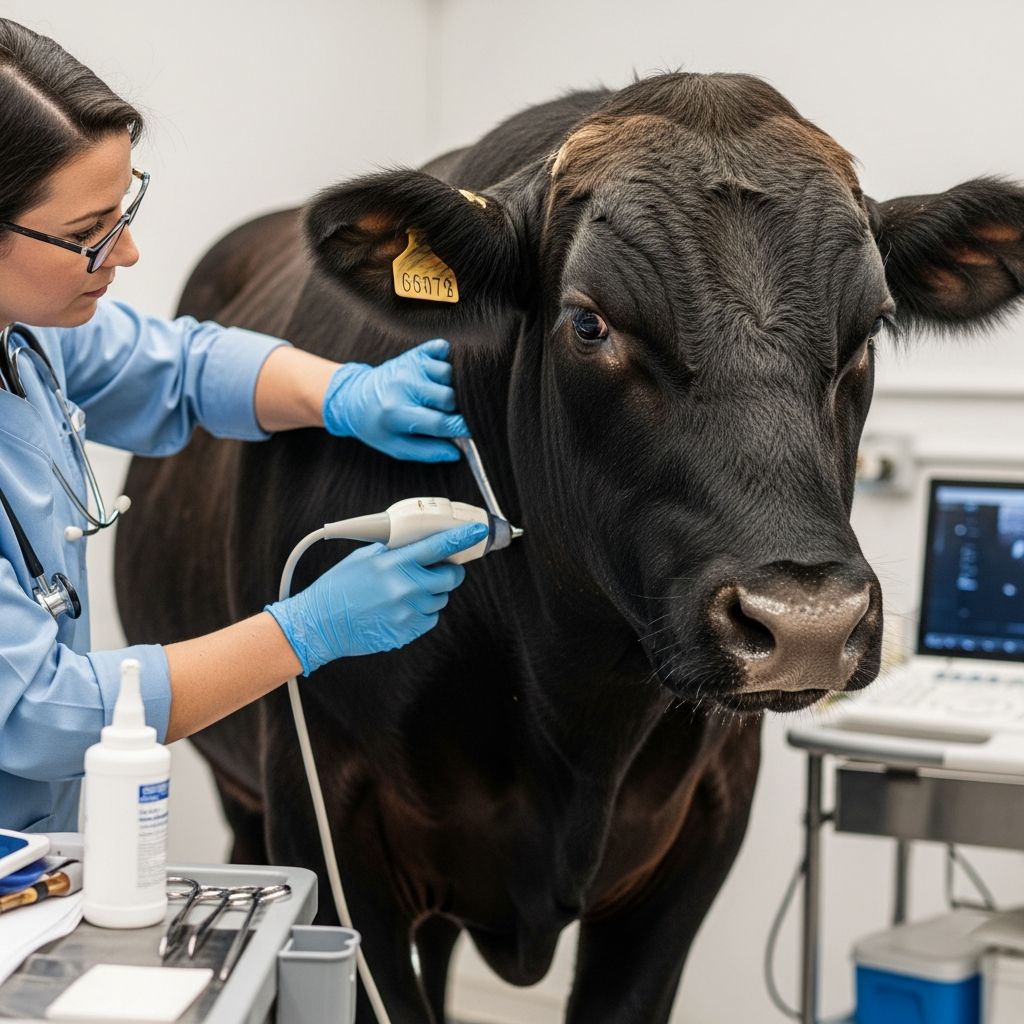
The reproductive competence of breeding bulls directly impacts the productivity and profitability of beef cattle operations. A systematic approach to evaluating male fertility has become an essential management practice for producers seeking to maintain strong herd genetics and consistent breeding outcomes. The breeding soundness examination (BSE) represents the gold standard method for objectively assessing whether a bull possesses the physical and physiological attributes necessary to establish pregnancies in a herd of cycling females during an organized breeding season.
Understanding the Foundation of BSE Assessment
A comprehensive breeding soundness examination encompasses four distinct but equally important evaluation components. These components work together to provide a complete picture of a bull’s capacity to contribute meaningfully to herd reproduction. Rather than focusing solely on one aspect such as semen characteristics, the BSE demands that veterinarians examine the entire animal systematically, recognizing that multiple biological systems must function optimally for successful breeding to occur.
The timing of BSE completion significantly influences management decisions within an operation. Ideally, examinations should be conducted 30 to 60 days before the designated breeding season begins. This timeline allows sufficient opportunity to address any identified deficiencies—whether requiring medical treatment, therapeutic intervention, or identification of a replacement animal—before the bull is expected to perform breeding duties. Producers who schedule examinations later in the season may find themselves unable to implement corrective actions effectively.
The Physical Examination Component
The first critical element of the BSE involves a thorough general and reproductive physical examination conducted while the bull is restrained in a squeeze chute. This examination initiates at the anterior structures and proceeds systematically through the entire body, with particular attention to anatomical systems directly related to mobility and reproductive function.
Structural Soundness Assessment
Veterinarians begin by evaluating the bull’s head and anterior structures, specifically examining the eyes for potential complications including squamous cell carcinomas, corneal damage, or lymphoid proliferation. The oral structures receive attention as well, with assessment of tooth wear patterns to determine whether the bull maintains adequate dentition for effective grazing throughout the breeding season. A bull with significant dental wear or disease may struggle to consume sufficient forage to maintain adequate body condition.
The front limbs undergo careful evaluation, with particular scrutiny given to the feet and claws. Veterinarians assess for structural defects such as screw claw deformity, abnormal wear patterns, or fissuring that might compromise the bull’s ability to maintain traction during natural mating. Even minor foot conditions can progress to lameness during the physical demands of an active breeding season, rendering the bull unable to mount females effectively.
Posterior limb evaluation includes palpation and observation of the hock joints and overall hindquarter structure. The angular relationships of the rear legs influence the bull’s ability to mount females successfully. Hocks showing evidence of swelling, heat, or pain may indicate joint disease that will worsen with the physical demands of breeding activity.
Body Condition and Systemic Health
Assessment of body condition score forms an important component of the physical examination. Bulls in inadequate body condition may suffer from reduced libido and poor semen quality, whereas bulls in excessive condition may experience reduced mobility and heat stress. Veterinarians evaluate the visibility of ribs, the prominence of hip and pin bones, and overall muscle tone to assign a standardized condition score.
The Scrotal Circumference Measurement
Among all BSE components, scrotal circumference (SC) measurement has generated considerable discussion within veterinary and production communities. This measurement serves as a reliable indicator of testicular volume and correlates strongly with sperm production capacity. The measurement procedure itself is straightforward but requires precise technique to yield consistent results.
Measurement Technique and Standards
During the scrotal measurement, both testes are gently manipulated toward the bottom of the scrotum without separating them from each other. A flexible measuring tape is placed at the widest diameter of the scrotum while maintaining even pressure and ensuring the tape’s top surface aligns flush with the skin surface. The measurement is recorded in centimeters, and the procedure can be repeated to verify consistency.
Breed-specific and age-appropriate minimum standards have been established for scrotal circumference. As a general framework, bulls younger than 15 months should present a minimum scrotal circumference of 30 centimeters, while bulls aged 16 to 18 months require a minimum of 31 centimeters. The standards continue to increase incrementally through the bull’s development, with bulls 2 years of age or older required to achieve a minimum of 34 centimeters. Breed associations frequently publish breed-specific averages that may establish higher benchmarks for particular genetic lines.
Significance and Implications
Scrotal circumference serves as a heritable trait that influences a bull’s sperm-producing capacity and has genetic correlations with female reproductive traits including age at puberty in heifers. Bulls failing to meet minimum scrotal circumference requirements may produce insufficient semen volume to service a large number of females effectively, or the semen produced may show reduced quality parameters.
Evaluation of Internal Reproductive Structures
Assessment of internal reproductive anatomy occurs through rectal palpation, allowing the veterinarian to examine structures not accessible through external manipulation. This technique requires training and experience but provides essential information regarding conditions that might not be apparent through surface assessment.
Testicular Assessment
The testes are palpated to evaluate their size, consistency, and symmetry. Healthy testes should feel smooth, resilient, and uniformly firm without areas of hardness or softness that might indicate infection, degeneration, or neoplasia. The testes must move freely within the scrotum without excessive adhesion to surrounding tissues. Any inequality in testicular size or consistency warrants further investigation, as these findings may indicate pathological changes affecting sperm production.
Cryptorchidism and Heritable Defects
Cryptorchidism, the condition of one or both testes remaining within the abdominal cavity rather than descending into the scrotum, represents an undesirable heritable trait. Regardless of whether semen quality appears acceptable in bulls with cryptorchidism, this condition renders them unsuitable for breeding purposes. The underlying genetic predisposition makes such bulls inappropriate contributors to herd genetics.
Accessory Gland Evaluation
Rectal palpation also enables examination of the seminal vesicles, ampullae, and prostate gland. Veterinarians assess these structures for evidence of inflammation, infection, or abnormal enlargement. Seminal vesiculitis, an inflammatory condition of the seminal vesicles, can significantly impact semen quality and fertility potential. Detection of such conditions during the BSE allows for treatment initiation or exclusion of the bull from breeding activities before he transmits infection to females in the herd.
External Genital Structures Assessment
The penis and associated structures require careful visual and tactile evaluation to identify conditions that might interfere with natural breeding success. Certain conditions affecting these structures may be amenable to treatment, while others render breeding impossible.
Penis and Prepuce Examination
During electroejaculation or following stimulation of penile extension, the penis is examined for structural defects and pathological conditions. Hair rings—hair wrapped around the penis that can create constriction and pain—can sometimes be surgically managed if identified early. Persistent frenulums, abnormal tissue connections, and penile warts all represent potential complications affecting breeding ability.
Balanoposthitis, characterized by inflammation of both the penis and prepuce, creates significant discomfort during mating and may be accompanied by preputial discharge or ulceration. While some cases respond to treatment, severe or recurrent balanoposthitis may necessitate breeding cessation. Preputial wounds or scarring can impede penile extension and must be evaluated for functional impact.
Infectious Disease Screening
Preputial wash samples should be obtained for diagnostic testing when bulls are beyond 4 years of age, as the risk of certain venereal pathogens increases with age. Testing for Campylobacter fetus venerealis and Tritrichomonas foetus uses specialized culture media appropriate to each pathogen’s growth requirements. Detection of either organism necessitates treatment protocols and management adjustments to prevent transmission to females.
Semen Collection and Evaluation Procedures
The assessment of semen quality requires standardized collection techniques and immediate microscopic evaluation. Semen characteristics directly reflect the bull’s functional capacity to produce viable sperm capable of fertilization, making this component essential to BSE accuracy.
Collection Methodology
Electroejaculation represents the most common semen collection method during BSE procedures. The technique involves inserting a specialized probe into the rectum and applying electrical stimulation in a controlled sequence, typically using 2- to 4-second pulses repeated at 5- to 7-second intervals. The stimulus intensity and duration are adjusted based on individual bull response. Following erection and penile extension, semen is collected into a pre-warmed container to minimize temperature shock to sperm cells. Maintaining proper collection conditions proves critical because sperm are extremely sensitive to temperature fluctuations.
Motility Assessment
Immediately after collection, a drop of fresh semen is placed on a pre-warmed glass slide and examined under microscopy to evaluate gross motility—the overall wave-like motion of the sperm mass. Progressive individual motility is then assessed under higher magnification, specifically evaluating the percentage of sperm demonstrating forward movement.
Minimum standards for motility establish that a bull must demonstrate at least 30 percent individual progressive motility to meet satisfactory breeding potential classification. This threshold represents the minimum under conditions that may not be optimized for sperm evaluation. Some breed associations and veterinary organizations recommend higher standards of 60 percent progressive motility when examinations are conducted under optimal environmental conditions.
Morphological Evaluation
Sperm morphology assessment involves staining a fresh semen sample with eosin-nigrosin stain and evaluating a statistically significant number of sperm cells under phase contrast or high-power bright-field microscopy. Each sperm is classified as morphologically normal or as possessing primary abnormalities such as abnormal head structures, or secondary abnormalities such as tail defects.
A minimum of 70 percent morphologically normal sperm represents the threshold for satisfactory breeding potential classification. Bulls producing semen with higher percentages of abnormal forms show reduced fertility, as abnormal sperm lack the structural integrity or functional capacity necessary for successful fertilization. Certain morphological defect patterns may indicate hereditary defects with genetic implications for offspring.
Classification Systems and Interpretation
Following completion of all four BSE components, bulls receive classification based on whether they meet minimum standards across all evaluation parameters.
Satisfactory Potential Breeder Classification
Bulls designated as satisfactory potential breeders have demonstrated:
- Passage of the physical examination with normal structural soundness and reproductive anatomy
- Achievement of minimum scrotal circumference for their age and breed
- Minimum 30 percent progressive individual semen motility
- Minimum 70 percent morphologically normal sperm
Critically, a bull must meet all four standards to receive satisfactory classification. Deficiency in any single component results in an unsatisfactory rating regardless of performance in other areas.
Unsatisfactory Potential Breeder Classification
Unsatisfactory classification may result from various factors including structural defects, inadequate scrotal circumference, cryptorchidism, pathological conditions of reproductive organs, insufficient motility, excessive sperm abnormalities, or evidence of infectious disease. Approximately 52 percent of bulls classified as unsatisfactory potential breeders fail specifically due to semen quality deficiencies, though other factors certainly contribute to unsatisfactory ratings in other populations.
Practical Implementation and Management Considerations
Successful integration of BSE into herd management requires understanding the examination’s purpose and limitations. The BSE predicts a bull’s breeding capacity under typical ranch conditions but does not guarantee fertility in all situations. Environmental stress, female reproductive status, management practices, and disease exposure all influence whether a satisfactory bull achieves predicted breeding success.
Establishing systematic examination records facilitates long-term monitoring of individual bulls and enables identification of performance trends. Year-to-year comparison of the same bull’s BSE results provides insight into reproductive capacity changes associated with aging or health challenges.
Veterinarians should communicate BSE results clearly to producers and recommend appropriate management responses. These may include treatment of identified defects, isolation of bulls with infectious diseases, replacement of unsatisfactory animals, or adjustment of female numbers assigned to individual bulls based on assessed breeding capacity.
Frequently Asked Questions
- Can a bull with cryptorchidism still be used for breeding?
- No. Cryptorchidism is considered an undesirable heritable trait that renders a bull unsuitable for breeding regardless of semen quality. The genetic predisposition makes such bulls inappropriate for herd reproduction.
- How often should BSE be performed?
- Breeding soundness examinations should ideally be performed annually before the breeding season begins. Some high-use bulls or those with identified issues may benefit from more frequent evaluation.
- What does low sperm motility indicate?
- Low sperm motility suggests reduced sperm viability and fertilizing capacity. This may result from collection stress, environmental factors, or underlying reproductive pathology. Repeated collection may be warranted to rule out technique-related issues.
- Is scrotal circumference measurement accurate?
- When performed using proper technique with appropriate pressure and consistent methodology, scrotal circumference measurement provides reliable assessment of testicular volume and sperm production capacity. Consistency in measurement technique ensures meaningful comparisons over time.
- Can bulls with penile defects be treated?
- Some defects such as hair rings may be surgically corrected if identified early. Other conditions such as severe scarring or permanent structural defects may preclude successful treatment, necessitating breeding exclusion.
Conclusion
The breeding soundness examination represents an investment in herd reproductive efficiency with substantial long-term returns. By systematically evaluating physical soundness, testicular development, and semen quality, veterinarians and producers gain objective information necessary for making informed breeding management decisions. Regular implementation of BSE protocols supports maintenance of strong genetics, consistent fertility, and economic productivity within cattle operations.
References
- Bull Breeding Soundness Evaluation — University of Tennessee Institute of Agriculture. https://utbeef.tennessee.edu/wp-content/uploads/sites/127/2020/11/W788.pdf
- Breeding Soundness Evaluation in Bulls: A Review — Biomedical Research Publishers. https://biomedres.us/pdfs/BJSTR.MS.ID.000415.pdf
- Breeding Soundness Examination of Bulls — Merck Veterinary Manual. https://www.merckvetmanual.com/management-and-nutrition/breeding-soundness-examination-of-the-male/breeding-soundness-examination-of-bulls
- How Valuable are Breeding Soundness Exams? — University of Nebraska-Lincoln Department of Animal Science. https://beef.unl.edu/beefwatch/2022/how-valu-bull-are-breeding-soundness-exams/
- Bull Breeding Soundness Exams: More than a Wiggle Test — Purdue University Extension. https://www.extension.purdue.edu/extmedia/VA/VA-25-W.pdf
Similar Articles








Read full bio of Sneha Tete


